


In March, a few weeks after the United States and Israel launched military strikes in Iran, Middle East expert Bernard Haykel said that unlike the Trump administration, he didn’t expect the conflict to end quickly or the leadership of Iran to fall.
Haykel was right on both counts — not surprisingly, since he is one of the nation’s foremost experts on the region as director of Princeton University’s Institute for the Transregional Study of the Contemporary Middle East, North Africa and Central Asia.
In multiple conversations with the Deseret News over the course of the war, Haykel has said he remains confident that Iran’s leadership will emerge hardened from the war, despite the physical damage the U.S. military has done to the country.
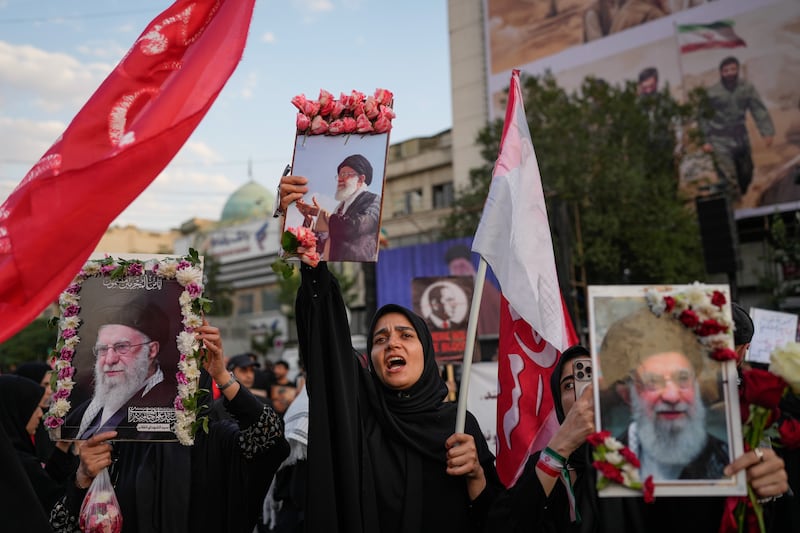
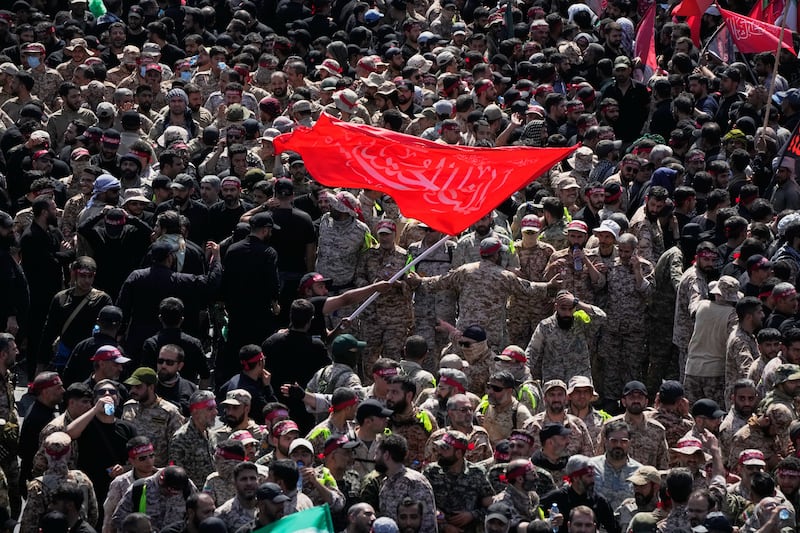
There’s evidence of that in the rhetoric and images coming from the country this week as Iran holds multiday funeral services for its 86-year-old Supreme Leader Ayatollah Ali Khamenei, killed on the first day of the U.S.-Israeli strikes.
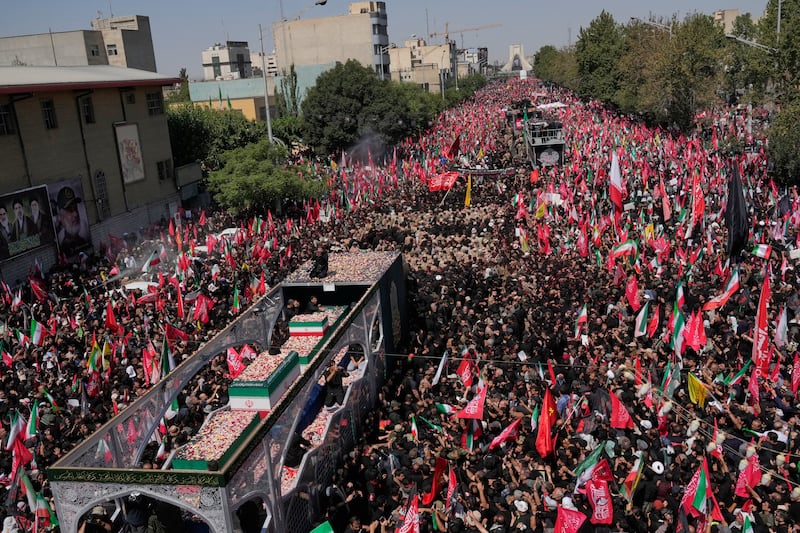
NBC reported that during a funeral procession Monday in Tehran, banners calling for revenge were seen, along with an image of U.S. President Donald Trump being hung in effigy. There have been reports of Iranians chanting “death to America” as crowds gather in the streets. (Of course, as The Washington Post noted in its coverage, “The views of people interviewed at the funeral events are unlikely to represent all of Iranian society, given the risks posed to those who have opposed or been critical of the government.”)
The timing of the funeral services is curious, given that its start coincided with the Fourth of July celebration in the United States and Muslims typically swiftly bury their dead.
But in conversation with the Deseret News from the Middle East on Friday, Haykel explained why the timing may have been a coincidence, not a signal.
Haykel also talked about where the war stands as it enters its fifth month, why he believes Iran is in a stronger position than the U.S. in its negotiations, and why gas prices haven’t been worse. He also talked about how the ordinary American can gauge how the war is going, with so much propaganda being shared.
The conversation has been lightly edited for clarity and length.
Deseret News: To start, is there any insight you can share about the timing of these funeral services, and whether there is any significance to this starting on July 4?
Bernard Haykel: I think it’s a coincidence. Normally, Muslims bury their dead almost immediately, typically even within 24 hours or less. The reason I think this has taken so long is just because of the war, and because I think they want to bury him in Mashhad, not in Tehran, and needed to make all these preparations for it. It was just a question of logistics and safety and the war that dictated it.
DN: The leader of the Islamic Revolutionary Guard Corps, Ahmad Vahidi, has been more visible in recent days and has been quoted as making belligerent, almost taunting statements about the U.S. Is this because of the funeral or is there something else at play with the Iranians’ strategy?
BH: We really don’t know, because the Iranian system is an extremely opaque system. You basically have the supreme leader in the form of the son of the supreme leader who is being buried now. He’s meant to be even more hard-line than his father, and his father was pretty hard-line, in terms of his anti-Americanism and his anti-Israel position.
And then you have the Revolutionary Guard Corps, individuals that I don’t know much about, and I don’t think many people know much about. They’re sort of second, third, fourth tier commanders who have risen through the ranks because of the killing of the top-ranked people, but also because the war has elevated and created a whole new leadership in Iran.
DN: Regarding the physical destruction in Iran, is it more than you would have expected over this period of months, or less?
BH: Again, we don’t know. If you listen to the Israelis and Americans, a lot of the infrastructure and many of the basic industries were destroyed, for instance, the steel industry. Whether that’s true, the extent of the damage, it’s really hard to tell.
The Americans and the Israelis also made claims that they destroyed a much larger number and quantity of missiles and drones than seems to be the case. The Iranians seem to have many more missiles, many more drones, so it’s really hard to know the extent of the damage in Iran, and it’s hard to believe the claims made by both the United States and Israel about the destruction.
What’s clear is the regime has survived and has hardened. And it still has the capacity to inflict tremendous damage on the oil and energy and water desalination installations across the Gulf countries. It also still has the capacity to block the Strait of Hormuz, despite America’s overwhelming military presence and firepower. So the regime has survived, it’s resilient, and it’s still capable.
DN: When we talked in March, you said that what we were seeing was a war of attrition. Is that still how you would describe this conflict?
BH: Yes, I think so. It’s a war of resolve, and who has more resilience. And Iran and the regime are more resilient, for a number of reasons. First of all, it doesn’t care how many of its own people get killed, and that’s an advantage in a war like this. It doesn’t seem to care how much suffering this war inflicts on its own people, or even on its infrastructure, whereas the Americans do.
President Trump is working on a very tight clock with the midterm elections in November, and he has serious qualms and concerns about the global economy as long as the Strait of Hormuz is blocked. So he seems to be in more of a hurry to end this war than the Iranians are despite the enormous pain it is causing the people of Iran, and even the regime. The Iranians know this, and they’re playing for time.
And you can see in their negotiations with Americans, they’re almost never straightforward. They’re almost always denying what the Americans are claiming publicly. In other words, they’re temporizing, they’re playing psychological games with the Trump people, and they seem to have the upper hand in the negotiation.
DN: To your point, it’s very difficult for the American people to have any idea what’s really going on with each side contradicting the other. How can the American public gauge how this war is actually going? What are things to watch for?
BH: Well, they can keep an eye on what each side wants, and what they can do. For instance, the Iranians want the Israelis’ proxy war with Hezbollah to stop; so far, the Israelis have not stopped the war against Hezbollah in Lebanon, so it’s clear that America’s ability to force Israel to stop the war in Lebanon is weak, not very effective. And also, the Iranians are able to block the Strait of Hormuz.
As long as the Iranians are able to block the Strait of Hormuz, it’s clear the Americans don’t have the upper hand and the Iranians do. That’s an obvious sign. What makes it a bit more confusing is that historically when there’s been a major disruption in oil flows, like there is now, you see a spike in energy prices, in gasoline prices. We have not seen that this time, so it’s a bit confusing.
DN: I believe you said before that you thought oil could exceed $150 a barrel. (Editor’s note: Brent crude reached nearly $120 a barrel in March and was about $72 a barrel Monday.)
BH: Right, and the reason that hasn’t happened, like the crises we had in the ’70s, is because China has a huge strategic petroleum reserve, and it’s released a lot of oil from its strategic reserve and it’s consumed a lot less oil than it has in the past. The Chinese have acted as a swing supplier of oil during this crisis, which is why we haven’t seen a huge spike in oil prices. That’s one reason.
The second reason is the world is a lot less dependent on oil than it was in the 1970s, and the third is, the U.S. is a major energy producer now with shale. So we haven’t seen the prices that would lead us to think that this is a serious crisis, which in fact it is. Because if it continues, and Hormuz remains closed, we will eventually see the spike in prices and in inflation. ...
The Iranians think they can toll Hormuz to the tune of $40 billion a year. You’re paying them not to attack you — it’s like the Mafia. And the Americans are saying, no, you can’t do that. And the Arab countries are also saying no.
So we have a situation where there is no meeting of the minds and a possibility of a resolution to this conflict. I think what will happen is we will keep kicking the can down the road with these endless negotiations.
DN: Is there anything about the way the war has unfolded that has surprised you?
BH: Yes, I think the Arab Gulf countries have come to the realization that until they build out infrastructure that can get around Hormuz — and that’s going to take two, three years — that they’re going to have to placate Iran by paying it off. That surprised me. I didn’t think the Arabs would, in effect, end up bribing Iran not to attack them. They’re not going to say this openly, but that’s in effect what’s happening as we speak now.
DN: Do you see this as still going on this time next summer?
BH: I don’t think so, because I think the disruption to the world’s economy would be too great if this continues. But it could certainly continue through the summer and into the fall. At least until the elections in November.
DN: Is there a scenario you see in which there is a clear victory for the United States?
BH: No, I don’t see a victory. A victory for the United States would have to involve the falling of the mullahs’ regime in Iran, and I don’t see that happening anytime soon.
There’s going to be a NATO summit (July 7 and 8) in Turkey, and it will be interesting to see if the Turks are on board with President Trump, and how many countries will be on board with President Trump, in putting pressure on Iran. I suspect that most countries will be pushing for some sort of deal or accommodation, which effectively means that Iran gets to toll the strait, or some sort of relief of sanctions.
And I think the nuclear question — whether Iran can or cannot enrich uranium — is a can that will be kicked down the road. Effectively, this was the most important thing for Trump. But he’s not going to get that from the Iranians. Instead, what he got is the closure of the Strait of Hormuz, which was open before the war. To me, this is a terrible outcome for the United States.