

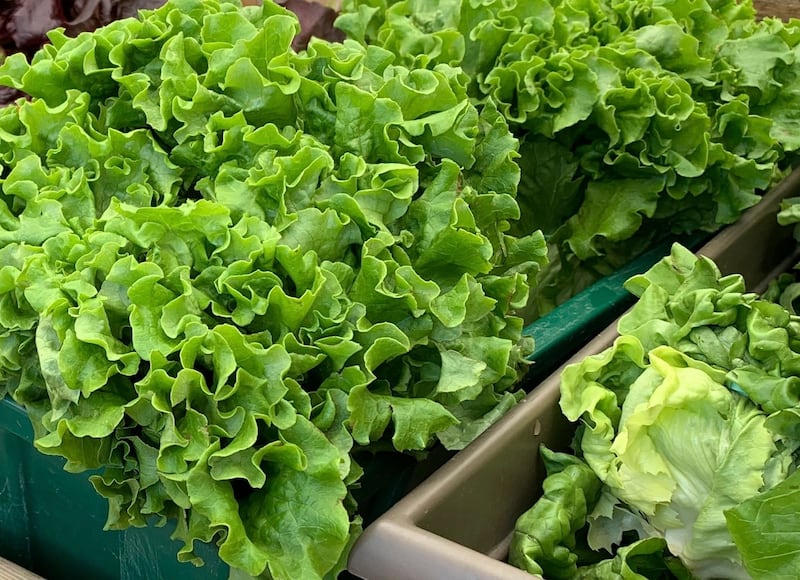

- A record cyclosporiasis outbreak has infected at least 1,600 people, a quarter of them in three states.
- Investigators are looking at lettuce, onions, cucumbers, cilantro and salad greens as possible sources.
- Public health officials advise taking precautions like thoroughly washing produce and removing outer leaves.
The U.S. Food and Drug Administration has just released a consumer update on Cyclospora, the tiny parasite that is having an oversized impact on gastrointestinal health in the majority of states at the moment. The emphasis is on the fact the illness is treatable and there are ways to reduce risk.
The Centers for Disease Control and Prevention on Tuesday released its own health advisory, as well, noting more than 1,600 confirmed cases and another 5,100 that are suspected, but for which analysis has not been completed.
“This is substantially higher than the 249 cases reported nationally by this time last year,” the advisory notes, adding that 141 people have required hospitalization. No deaths have been reported.
The CDC said that more than 400 cases have been linked across Michigan, Ohio, Kentucky and West Virginia, with symptoms that began on or after June 22. In the Midwest, Michigan health officials said early results suggest “lettuce or salad greens” as a possible source.
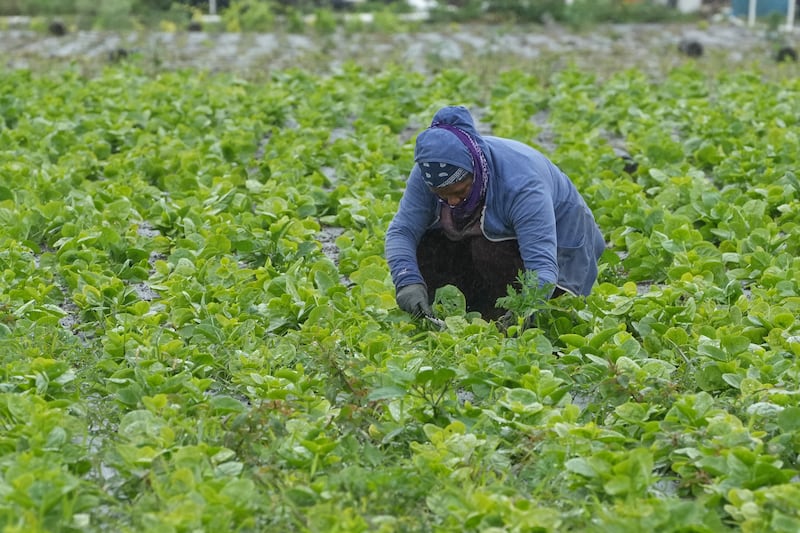
No definite source has been identified and there may never be a clear answer on that, as Deseret News earlier reported. But Taco Bell announced it has “voluntarily and temporarily removed limited ingredients at select restaurants as a precautionary measure,” per The Washington Post.
Food Safety Magazine reported that the FDA traceback investigations are reportedly looking at white and green onions, cucumbers and cilantro, in addition to lettuce.
Here are answers, courtesy of the FDA and CDC, to common cyclosporiasis questions.
What are Cyclospora and cyclosporiasis?
Cyclospora is a tiny parasite that can only be seen under a microscope. But it can have big impact when people consume food or drink that has been contaminated with it, by way of fecal matter. That leads to an intestinal illness called cyclosporiasis. It’s believed that only humans are at risk of the infection and only human fecal matter causes it.
“It’s unlikely to be transmitted directly from person to person because the Cyclospora parasite needs time (days to weeks) after being passed in feces to become infectious,” per the FDA.
What are the symptoms of the infection?
It takes between one and two weeks for symptoms to appear, though it can show up as early as two days. One week is about average. That time range makes tracking the source hard, because a person can go a lot of places and eat a lot of different foods in that time.
The parasite infects the small intestine and the result is most often frequent, watery diarrhea. People can also experience loss of appetite, weight loss, cramping, bloating, gas, nausea and fatigue.
Some people will have headaches, body aches, low-grade fever and vomiting. Meanwhile, for some there are no symptoms.
In some cases, symptoms wane and then return.
Who can get cyclosporiasis?
The short answer is anyone who consumes food — usually produce — that has been contaminated with human feces can get cyclosporiasis. But those most at risk of severe symptoms are people who have weakened immune systems, older adults and children. They are at risk of severe dehydration and the complications that brings.
There’s also an increased risk for those who travel to or live in an area where the illness is endemic — usually tropical and subtropical areas. The CDC specifically highlights, as well, Latin America, Egypt, the Indian subcontinent, Southeast Asia and Sub-Saharan Africa.
But there are home-grown cases, as well. As the FDA notes, “There have been illnesses associated with produce grown in the United States in recent years.”
How is it treated?
Treatment can prevent severe illness and complications and a healthcare provider can prescribe the right antibiotics. Prompt treatment is needed especially for those who are immune-compromised.
Where did the U.S. outbreaks originate?
“Past cyclosporiasis outbreaks in the U.S. have been linked to fresh produce such as raspberries, cabbage, basil, cilantro, parsley, broccoli, snow peas, sugar snap peas and leafy greens. Cyclosporiasis also can be acquired when people eat or drink contaminated food or water during travel outside the United States,” per the FDA.
How can the illness be avoided?
Consumers could skip foods that the CDC and FDA say could be linked to current outbreaks during summer months when the infections are more likely in the U.S. But Consumer Reports and public health officials advise against eliminating fruits and vegetables from meals. Instead, there are precautions that can be taken.
But there are basic steps that can be taken to reduce the risk from this particular parasitic infection. Per the FDA, they include:
- Wash your hands for at least 20 seconds with hot, soapy water before and after handling food.
- Getting rid of outer layers of fruits and vegetables — including two or three layers of leafy greens.
- Rinse produce immediately after getting it, but that alone is not enough. All fresh fruits and vegetables should be rinsed under clean running water, even before peeling anything. On firm produce, scrub with a clean vegetable brush. “Note that Cyclospora parasites are resistant to standard chlorine-based sanitizers. Consumers should not use soap or bleach to rinse produce,” the FDA emphasizes.
- Don’t trust that prewashed and precut produce are safe. The FDA said commercial washing may not be adequate to protect against the parasite. “No EPA-registered disinfectant products have been demonstrated to be effective against Cyclospora.”
- Be sure to wash kitchen counters, cutting boards and kitchen tools with hot, soapy water.
- Cook any produce that can be cooked to a temperature of at least 158 degrees Fahrenheit, which will kill the Cyclospora parasites. Chemical disinfection alone may not do the job.
- Seek care if you think you are sick because of food that might be contaminated. That’s especially true in cases of diarrhea or other symptoms that last more than three days.
Anyone with food safety questions can submit them to the FDA here.