

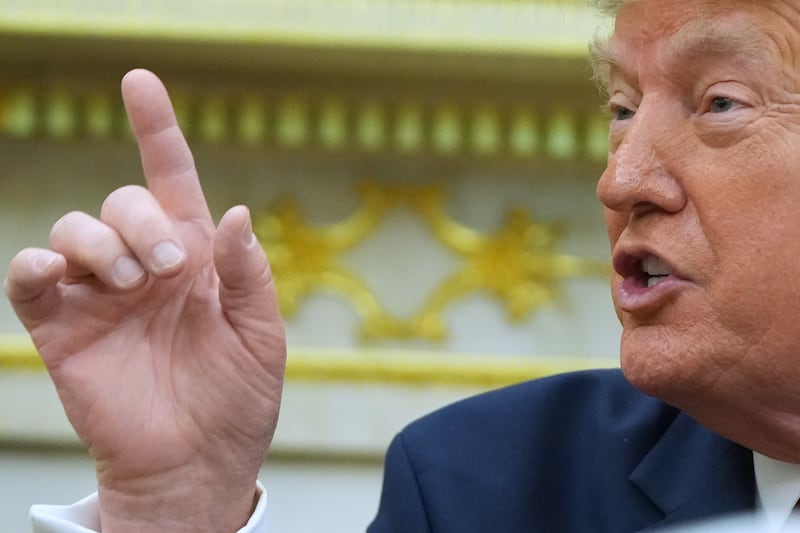

Over the weekend, President Donald Trump posted on social media that he has a 59% approval rating and that prices are coming down, even on oil and gas.
Part of that claim was demonstrably true: Despite continued uncertainty about Iran, inflation slowed and gasoline prices dropped in May, according to the Consumer Price Index Summary released this week.
But that 59% approval rating? No one is sure where that number came from, and according to the latest polling, Trump is losing the support of young Americans and independents.
Newsweek is among the publications that tried to find out where Trump got that 59% number, noting Monday that no polls “tracked by RealClearPolling or The New York Times show him with over 50 percent approval in recent weeks or months.”
“In fact, the latest polling averages from RealClearPolitics have Trump 15.5 points underwater — with 41 percent approving and 56.5 percent disapproving — while the most recent Times/Siena poll revealed that only 37 percent of the country are happy with his handling of the presidency," Hugh Cameron wrote for Newsweek.
Cameron quoted New York Times political analyst Nate Cohn, who said, “If there has been a floor during this partisan era of politics, Trump’s ratings today have fallen to it.”
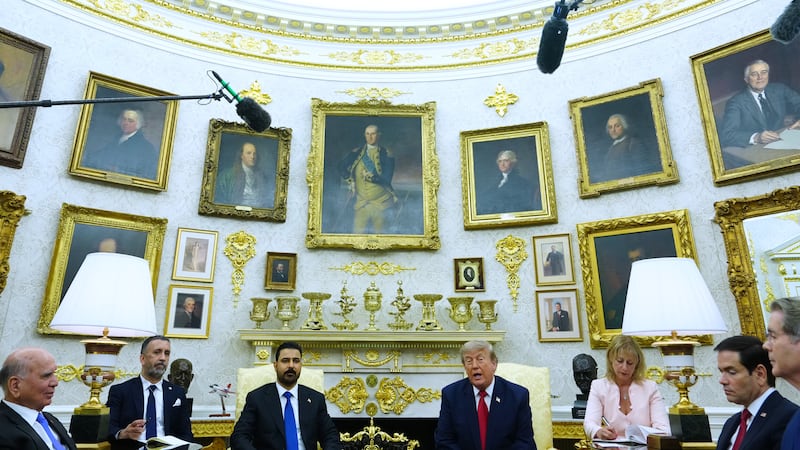
But things looked even worse for Trump the next day when Echelon Insight’s new survey put the president’s overall approval rating at 38%, and the latest Economist/YouGov poll put it at 37%.
And Trump’s support in Utah has been falling over several months, according to polling by the Deseret News and the Hinckley Institute of Politics.
The difference of a percentage point or two won’t matter to anyone but the pollsters, but the trend is not good for the president, and it’s seemingly out of line with what he believes to be true.
The biggest takeaway from Echelon survey is the steep decline in approval among voters ages 18-34, which has fallen 37 points since Trump took office in January 2025.
This follows on the heels of reporting last month that the president has lost significant support among independents, which has fallen 17 points in the time since he took office, according to the Associated Press and the NORC Center for Public Affairs Research at the University of Chicago.
“This decline has been especially pronounced among independents without a college degree. In contrast, Republican and Democratic support has remained largely stable during the same time period, with Republican support hovering around 75% and Democratic support around 5%,” the AP/NORC report said.
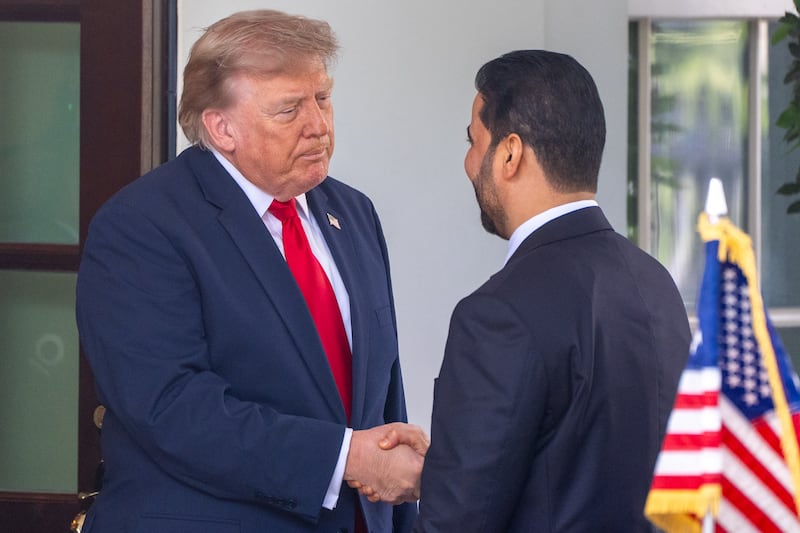
Trump’s approval rating is closely watched by political analysts who believe it is an indicator of how Republicans will perform in November’s midterm elections.
He’s not yet near the U.S. president with the lowest approval rating, or even his own personal low, according to USA Today.
“The record for the lowest individual approval rating in a single poll belongs to Harry S. Truman, who hit 22% in February 1952, according to Cornell University’s Roper Center for Public Opinion Research. Trump’s lowest approval rating ever is 29%, which was recorded Jan. 8-12, 2021, near the end of his first term, according to the center,” Fernando Cervantes Jr. reported for USA Today.
And Nate Silver and Eli McKown-Dawson said today on the Silver Bulletin SubStack that Trump’s favorables have actually edged up ever so slightly in recent weeks.
“Trump certainly still isn’t popular, but there does seem to have been a slight reversion from his all-time approval low in May,” the Silver Bulletin report said.
The decline in Trump’s favorables is widely attributed to his handling of the Iran war, as well as continued unhappiness about the U.S. economy.
The business of analyzing how popular a president is tricky, and can turn on how a question is phrased and who is asked. Nate Silver, for example, says when compiling numbers, he prefers polling of “all adults” over “registered voters.”
“This is because all Americans have a say in how popular the president is — whether or not they vote," the Silver Bulletin says.
Moreover, there are dozens of credible sources of polling, including Echelon, YouGov, Rasmussen Reports, Harris Insights & Analytics, Morning Consult and Zogby Analytics, as well as those polls done in conjunction with news organizations including the Deseret News.
A May poll from the Deseret News/Hinckley Institute for Politics, conducted by Morning Consult, showed a decline in Trump’s favorables, with 48% of Utahns saying they approved of Trump’s performance in office, compared to 50% who somewhat or strongly disapproved.
What often gets lost in headlines about Trump’s favorables, however, is that he still enjoys the support of most Republicans; the overall numbers are skewed by unfavorable ratings by Democrats and moderates. In the Deseret News/Hinckley Institute poll, for example, 75% of Republicans said they strongly or somewhat approve of the president’s performance, even though he has lost some support among Republicans and religious voters this year.
So as for Trump’s mysterious 59%, it’s possible he was citing a poll that showed Republican support, but until that is clarified, most of the media is going with the theory that the president read the numbers wrong in the latest NPR/PBS News/Marist poll — which showed Trump at 59% disapproval.