


- More cases in the summer cyclosporiasis outbreak are being reported, and nine states are now linked.
- Cyclospora can be transmitted during multiple points in the supply chain process.
- Experts give tips on how to avoid getting sick during this foodborne illness outbreak.
As of July 24, 2026, the Centers for Disease Control and Prevention reported at least 1,947 cases of cyclosporiasis, the intestinal illness caused by the Cyclospora parasite. One outbreak is currently linked to nine states including Illinois, Indiana, Kansas, Kentucky, Michigan, Ohio, Oklahoma, Pennsylvania and West Virginia.
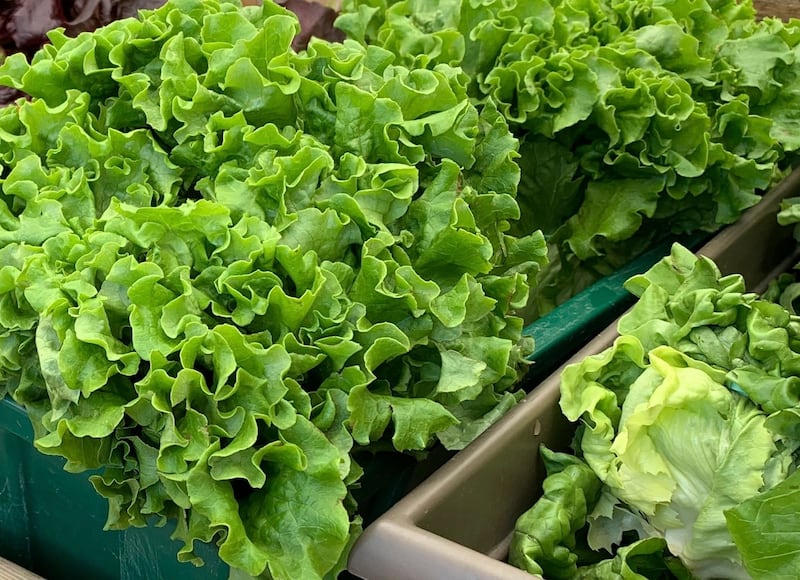
A definitive source of the outbreak has yet to be identified, but the CDC advised against eating recalled lettuce from Taylor Farms de Mexico. “If you purchased recalled lettuce, throw it out or return it,” the CDC’s website recommends.
How does an outbreak start?
“Contamination can occur with fresh produce anywhere along the farm-to-fork continuum,” according to Dr. Kalmia Kniel, a professor in the Department of Animal and Food Sciences at the University of Delaware.
Kniel told journalists at an online media briefing Tuesday that there are many opportunities for food to become contaminated during the supply chain process. “Anytime there’s potential contamination on equipment, people’s hands or through irrigation water,” pathogens can be transmitted to produce, she said.
Food may come in contact with Cyclospora during the growing, processing, cutting or packaging stage before it goes home with a shopper.
“There is really a wide potential for areas for contamination, which is why training, good hygiene practices, cleaning and sanitizing are so critical throughout that entire process,” Kniel said.
The timing
Cyclospora cannot multiply in food; it requires a human host for that, according to Kniel. It’s also not immediately infectious when shed in feces, but rather takes seven to 14 days to mature, which is why it’s hard to trace exactly what infected a patient. They’d have to remember the things they ate as far as two weeks prior to the start of symptoms.
Kniel said her research showed the parasite can live in soil for up to six months, and other studies suggested it can survive in soil for more than a year.
What to do
Fresh produce should not be avoided altogether during a Cyclospora outbreak, because the benefits of eating fruits and vegetables are still important to a healthy lifestyle. But there are actions people can take to avoid foodborne illness.
The CDC says to wash all produce, even if it’s labeled pre-washed. Kniel also said people can cook fruits and vegetables if they are concerned, because heat will kill the parasite. For example, she said berries could be made into jams or jellies instead of eaten raw.
Other typical tactics like washing hands and cleaning surfaces that touch food are good practices.
As an alternative to grocery store produce, Kniel suggested people shop at farmers’ markets if they want to be extra careful, because produce from a farmers’ market has a shorter distribution process and therefore fewer opportunities for contamination.
Staying calm is also important. “Until something gets identified, I wouldn’t be concerned about it,” said Craig Hedberg, an epidemiologist and professor in the Division of Environmental Health Sciences at the University of Minnesota. Just because berries have been identified in past Cyclospora outbreaks does not mean people should assume they are currently infected, he said.
As for the government and companies, “Ultimately, being as forthcoming as we can about how the outbreak happened, how it was investigated (and) in the end communicating what we learned from that process is the most effective thing we can do,” Hedberg said.