

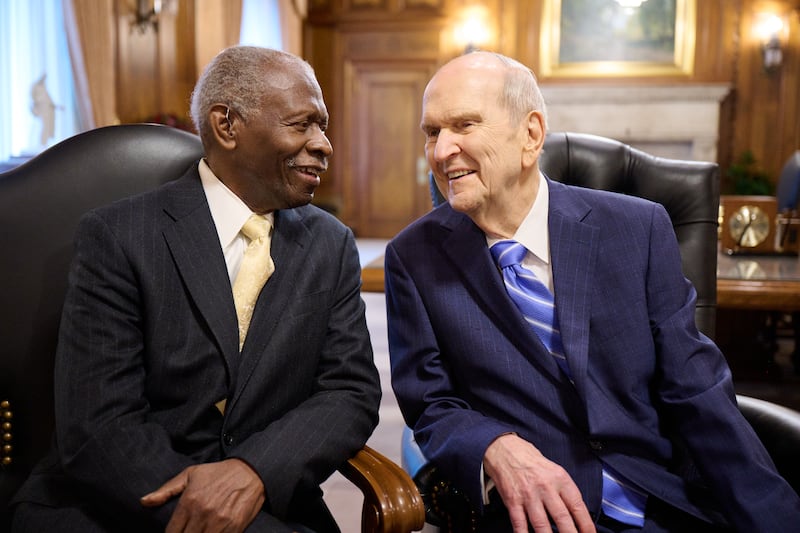


The Rev. Lawrence Edward Carter Sr. spent 47 years honing his advocacy for interfaith cooperation and pluralism, based in part on a conversation with Martin Luther King Jr. that took place when Carter was in high school. That conversation led him to Morehouse College in 1979, where Carter became the founding dean of a chapel named in King’s honor.
In 2023, Carter spearheaded the establishment of the Gandhi-King-Mandela Peace Prize to honor a “person who promotes positive social transformation through nonviolent means,” and “uses their global leadership to affirm peace, justice, diversity and pluralism.” The inaugural recipient was then-President Russell M. Nelson of The Church of Jesus Christ of Latter-day Saints. Here, Carter shares his vision for racial equality ahead of the country’s 250th birthday with Deseret Magazine. This story has been edited for length and clarity.
The Bible verse I ponder most often is probably the most obvious. “For God so loved the world that he gave his one and only Son,” John 3:16 famously tells us, “that whoever believes in him shall not perish but have eternal life.”
Many have written treatises on this declaration, from Pope Francis to Tim Tebow. Often they focus on the second half — on the idea of atonement and salvation. I’m more interested in the beginning, when God tells us that these ideals and aspirations apply not to any one group of people — Blacks or whites; Jews or Gentiles — but to everyone.
To the world.
That saved me as a young man. I was born in the segregated South, in a place officially called Terrell County. To local African Americans, however, it was known as “terrible Terrell” — a last resort where the most resistant, recalcitrant, rebellious slaves were once sent to either be broken, or killed.
That legacy lingered in my youth, even after I moved north to Columbus, Ohio. On visits to my family, I’d watch my aunt wash, hang and iron white people’s clothes for hours upon hours. They’d pay her with a single eel for dinner.
I’d attend minstrel shows, where white people dressed in blackface caricatures, who were themselves segregated by a rope. “These people are no different from us,” I thought then. I longed to snip that rope in half. Yet I could also see that our Black communities were not as well maintained.
As a young man I didn’t have the words to make sense of the inequality all around me, so instead I turned inward. I internalized negative thoughts about my own inferiority, and from an early age I contemplated suicide. The idea of a universal church pulled me back from the edge.
This noble aspiration, of course, hasn’t always worked out in practice.
These ideals pull people toward them over time. They gather mass and momentum until “We the people” becomes inescapable.
In Columbus, I once tried to attend Vacation Bible School at a United Methodist Church in town. I didn’t understand the division between white churches and Black churches. I only understood that this church had a gymnasium, and I wanted to play. They’re Christians, I told myself, and I’m Christian. There’s a cross on the lawn. I’ll be fine.
As soon as I walked inside, I noticed kids snickering. An administrator asked me if I was familiar with the Oakley Baptist Church, a local Black congregation. “I think you would be very happy there,” she said, and drove me over. She was perfectly pleasant about it, but the system was set up to reinforce our divisions. If God really loved the world entire, why did he also want to keep his children apart?
As the United States of America nears its 250th birthday, the same question has been on my mind regarding this nation’s founding document, the Declaration of Independence, and its successor, the Constitution. These documents are monuments to the rights of mankind.
The former proclaims, “We hold these truths to be self-evident, that all men are created equal, that they are endowed by their Creator with certain unalienable Rights, that among these are Life, Liberty and the pursuit of Happiness.”
All men.
The latter, in famously large print, heralds a government initiated by “We the people.”
We.
As understood at the time, all men didn’t even mean most men, and certainly not women, nor did “We the people” actually apply in any meaningful way. But the allure of a true “we” exerts its own force of gravity, much like a church that embraces the whole world. These ideals pull people toward them over time.
They gather mass and momentum until “We the people” becomes inescapable.
Meeting Martin Luther King Jr.
In 47 years as the founding dean of the Martin Luther King Jr. International Chapel at Morehouse College, a historically Black institution in Atlanta, I have seen this principle in action. I have seen it in my students, in my colleagues, and in a society that has moved, however slowly, toward an understanding that “we” means nothing if it doesn’t apply to all.
King, himself a Morehouse alumnus, instilled this in me and in many during the Civil Rights Movement, which could be seen as a culmination of longing for the collective “we.” He famously told Americans that we must “live together as brothers,” or “perish together as fools.”
His message changed the course of history. It also changed my life.
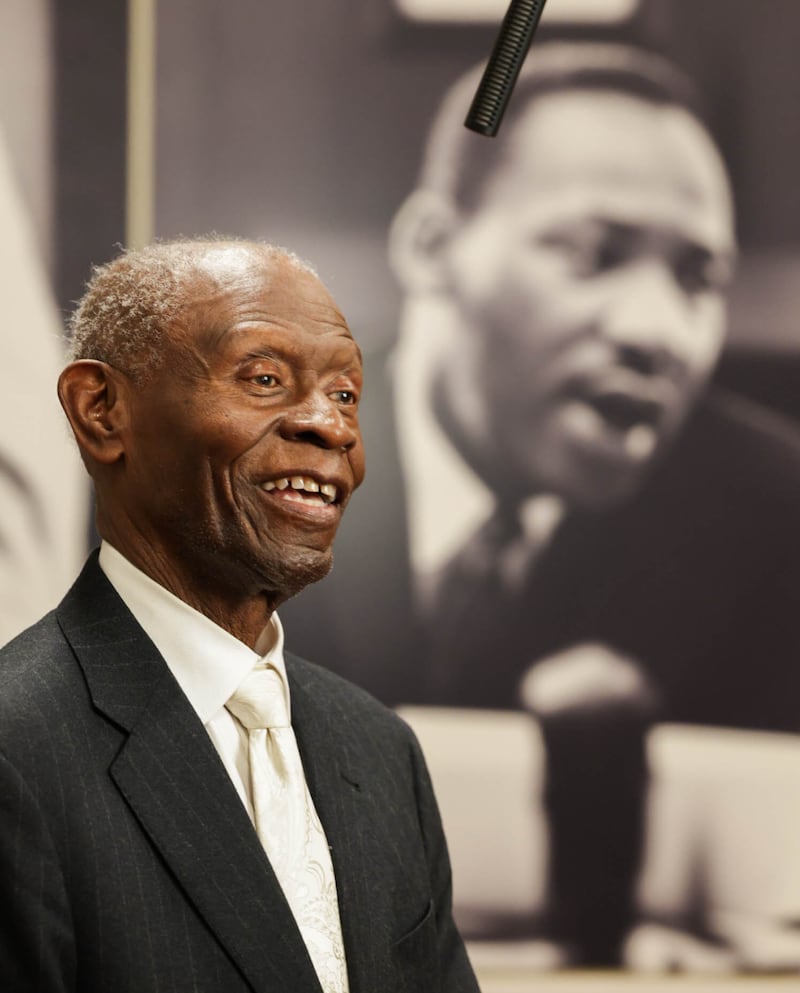
In 1957, as a 10th grader, I listened to King speak at Columbus’ Union Grove Baptist Church. I don’t remember exactly what he said, but I know I was impressed.
After the sermon, I asked the pastor if I could take a look inside his study. I hadn’t learned to read until fifth grade, but I’d since become obsessed with books, and I’d often ask to peruse collections when visiting new churches. The pastor obliged, and told me no one else was inside.
I looked through one wall of volumes that reached from the floor to the ceiling, then another. When I turned toward the third wall, I saw him. Martin Luther King Jr., sitting there, watching me.
Black Americans know, through painful history, how hollow virtues and ideals can be when selectively applied. But we also know the divine gravity of “we.”
I didn’t understand it at the time, but now I know he saw in me a certain intellectual curiosity. He sought to nurture it by telling me I should consider attending Morehouse, like him. Many people didn’t believe in me as a young man, but Dr. King did. And it made all the difference.
I didn’t follow him to Morehouse right away. I did, however, earn two master’s degrees and a doctorate of philosophy from his other alma mater, Boston University. It was there, while studying in 1968, that I learned of his assassination.
I spent that night in the last row of the school chapel, bawling, holding the hand of the woman who would become my wife. “Lord,” I said then, “help me to do something significant for Martin Luther King Jr. before I close my eyes.” The Lord gave me that chance when, in 1979, he finally brought me to Morehouse.
I spent my 47 years in Atlanta building the chapel into a premier global destination for ministry formation, peace promotion and interfaith dialogue. One trap I knew to avoid early on was to make the institution too backward-looking, even though it was named for someone who died a decade before it was founded.
I wanted it to breathe new life into his legacy. Help forge the “we” promised by the Constitution.
Black Americans know, through painful history, how hollow virtues and ideals can be when selectively applied. But we also know the divine gravity of “we,” that special force that pulls us toward tolerance, then respect, then fellowship and brotherhood. Because of it, we’ve seen virtues and ideals redefined for the better. We’ve seen people fight for the better.
People like Joseph Smith, who I think of as Abraham Lincoln before Abraham Lincoln — a man who ran one of the first abolitionist campaigns for president.
Like Martin Luther King Jr., who dared to share a radical dream of “we” with the world by proclaiming that “the moral arc of the universe is long, but it bends toward justice.”
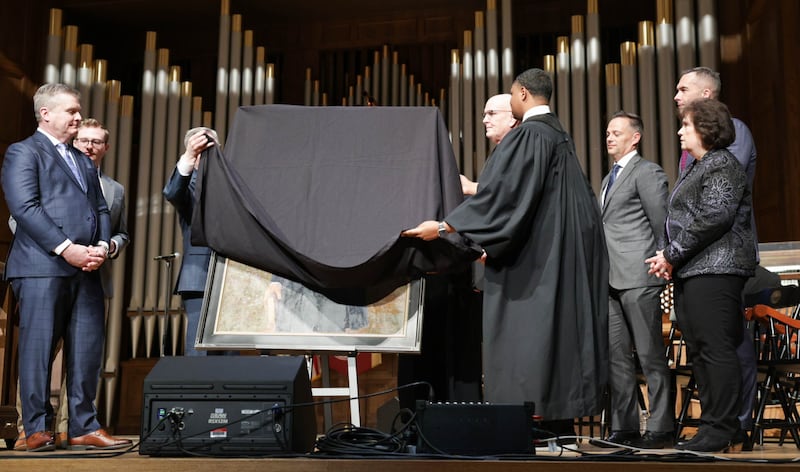
Like President Russell M. Nelson, past president of The Church of Jesus Christ of Latter-day Saints, to whom I was honored to present the inaugural Gandhi-King-Mandela Peace Prize from Morehouse in 2023.
And most of all like everyone who labors unacknowledged for a more encompassing, embracing, undeniable version of “We the people.”
I retired from Morehouse on June 30, which means for the first time since the Carter presidency, I will not be working this July Fourth. But I will be thinking — not only about this anniversary, but about another to come in 2033.

That year will mark 2,000 years of Christianity, and already I find myself wondering who among us has most appropriately lived up to the high standards the Lord set when he proclaimed his love for the world entire. Who among us has shown the willingness, the courage, the strength to live up to such an ideal?
Similarly, consider the words of Frederick Douglass, who in 1852 delivered a speech that asked what July Fourth is supposed to mean to the enslaved. “The rich inheritance of justice, liberty, prosperity and independence, bequeathed by your fathers, is shared by you, not by me,” he said. “The sunlight that brought life and healing to you, has brought stripes and death to me. This Fourth July is yours, not mine.”
Yet Douglass also celebrated a hope that one day, those same rights would indeed apply to him and to all. “I do not despair of this country. There are forces in operation, which must inevitably work the downfall of slavery,” he wrote. Less than 20 years later, he was proven correct.
“The fiat of the Almighty, ‘Let there be Light,’ has not yet spent its force,” he continued. “No abuse, no outrage whether in taste, sport or avarice, can now hide itself from the all-pervading light.”
That light continues to shine even in dark times. As the United States turns 250 years old, I will, like Douglass, be thinking about how the rights enshrined in our national foundation have often failed people who look like me.
But I will also be thinking, like Douglass, about the hope of better days when divisions of race, religion, economics, geography, nationality and gender will matter little in comparison to the divinity within all people — that inevitable, irrepressible, undeniable “we.”
This story appears in the July 2026 issue of Deseret Magazine under the headline “The Undeniable ‘We.’”Learn more about how to subscribe.