


On a late February weekend in 1920, a telegram crackled into the Frantz Corporation’s Chicago office from a drilling crew near Winnett, Montana. “PINE TREES GROW TALL HERE, COME YE MEN OF WAR.” In company code, it meant good news: “Big well, bring a number of men.”
After months of drilling through frozen ground and sandstone, the crew had struck oil in the Cat Creek field’s second sandstone layer, just west of the Musselshell River. Word spread fast. Ranchers and townsfolk rode out to see the gusher. There was no place to store the oil, so the flow was dammed and folks used it as “cow dip” to ward against pests.
By late August, a two-inch pipeline snaked into Winnett, feeding tanks bound for Wyoming refineries. Montana’s first major commercial oil boom was underway, and Winnett sat at its center. In 1921, 48 new homes went up in six weeks. By year’s end, 200 businesses — billiard halls, candy shops, hotels — served a population of about 1,200. It was big enough, they figured, to warrant some governance. In 1925, Petroleum County, Montana’s 56th and final county, was voted into existence, named for the resource that made it possible, with Winnett as its county seat.
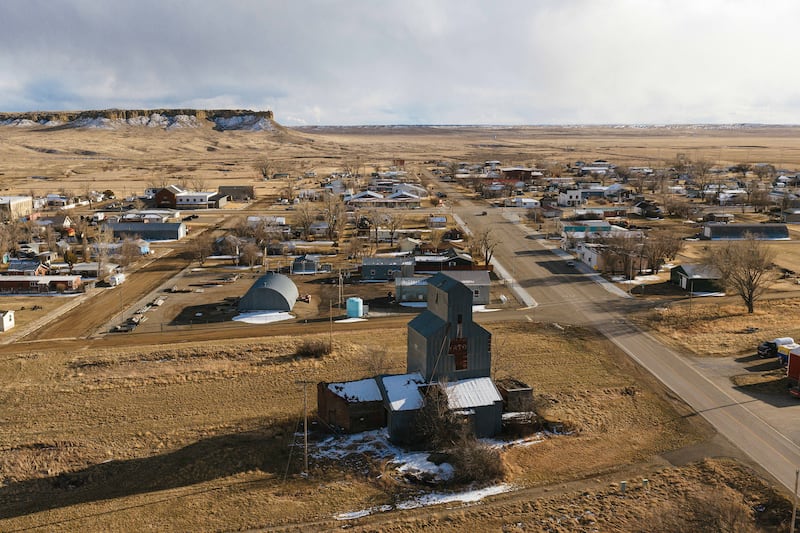
A century later, the boomtown is booming no more. About 1 in 3 Petroleum County residents is 65 or older, nearly double the national average. Cattle outnumber people roughly 62 to 1. Just 196 people live in Winnett, and only 524 in all of Petroleum County, which is the least-populated county in an already sparsely populated state.
Drive east from Billings, past the last big-box store, and the prairie stretches endlessly. Miss the right turn onto Main Street, and you might pass through without realizing a town is there. From a distance, Winnett looks like another fading dot on a map — one of many scattered across the Mountain West. To many, they’re just dwindling, too-small-to-matter-anymore towns. But they matter, still, if not for their inverse relationship with the increasingly wealthy urban hubs of the West, but simply because, to some, it’s home.
Then and now
Larry Carrell remembers the Winnett of 1946, when his father would come home sunburnt from the Cat Creek oil fields near his grandparents’ homestead. He took to the work, too. After graduating from high school in 1958, he left Winnett to study petroleum engineering at the University of Wyoming. His career chasing oil took him to Dubai, Houston and eventually Denver, where he helped build an oil and gas exploration company.
But he still had a stake in Cat Creek. Decades after his father helped sell the operation to Continental Oil, Carrell’s brother bought it back in 1995 and ran it until his death in 2019, when Carrell inherited the trust. By then, he had been retired for a decade and gone from his hometown for nearly 50 years. But it was time to find his way back.
When he drove down Main Street in 2019, the town felt smaller than he remembered. Some buildings stood vacant. Others were charred by fire. Yet the most important landmarks remained: the white-brick courthouse, the gas station and the town’s only restaurant, a red barnhouse still serving rib steak sandwiches. Despite the passing decades, Winnett was mostly unchanged.
Beyond it, though, he saw the West transforming. Between 2010 and 2024, the region grew faster than any other in the country. Idaho led the surge, with 1.7% annual growth, followed by Utah. Cities like Phoenix, Salt Lake City and Denver have swelled, attracting residents with jobs, access to nature and lower costs of living. That growth has also strained water supplies and concentrated wealth and political power in urban cores across the region. In Utah, nine out of 10 residents now live in urban areas covering just 1% of the state’s land.
“You have this idea in your mind of what the West is. But the Old West is something that’s kind of falling apart, and it’s going down to nothing.”
Rural places tell a different story. Towns like Winnett face shrinking economies and aging populations as younger residents move away, often for good. The divide between urban and rural America runs deep, but it feels especially stark in the West, where there are only a few things a town or a city can be. The land and the resources it provides seem infinite but are anything but. Nearly half the region is federally owned, and its most prized amenities — mostly open space — are unevenly distributed, concentrating prosperity in a handful of polished enclaves increasingly disconnected from the industries and people who once built them.
“You have this idea in your mind of what the West is,” says Samuel Otterstrom, a geography professor at Brigham Young University. “But the Old West is something that’s kind of falling apart, and it’s going down to nothing.” About 25 years ago, Otterstrom and BYU colleague Matthew J. Shumway coined the terms “New West” and “Old West” to describe an emerging regional divide. In a more recent 2022 study, they found that “New West” counties, centered on amenities and recreation, grew about 1.35% per year, drawing newcomers whose per capita income averaged 6% higher than that of existing residents. “Old West” counties — long reliant on mining, logging, farming and other extractive industries — expanded by less than 1% annually over the past two decades, with some losing as much as $21 million in aggregate income through out-migration.
By that measure, Winnett belongs to the Old West, but not entirely. Nearby towns that once thrived in the same era have disappeared. Winnett has endured, sustained mostly by generations of people unwilling to let it fade away.
At an all-class reunion held at the high school, Carrell stopped by the Petroleum County Community Center Committee’s booth, where sketches of the proposed building were spread across a table. He left his phone number, and soon after, he and his wife pledged $5 million toward construction — including an endowment to sustain future programs.
Four years later, in 2023, the Petroleum County Center opened — a low building clad in cedar panel on Main Street that now hosts basketball practices, board meetings, senior dinners and family reunions.
“There’s more to it than just my history,” Carrell says. “I have a strong desire to see their way of life continue. It’s all about collectively trying to help that little community to exist.”
For “New West” towns, survival has meant embracing a different kind of boom — one built on recreation and tourism, especially as the pandemic reshaped where people live and work. Between 2020 and 2023, home prices in the region’s rural vacation counties rose 51%, the steepest increase in the nation, according to Harvard University’s Joint Center for Housing Studies. Otterstrom and Shumway found that newcomers in these counties earn 6% more than existing residents and 21% more than those who leave, a sign that many locals are being priced out.
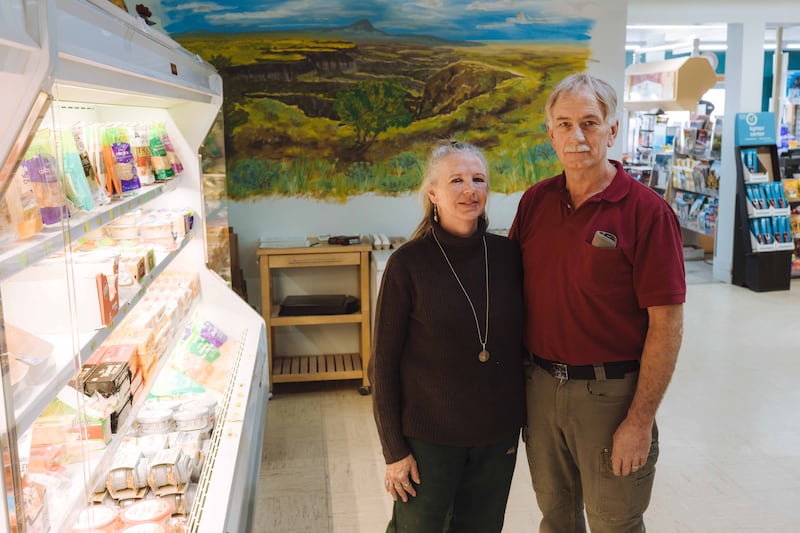
Different as they are, both versions of the West are shaped and strained by the same force: people. In Winnett, Carrell says, that remains the town’s enduring strength.
“Their hearts are in keeping that community alive,” he says. “The ones that grow up there step up from watching to being the leaders.”
Sense of place
Down a dirt road on the edge of town, piano chords drift from a one-story house. Inside, 90-year-old Gary Gershmel sings along to a country ballad on an upright piano that once belonged to his grandmother, who came west from Chicago in 1912 with her parents to homestead. Gershmel wears cuffed jeans and a neatly tucked pale-blue shirt, his gray hair slicked back at the nape of his neck. Quilts sewn by his wife, Linda, hang on the walls above him. On the living room mantel, wagon miniatures, cowbells and a silver plaque honoring Gershmel as Montana’s Outstanding Young Farmer in 1972 cluster together — tokens of a life rooted in Winnett.
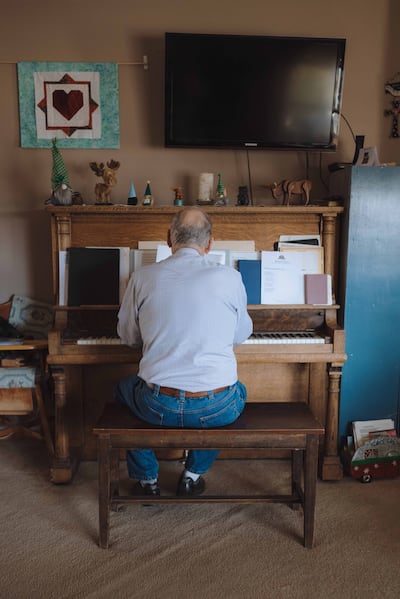
He remembers when the town felt like “a little city.” Between herding cattle on his family’s ranch or selling eggs with his sister, he went to see movies at the theater, grabbed malts at the drugstore and played saxophone at school dances. After two years at Montana State University, he came back to take over the family ranch, later serving in county government and even running for the state Senate in 1978. When the farm crisis of 1980 forced him off the ranch, he and Linda opened The Breaks, a general store and hardware shop they sold in 2017 to a longtime employee. These days, his world is smaller. His children and grandchildren live elsewhere, and most of his close friends are gone. He tends his garden in the summer, venturing into town most Thursdays for senior dinners at the community center. But “I’m a stranger in my hometown now,” he says.
Change has reached Winnett at a slower pace. Longtime residents, wary of what’s new, now share space with young families made up of those who grew up here and have returned, eager to modernize the town. For many, the decision to come back has less to do with proximity to highways or stores than with something harder to quantify.
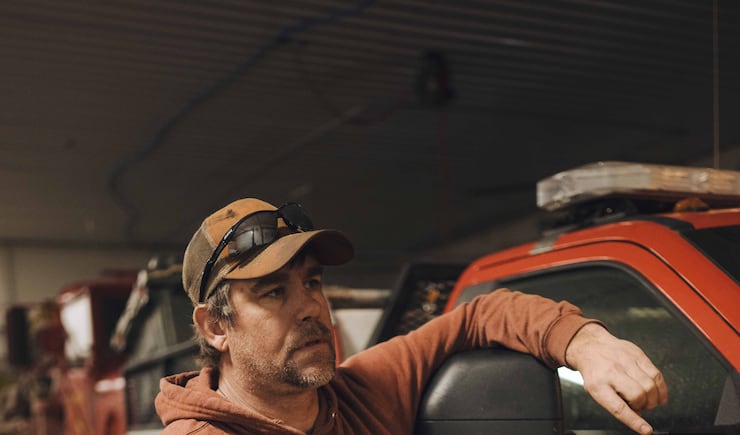
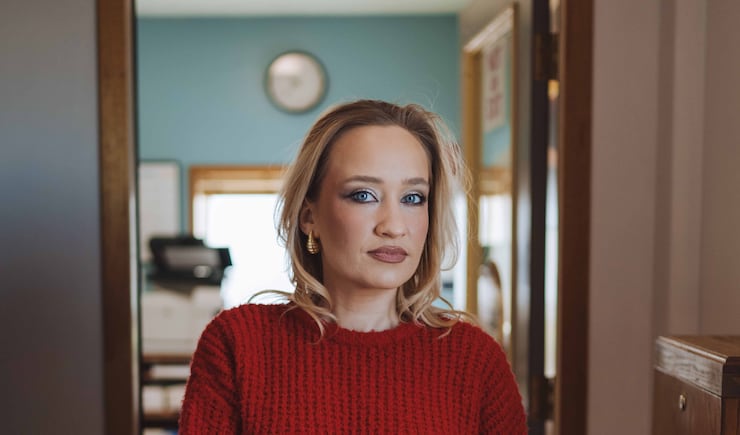
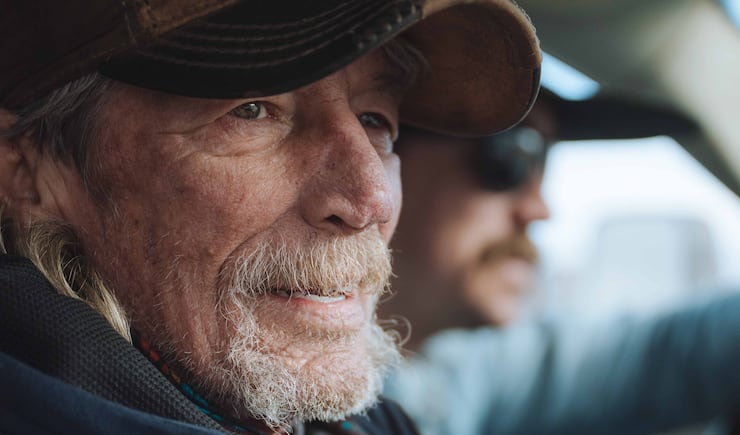


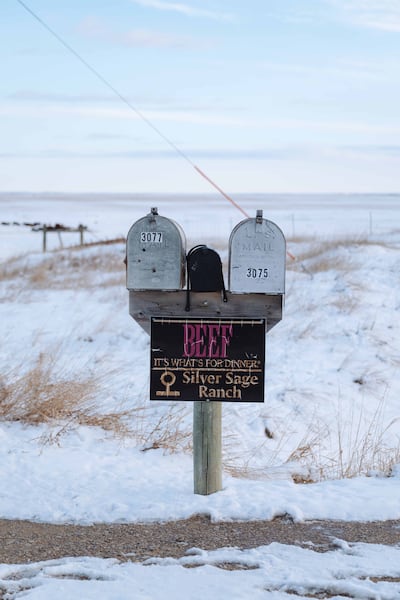
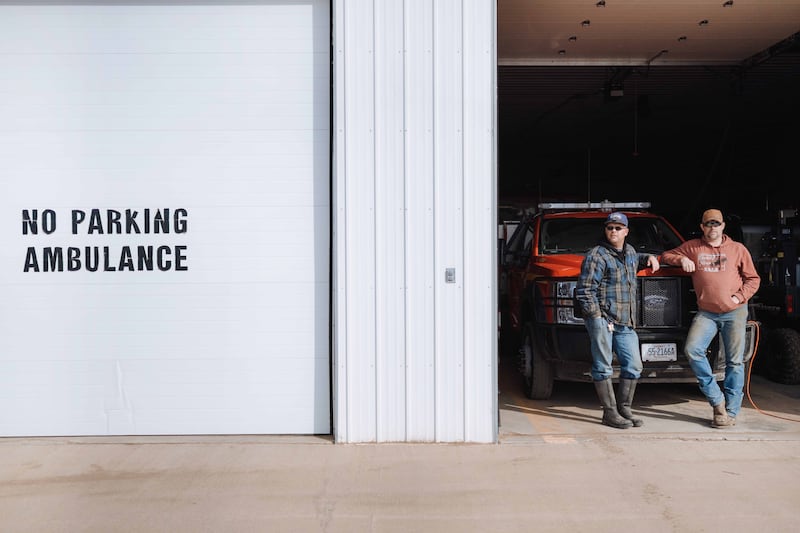
Jessica Schad, a sociology professor at Utah State University, studies how land use shapes communities beyond tax bases and infrastructure — what she calls “community attachment” and “sense of place,” both of which act as the bonds that keep small towns going. In Winnett, those ties are everywhere. The mayor does the mail route along dirt roads, the pastor volunteers as a paramedic and ranchers donate beef to the school cafeteria despite tight margins.
Unlike those who predict continued decline, Schad sees reason for cautious optimism for the small towns of the West. “You have to have something going on for people to be able to stay there,” she says. “But (there’s) this tension between it not becoming too much that it overtakes what you love about the place.”
The road ahead
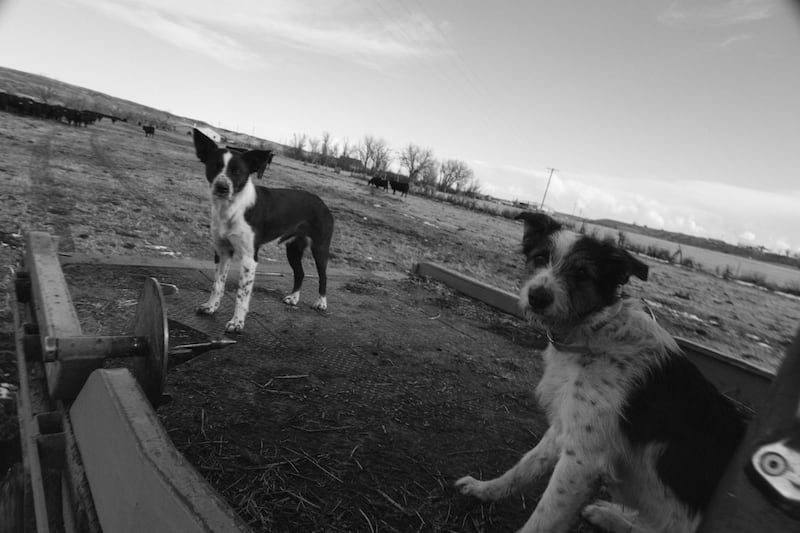
On a Tuesday afternoon in early March, a small crowd gathers on Main Street. Two red plow trucks block the road. A few servers step outside the town’s restaurant. Across the street, a pair of collies sit among the locals lining the sidewalk. Everyone waits for the send-off.
The high school boys basketball team, shared with nearby Grass Range, is headed to the first round of the state tournament. Only three players are from Winnett, but that hardly matters. A firetruck leads the parade, its siren whooping. Someone lights a can of firecrackers. A yellow school bus passes — “Winnett Public School District” painted in block letters along its side. Three boys lean out of the windows, their grins framed against a blue sky. And then, just like that, they’re gone.
This town still matters simply because, to some, it’s home.
For all its nostalgia, the West is still young. Most of its towns are barely over a century old — some still finding their footing, while others grow too fast for their own good or fade from memory.
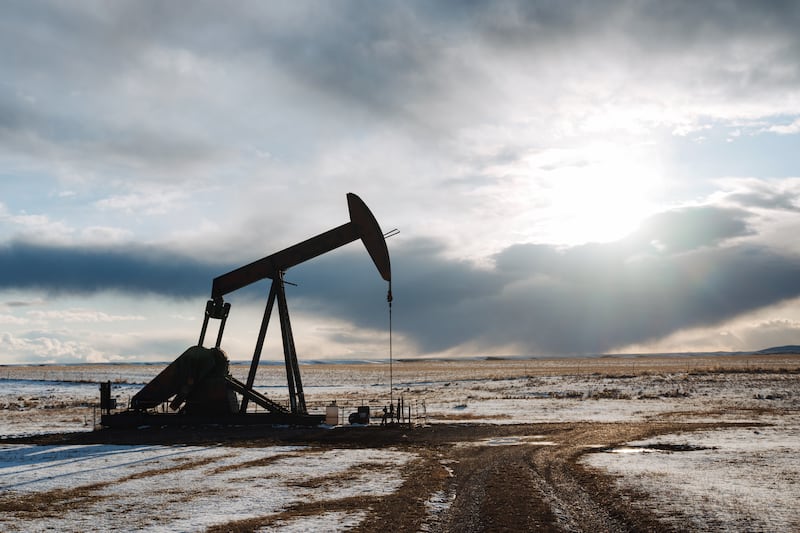
By Thursday, the boys will return from their overnight trip. But one day, soon, they’ll graduate, and no one knows whether they’ll stick around Winnett, a question that hangs over every small town and its next generation. For now, the bus driver winds out of the county toward Missoula, passing an oil well — one of 28 still pumping, though the industry hasn’t sustained life here in decades. Even so, its rusted arms rise and fall, a slow wave to anyone passing through, coming or going.
This story appears in the September 2026 issue of Deseret Magazine under the headline “Who’s left in Winnett?” Learn more about how to subscribe.