


Tessie Hutchinson is late.
“I forgot what day it was,” she says, as she runs up to join her husband and children, and her fellow townspeople in a circle, near the beginning of the fictional, horrifying short film, “The Lottery.”
“You wouldn’t have me leaving the dishes in the sink now would you Joe,” she says as she is greeted and shares a smile and a chuckle with her friends and those who are running the lottery.
Based on a 1948 short story from Shirley Jackson, this 18-minute film premiered in 1969 and has stuck with me decade after decade since I first viewed it with my classmates as a junior high school student in Northern California. In the film, old-timers in the town are clinging to their traditions, and among those traditions is holding the lottery, believing it’s necessary to ensure a good harvest.
I remember watching as each family drew lots from a black box. Every paper is blank, except for one marked by a black dot. Tessie’s husband drew the dot; each member of the Hutchison family — mom, dad and three young children — each now must draw again to see who among them will be selected.
The prize? The “winner” is stoned to death by the townspeople.
It’s horrifying even writing those words. What’s wrong with these people? Tessie is the unlucky one to draw the black dot. She lost the lottery and her family lost a mother. The movie is fiction, but it helped our young minds consider how wars start, how the Holocaust could have happened, and how behaviors are accepted even when irrational and leading to someone’s death.
The dark story — which was part of the “Short Story Showcase” by Britannica and designed to make people consider, among other things, their inhumanity toward each other, came to my mind earlier this week when Utah topped 1,000 deaths from COVID-19.
Each of those deceased lost the COVID-19 lottery. That sentence also feels too harsh to write. This is no movie. These are real people with real loved ones, and we ache for them. There is an inhumanity displayed by those failing to protect them — failing to make even the slightest adjustment to save their fellow townspeople.
“The number of Utahns who’ve died from COVID-19 exceeded the 1,000-mark Thursday, just two months after 500 deaths were reported. Even with a vaccine, that total is projected to double again in less than 10 weeks, to 2,000 deaths in the state,” wrote Deseret News reporter Lisa Riley Roche last week.
Is it asking too much to protect each other? Some people are yet willing to pick up that rock and hurl it at an unlucky passerby.
The idea appears absurd. But also absurd is getting behind the wheel of a car when you’ve been drinking, or refusing to do something as simple as keeping distance or wearing a small cloth over your face.
Inside the newsroom we have these conversations as we struggle to write stories that will actually influence change. Reporter Amy Donaldson wrote about Navy veteran Victor Hammond, whose family took to the streets to try and convince anti-mask citizens to consider his story.
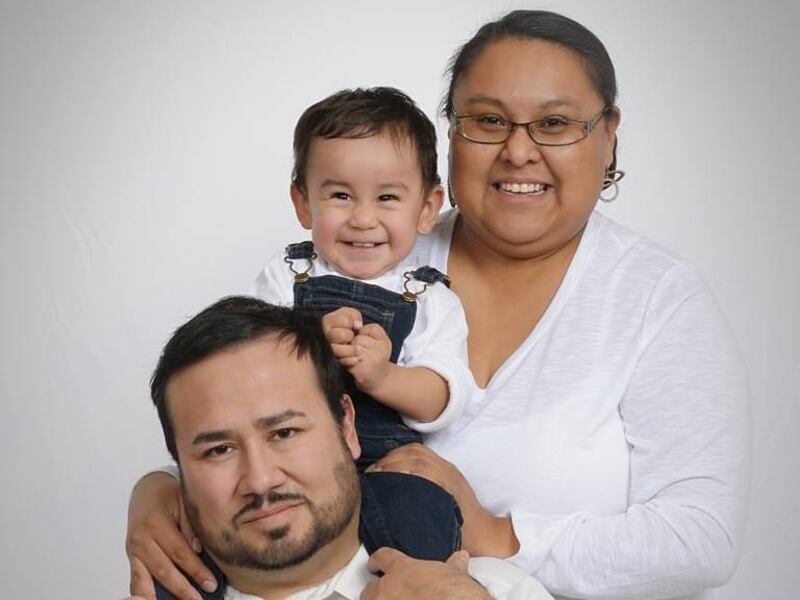
Deseret News reporter Ashley Imlay and KSL’s Garna Mejia told the story of Charity Montoya, a 41-year-old wife and mother who worked as a study director at a Salt Lake City laboratory.
“It was just bad luck of the draw, unfortunately,” said her husband, Rudy Montoya, when he talked to our reporters. “We don’t know who brought it home, but once it hit, it hit all of us. Her mother had to go to the emergency room, her sister was in ICU for a time as well, and it seemed like we were doing fine,” he recalled.
In March, Utah learned of the passing of Robert Garff, “the chairman of a car dealership conglomerate founded by his father and a former Utah House speaker who died Sunday from complications due to the new coronavirus,” as Riley Roche reported in the Deseret News at the time.
“The new coronavirus.” That’s what it was called then. It’s not new anymore.
There was good news Saturday, following an emergency meeting of the Centers for Disease Control and Prevention covered by Sara Israelsen-Hartley of the Deseret News. She’s been our go-to expert on vaccines — the approval process and what it will take to distribute in Utah.
Vaccines will begin to be distributed in Utah and across the nation, on Monday for health care workers and other emergency first responders. Full distribution will take time. So the virus isn’t going away. And some will need to be convinced to do their part for the community by taking the vaccine. Masks will still be required, probably through summer.
The stories we want to tell are those about people doing their part — like the health care workers that have been working nonstop, many isolated from their own families. They are more than doing their part; nearly 6,000 workers in Utah’s health care industry have been infected by COVID-19.
It is not too late to do the right thing. And Rudy Montoya, who lost his wife, said it eloquently in words we can all relate to:
“Everything seemed fine until suddenly it wasn’t.”