

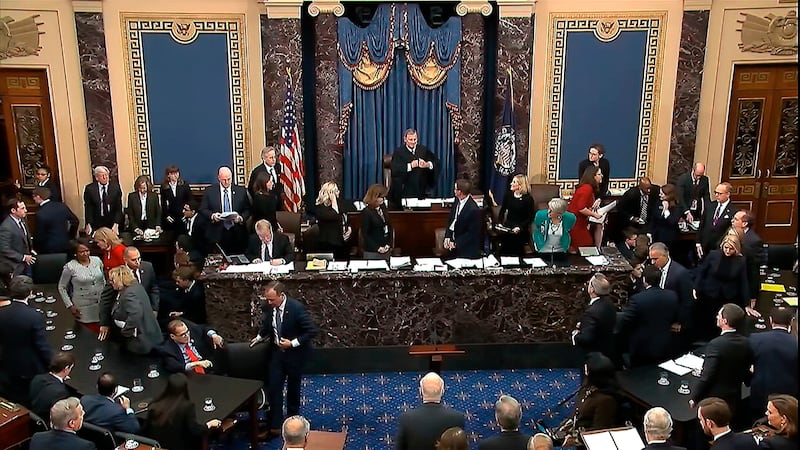
The impeachment hearings in the House, and the subsequent trial in the Senate, were so partisan, so filled with obvious election year overtones and accusations about the other side’s motives, that Americans could be excused for forgetting what it all was about.
So we remind you, this was about the president of the United States withholding congressionally approved aid to Ukraine as an incentive for the Ukrainian government to investigate his political rival, as well as what President Donald Trump believed was Ukraine’s role in influencing the 2016 election.
That this happened has been confirmed by testimony, emails and documents, which paint a picture of White House officials trying to warn the president against his actions. The president himself does not deny withholding the aid, offering several reasons for doing so and denying wrongdoing.
After a whistleblower raised questions about withholding the aid, Trump, in fact, released the money.
Did this rise to a level worthy of overturning the 2016 election and removing Trump from office? We would prefer a third way between the political death penalty of removal and the potentially dangerous and permissive message sent by acquittal.
The president should be censured. He should be made to understand that presidents cannot use the power of their office and the prestige of the United States to blatantly coerce foreign nations to help their political careers. Acquittal cannot be used as a vehicle to embolden chief executives to more questionable conduct.
Acquittal cannot be used as a vehicle to embolden chief executives to more questionable conduct.
There is precedence for this. The Senate censured President Andrew Jackson in 1834. It would send a clear message to the president, and to a world that may be wondering about America’s strength and resolve.
Regardless of what happens next, Americans should be clear about one thing. The system worked. If there were any winners to emerge from these impeachment proceedings, they were the nation’s founders.
The men who wrote the Constitution were not naive. They thoroughly understood politics and the propensity for partisanship to rise above patriotism. That is why they set such a high bar for impeaching and removing a president from office.
While members of the House must weigh the political ramifications of passing articles of impeachment, the Senate must reach a two-thirds majority to remove a president. That type of overwhelming majority requires a bipartisan effort that rises above party politics. By its nature, it would have to represent the will of the American people. It could not be done merely for disagreements over policy decisions, nor for any wrongdoing that doesn’t rise to a clear threat to the nation.
Despite three such trials now in the nation’s history, that bar has never been reached. When it appeared it might happen in 1974, President Richard Nixon resigned before the Senate trial could begin.
The impeachment proceedings also reveal much about the current state of politics, and about the American people. The nation is deeply divided politically, and in ways that often defy rational thought. The Democratically controlled House did not allow Republicans to mount much of a defense of the president during House hearings. And the Republican controlled Senate refused to allow any witness testimony, despite what might have been revealing accounts from people such as former White House security adviser John Bolton.
The political circus was encapsulated perfectly by a State of the Union address in which Republicans cheered and chanted, while Democrats groaned and the Speaker of the House dramatically ripped Trump’s speech to pieces in full view of television cameras.
Despite all this, Americans should take heart. Partisanship is not new to the nation, even if the current passionate version hasn’t been seen since the 19th century. The republic will survive. It will, in fact, continue to thrive. The wisdom of the founders has been vindicated again.