

Without the Electoral College, presidential candidates would not be forced to respond to the needs of states or regions that otherwise would lack the population to gain much attention on a national stage.
If states are not allowed the freedom to force those electors to vote in line with the wishes of a majority of voters in that state, this advantage would be lost.
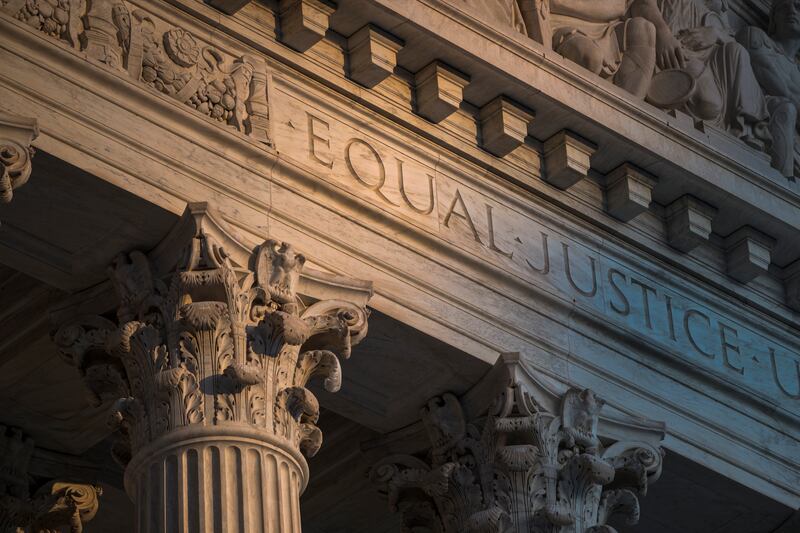
The U.S. Supreme Court heard arguments Wednesday in two cases, from Colorado and Washington state, concerning the fidelity of electors. In each state, the electors want the freedom to vote as they please, regardless of how people in their respective states voted. A federal appeals court ruled Colorado could not bind its electors, while the Washington Supreme Court ruled the opposite, that an unfaithful elector there could be rightly fined for $1,000.
This appears to be one of those constitutional questions for which no clear answer exists, despite the articulated wishes of Alexander Hamilton, as expressed in the Federalist Papers, that electors stand between the people and the presidency.
Yet we agree with Justice Brett Kavanaugh, who said during arguments, “If it’s a close call or a tiebreaker, we should not facilitate or create chaos.”
A nation full of rogue electors certainly would create chaos, something the nation doesn’t need atop a hyperpartisan election process already fraught with allegations of foreign interference and rumors of fraud. This is clearly a states’ rights issue, and states, if they please, should be allowed to force electors to follow the wishes of the people.
Rogue electors have been rare in the nation’s history. However, the final electoral count in 2016 was 304-227, in favor of Donald Trump, when, according to the popular votes tallied in each state, it should have been 306-232.
Those seven unfaithful electors might have been enough to change the results of a tighter election. A special type of hubris is required for an elector to assume that he or she should be more powerful than the will of the people.
To be fair, the Founding Fathers, skeptical of democracy, drafted a Constitution that originally allowed only one body, the House of Representatives, to be directly elected by the people. Senators were chosen by state legislatures, federal judges were appointed by the president and confirmed by the Senate, and presidents were chosen by electors who were chosen in each state.
Today, after two recent elections in which the candidate with the most popular votes ended up losing the Electoral College, some voices are calling for an end to this system entirely.
The original idea of a group of representatives choosing the president as a hedge against public opinion no longer fits current democratic sensibilities. However, the Electoral College today serves a vital purpose in giving voice to otherwise voiceless Americans in smaller states.
If presidents were chosen entirely by a popular vote, candidates would gravitate toward populous urban areas, ignoring the needs of smaller communities and rural areas. Utah, for instance, would not achieve the attention it did in 2016 when, for a brief period, it was considered a tossup.
It would be hard to find the constitutional authority for the Supreme Court to forbid states to allow electors to vote as they please. The more likely outcome would be for justices to uphold the power of states to force the fidelity of electors, should they please.
That would be the best result in these two cases, and the one most likely to preserve a peculiar election method that serves a great purpose.