

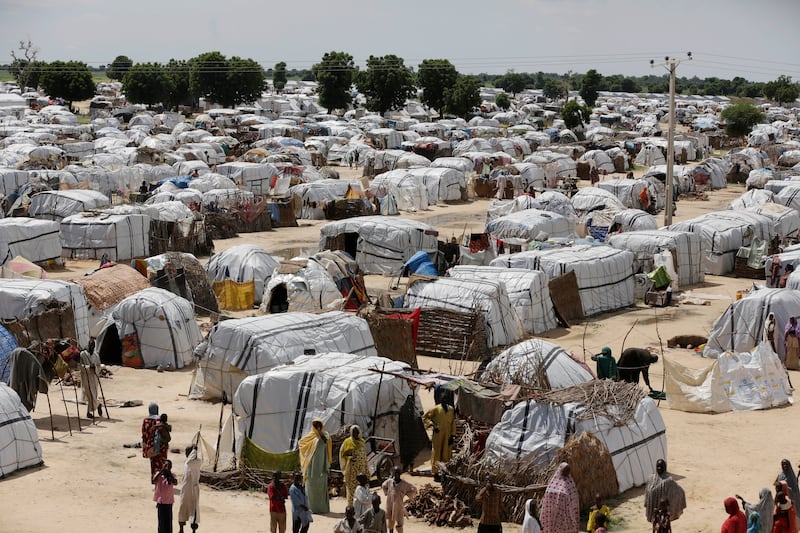

Nigerian soldiers descended on a small island village where Boko Haram militants were holding women and girls captive and engaged in a fire fight. Fati, held captive there, blacked out from fear. When she awoke, she was in a Nigerian military camp. She thought her nightmare was over. “I felt the happiest I ever had in my life,” she told a reporter from Reuters.
According to Reuters, Fati had been forcibly married to three different men, each one after the preceding one did not return. And, after months in captivity, she was pregnant.
Somewhere around a week later, she and five other rescued women were given shots and pills by men in military uniform. Maybe they were to treat their malnutrition, or malaria, as some were told. That is until the searing pain and the bleeding came. Their pregnancies had been ended, their babies aborted.
Since 2013, some 10,000 forced abortions have occurred in Nigeria, as reported by Reuters. Those numbers reflect the cases Reuters could actually establish. The true numbers could be much higher. The Reuters team spent more than a year meticulously researching and fact-checking the clandestine mass abortion program. Though denied by government officials, Reuters reporters got firsthand accounts from mothers, multiple soldiers, guards and health workers who said that abortions happened to “sanitize the society.” The children of insurgent Boko Haram, some believed, were predestined “by the blood in their veins” to grow up and try to overthrow the Nigerian government.
When Matthias Schmale, the top United Nations official in Nigeria, was asked whether forced abortions could happen without the knowledge of aid groups, he said he was “at this moment not in a position to make public comments to the media on this sensitive and important matter.”
According to the report, the pregnancies were a few weeks along to almost full-term. Women died. All the babies died. The procedures occurred “in at least five military facilities and five civilian hospitals in the region.” Only those who needed to know, knew. Involuntary abortions done in the hospital were often in a wing away from other patients, sometimes with names entered into a separate registers.
The soldiers interviewed by Reuters said their orders came from their direct superiors and included detailed information on “how to run and tally abortion transports, how to keep the programme under wraps and where to bury any casualties.” Health workers in the culturally-conservative country were ordered by Army officers to perform abortions.
In the process of uncovering the mass abortions, survivors stories are sadly similar. Injections — likely of oxytocin, and pills — likely misoprostol and mifepristone, were given to women without their consent. At least one survivor was asked if she would consent to terminating her pregnancy. When she said no, they told her she needed an “exam” and performed a surgical abortion without consent, according to Reuters.
Not only is abortion frowned on culturally, but it is against the law. In the northern part of the country, any person who is found guilty of participating in an abortion — including the mother, can go to prison for 14 years. If the mother died from an abortion, it can mean life in prison. It’s also against the Nigerian military code. The most recent version that is publicly available was issued in 1967, and states that “under no circumstances should pregnant women be ill-treated or killed.” Written laws notwithstanding women — especially during war — are often “ill-treated” in savage and gruesome ways.
According to four legal experts briefed by Reuters, forced abortions may amount to war crimes and crimes against humanity. The International Criminal Court Office of the Prosecutor declined to comment on Reuters’ findings.
One thing I’ve learned about perpetrators of crimes against humanity, going all the way up to genocide, is that no one ever says to the world community, “Hey — you know, we really ARE committing atrocities. You caught us.” Rather, they deny and deflect, act outraged and cast aspersions on both the victims and those who report the atrocities. In 2018, Amnesty International issued a report detailing accounts of the Nigerian military detaining, raping and starving women they had “rescued” from the Boko Haram. Nigeria’s response was to accuse the human rights watchdog of “cooking reports from time to time to demoralize the entire military system and the nation as a whole.”
Rather than finding relief at being rescued, many of the survivors face new miseries and ongoing trauma. They often find themselves rejected by their communities, somehow seen as “tainted” and “at fault” because they had been kidnapped and raped.
Fati was able to return home to her parents. She remembers happier days, studying Islam and wanting to help people by becoming a doctor, she told Reuters reporters. Now — her sense of safety has been destroyed and her ambitions crushed. She’s changed her mind about doctors and wanting to become one. “Doctors are heartless,” she said.
Holly Richardson is the editor of Utah Policy.