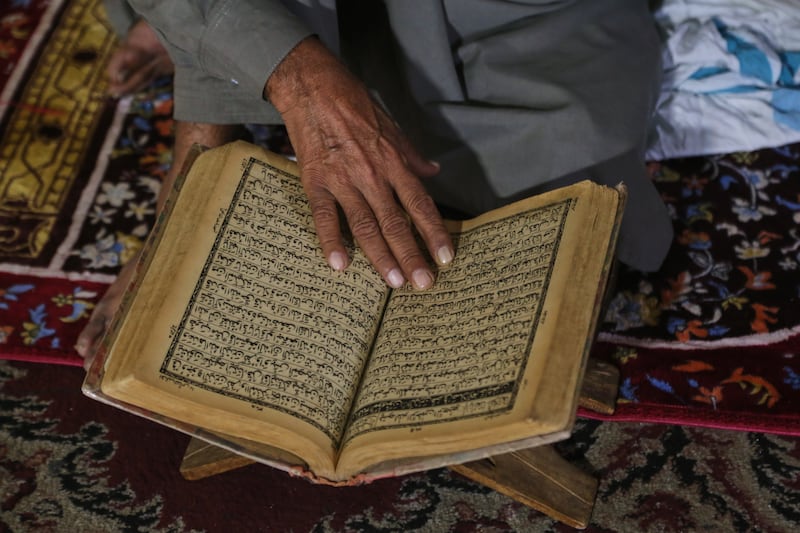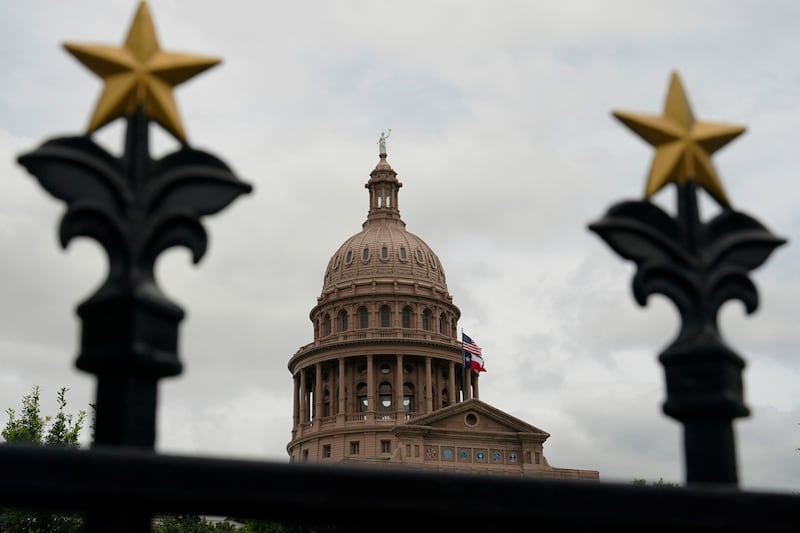

In Texas this month, a proposed Muslim housing development near Dallas has been cast as evidence of the “Islamization of Texas,” described not as a real estate project, but as a civilizational threat.
At a Fort Worth church just days after the primaries, panelists debated banning Islam, deporting Muslims, or reclassifying their faith as a political ideology. In Austin, after a deadly downtown shooting, Muslim families quietly increased mosque security and wondered whether their children would be targeted, not because of anything they had done, but because of what they believed.
I have seen this pattern before. In 2019, I wrote “When Islam Is Not a Religion,” warning that the effort to define Islam out of constitutional protection was already underway. What we are witnessing now is not new.
The argument is deceptively simple. Islam, a surprising number of critics say, is not truly a religion. It is a political system, a totalitarian ideology wearing a religious veneer. And if it is merely political, then it does not qualify for protection under the First Amendment.
I documented these kinds of assertions in a 2018 New York Times article. Since then, the argument has not faded; it has grown more explicit and more mainstream. In 2025, Sen. Tommy Tuberville from Alabama wrote in response to a violent incident abroad, “Islam is not a religion. It’s a cult.” That same year, a local Florida official, Robert Langevin, argued on social media that Islam is “as much a political ideology as it is a practice of faith,” and claimed Muslims were advancing that ideology in Western societies.
This language in the U.S. echoes that of Dutch politician Geert Wilders, who for years has described Islam not as a religion but as a totalitarian political ideology comparable to fascism or communism.
The pattern is familiar: redefine a faith as an ideology, recast believers as political actors, and constitutional protections begin to look optional rather than fundamental.
This claim does not live on the fringe. It has appeared in courtrooms, legislative proposals, and official statements by elected leaders. Lawmakers have introduced anti-Sharia bills premised on the idea that Islamic law poses a unique threat to American values, even though existing law already prevents the abuses they claimed to fear.
Lawyers have also argued that mosques were not entitled to the same protections as churches because Islam was inherently political. The debate was never really about foreign law. It was about who counts.
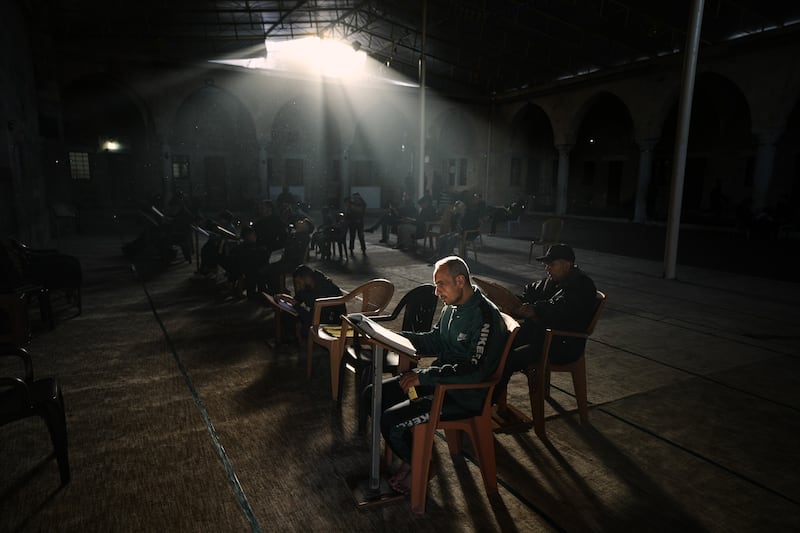
The controversy surrounding the EPIC community near Dallas fits squarely within this framework. A group of Muslim Texans sought to build a residential development anchored by a mosque and community amenities.
Critics responded with warnings of demographic takeover and creeping Sharia. Their concern was not traffic patterns or zoning density, but visibility. Muslims choosing to live together in intentional community became, in this telling, proof of an imagined transformation of Texas itself.
As of March 2026, the development’s legal status remains locked in a complex gridlock of local permit delays and state-level litigation. Additionally, in February 2026, the U.S. Department of Housing and Urban Development opened a federal civil rights investigation at the urging of Texas Gov. Greg Abbott who has called residential development “discriminatory” and invoked fears of “Sharia” while insisting that religion was being used as a “form of segregation.”
The phrase “Islamization of Texas” does powerful rhetorical work. It reframes Muslim religious life not as an exercise of faith, but as an ideological campaign. This casts ordinary civic participation as stealth conquest. Once that frame takes hold, extraordinary legal measures begin to sound reasonable.
Consider what follows if it does. Could the state deny mosque construction outright? Could Muslim charities be regulated as political organizations rather than houses of worship? Could Muslim religious arbitration be singled out for restriction while Jewish and Christian arbitration remains respected? Could Muslim inmates be denied religious accommodations because their faith has been labeled an ideology?
These are not abstract possibilities. They could be the practical consequences of redefining religion.
Religious liberty in America rests on a foundational principle: Government does not sit as theologian. It does not decide which doctrines are sufficiently spiritual or sufficiently American. The First Amendment protects religious exercise because we do not have to prove that our beliefs are popular or comfortable in order to deserve constitutional protection.
To declare that Islam is not a religion is to make Muslim rights conditional on political approval.
History should make us wary of this move. Catholics were once portrayed as loyal to Rome rather than the Republic. Jews were depicted as operating hidden networks of influence. Latter-day Saints were treated as an inherently political movement undeserving of constitutional standing.
In each case, the pattern was the same. Redefine the unfamiliar faith as political, then deny it full protection. The faces changed; the logic did not.
Texas prides itself on limited government and robust religious liberty, and many of the same leaders now warning about Islamization champion strong protections for Christian religious exercise. That instinct for protection is sound.
But it cannot be principled if it is selective. Evangelical Christianity shapes views on marriage, abortion, and public policy. Catholic social teaching animates debates about poverty and immigration. Orthodox Judaism structures daily life in ways that touch commerce and community. Nearly every faith tradition carries moral commitments into public life, and none of that strips it of its religious character.
The test of religious freedom is not how we treat the familiar. It is how we treat the faith that unsettles us.
Muslim Texans describe a lived reality in their own families and communities that looks nothing like an ideological campaign. They celebrate Ramadan under American and Texas flags, run businesses, serve in public office, and raise families in the same suburbs now accused of harboring civilizational threats. Their lives resemble ordinary American pluralism. The question is whether American pluralism will extend to them.
When I wrote “When Islam Is Not a Religion,” I argued that the struggle over Muslim religious liberty was a test of the coherence of religious freedom itself. That test is before Texas again. A government that labels a faith political in order to place it outside constitutional protection has already abandoned neutrality. And a religious liberty that applies only to the comfortable is no liberty at all.