


The rights of one religious minority group are inherently connected to the rights of another. No one, anywhere in the world, has to look very far from their own doorstep to see groups in need of justice and protection.
In 2018, senior ecclesiastical leaders of The Church of Jesus Christ of Latter-day Saints, including Sharon Eubank, director of Latter-day Saint Charities, and Elder Anthony Perkins, were invited to share insights about the journey from “persecution to participation” in a conversation with an international NGO focused on responding to the Yazidi genocide.
While the experience of the Yazidis and Latter-day Saints should not be compared directly (the scale and horror of the Yazidis’ survival of genocide stands on its own), Latter-day Saints are uniquely positioned with our own history of persecution to stand with communities affected by genocide or identity-based extermination. After Latter-day Saints faced their own extermination threat, their story didn’t end there. Nor will the Yazidis.
A history of enormous persecution
The Yazidis believe in a universal god and the holy angel Tawusi Melek, who came to the earth to redeem humanity. He presents as a holy peacock on the earth. The Yazidis have an entirely oral religious practice, shared with song and dance, along with the sacred rituals of making and eating holy bread, which is passed down from generation to generation.
Like monotheistic believers generally, Yazidis believe in one supreme Creator and understand human life as shaped by a moral order expressed through worship, ritual and a sense of accountability for one’s actions. And like Latter-day Saints, the Yazidi people place a strong emphasis on community, sacred ritual practices and the transmission of faith across generations through close-knit families and lived tradition.
Yet Yazidis have faced centuries of persecution, largely because their distinct religion has been widely misunderstood — especially the false belief that they “worship the devil” — and because of their status as a smaller minority without written traditions.
This began as early as the faith’s beginnings in the 12th century, when its tradition took shape around the teachings of Sheikh Adi ibn Musafir in northern Iraq. Over the centuries, they became frequent targets of persecution by regional powers, including repeated campaigns under the Ottoman Empire.
That long pattern of vulnerability continued into the modern era, from forced displacement under Saddam Hussein to mass-casualty attacks in the 2000s. This culminated in the 2014 genocide, when the Islamic State group (also known as ISIL or Daesh) crossed the Syrian border and carried out a systematic and planned extermination of the Yazidi people because they were not “people of the book,” or religious followers with scripture.
Men and boys were separated from their families, shot and killed, and buried in mass graves. Women and girls were sold into sexual slavery. Some 2,600 women and girls are still missing today.
Small international steps
Awareness of these tragic events has increased through the work of Nobel Peace Prize Laureate Nadia Murad and efforts from thousands of other advocates who have elevated the plight of the Yazidis to the international community. A handful of NGOs remain committed to supporting the Yazidi community and others affected by the genocide, including religious minorities in the region, refugees and displaced people.
In an inspiring act of genocide resistance, many of these NGOs are run by Yazidi survivors. Additionally, in landmark genocide criminal cases, Islamic State group fighters have been prosecuted in France, Germany, Sweden and the Netherlands.
Enormous challenges remain in spite of these efforts. The United Nations commissioned an Investigative Team to Promote Accountability for Crimes Committed by Da’esh/Islamic State, called “UNITAD,” that has worked to uncover mass graves, provide witness protection, document and archive materials, and run forensic laboratories.
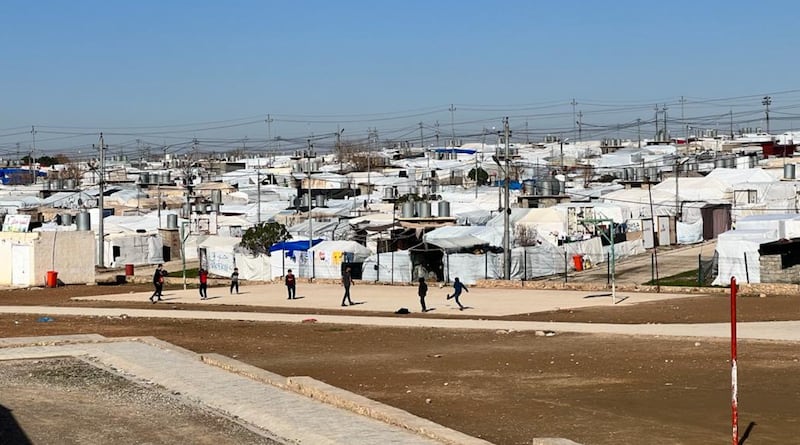
Yet that team ceased operations on Sept. 17, 2024, in a controversial request from the Iraqi government. Over 150,000 Yazidis still live in tents in Internally Displaced Person (IDP) camps with limited access to the resources needed to transition to a life of healing and thriving after the genocide. The Yazidi Survivor Law in Iraq, which promises reparations and financial support to survivors, has been implemented with little consistency or clarity, and administrative burdens and paperwork hurdles create huge barriers to the fund.
Perhaps most shocking are the diminished efforts from the international community to find the missing Yazidi women and girls in ISIL human trafficking circles, subjected to constant sexual abuse, torture and slavery. In many cases, family members know where their missing loved ones are but do not have support from the government, military or other capable organizations to rescue them.
Lessons could be learned from the campaigns to rescue the Chibok girls, which started with international media efforts to highlight the plight of girls and what could be done. Yet in this case, despite the tireless efforts of activists, awareness and urgency remain limited in the international community.
Preventing future violence
Preventive efforts will be needed to truly overcome the effects of genocide. Any country that has experienced genocide in the past is three times more likely to experience genocide in the future, which means that even when bullets stop flying, strategic efforts to disrupt the cycle of genocide are crucial to ensure the prevention of genocide in the future.
Preventing genocide is achievable and measurable, and it benefits the world. As the Yazidi population is strengthened and supported in Iraq, the national economy will improve, which will strengthen neighboring countries, the region and global trade partners.
While upholding human dignity and protecting human lives, investing in genocide response will strengthen a world equipped to prevent atrocities in the future. Efforts in Iraq can model a path forward for other genocide survivor networks — much like the Holocaust survivors and Mothers of Srebrenica before them.
Healing from the past
Addressing collective trauma in any community is key to disrupting the cycles of identity-based violence that plague our world — something we have seen directly in our work at Bellwether International. Unless addressed, these traumas are transmissible to future generations who feel the neurological, physical and mental load of those grievances.
Through an evidence-based trauma healing framework that draws on cognitive behavioral therapy, Yazidi women are leading their own healing by training as peer facilitators and then working together to address individual trauma through group sessions. These gatherings can be held anywhere but often take place in the humble setting of a displacement camp, under the protection of the thin white plastic tents that still dot the horizon in the Kurdistan region of Iraq.
Hadya is a Yazidi survivor who was captured by ISIS in 2014 and liberated after two years along with six of her children. After her liberation, she experienced mental breakdowns, struggling with sleep difficulties due to nightmares and overthinking. Whereas at first, she couldn’t sleep or eat well and would get very angry with her daughters and others around her, Hadya made progress in her own trauma healing.
“Now, I can proudly say that I have control over my life,” she told us.
Many of the Yazidi women who complete trauma healing sessions go on to start their own businesses and create livelihoods through vocational training.
This year, I am renewing my own commitment to seek justice for the Yazidis and raise awareness and resources to prevent genocide in our world. As long as we live in a world where groups like the Yazidis are at risk of genocide, people of faith should work together to prevent and end such horrible atrocities from ever taking shape.