

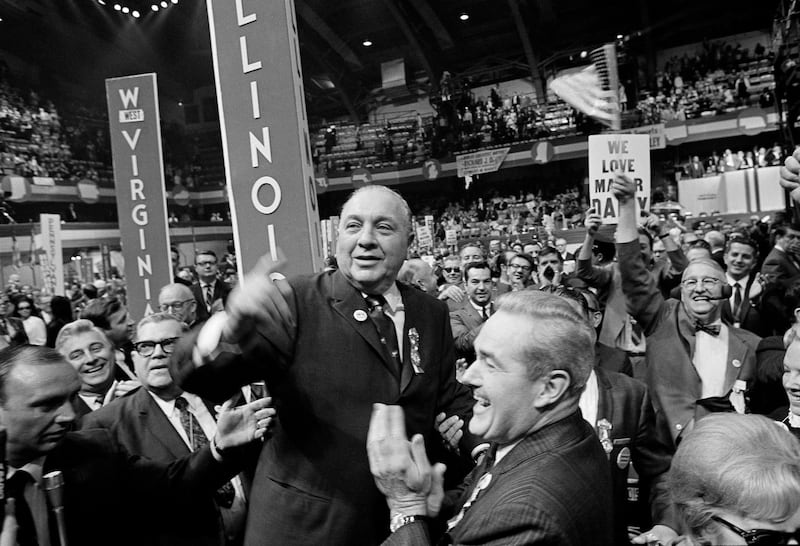
When I arrived in Chicago in 1963, it was the most beautiful city I had ever seen. It was defined by power, density and political machinery. The lakefront gleamed, the neighborhoods thrived and the city moved with a confidence that felt almost physical. Chicago had something no other city had: Richard J. Daley.
He wasn’t just a mayor. He was the city’s center of gravity. People sometimes called him a “kingmaker,” but what mattered more was that he held the city together — politically, administratively and culturally. Chicago knew who it was because Daley knew who it was. His presence gave the city coherence.
And then, in December 1976, he died.
The change was immediate. You could feel it in the air. Chicago had peaked, and with Daley’s passing, the long decline began. Not because of any single decision or crisis, but because the city had built its stability around one man. Mortality exposed the fragility of that arrangement. There was no clear succession. No one prepared to carry the weight he had carried. Chicago entered a period of drift, and drift is the first stage of decline.
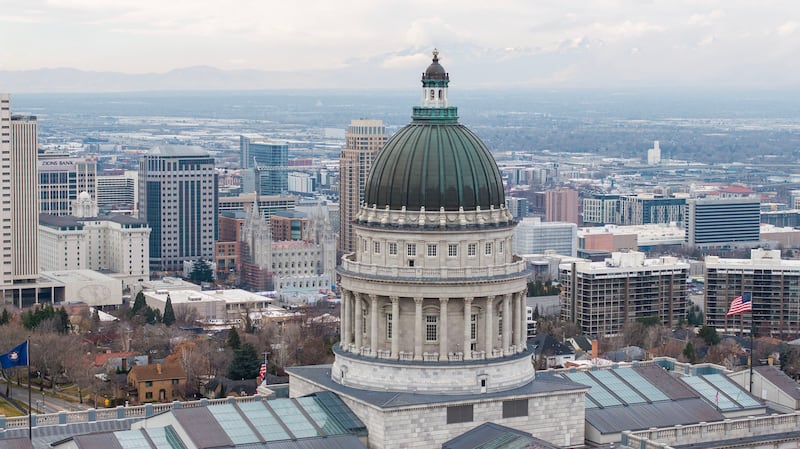
Now, decades later, I live in Utah, watching Salt Lake City rise with the same energy Chicago once had. It is a city defined by order, growth and institutional continuity. It is attracting talent, capital and national attention. Salt Lake City is becoming a regional center of gravity. It has momentum — the kind that makes a place feel like the future is unfolding right in front of you.
But Salt Lake City is different from Chicago in one crucial way.
Its civic identity is not anchored in a single individual. It is shaped by a long-standing religious and cultural institution whose influence extends across generations. Many Utahns see this influence in the city’s norms, expectations and sense of community. Where Chicago’s continuity rested on one man, Salt Lake City’s continuity rests on an institution that outlives individuals.
Both forms of power are formidable. One is weakened by mortality. The other is strengthened by the lack of it. One rises and falls with the lifespan of a man. The other persists because it is carried by many. Yet even institutions, for all their endurance, often concentrate their direction in a single guiding figure at any given moment. The difference is that when one leader passes, the institution remains.
This distinction matters for Salt Lake City’s future.
Chicago’s turning point came when its central figure was gone. Salt Lake City’s turning point, if it comes, will not be triggered by mortality, but by whether its guiding institution can adapt to the pressures of growth, diversity and change. The city is expanding rapidly. Housing costs are rising. Infrastructure is strained. Newcomers are arriving with different expectations and different experiences. These pressures will test the city’s cohesion.

The question for Salt Lake City is whether it can maintain its sense of identity and continuity as it grows — not because of one leader, but because of the strength of its institutions and the values they carry.
Chicago’s story is a warning. Salt Lake City’s story is an opportunity.
Cities rise on momentum. They endure on continuity. Salt Lake City has the rare chance to have both — if it prepares for the moment every growing city eventually faces. Its future won’t hinge on the lifespan of a single leader, but on whether its guiding institution can evolve as the city becomes more complex. Growth brings pressure: rising housing costs, new demographics and the strain that comes when a once homogeneous place becomes a crossroads. These forces will test the city’s cohesion and its confidence.
But they also present an opening.
Salt Lake City can choose to meet this moment with clarity about who it is and what it stands for. It can strengthen the values that have long given it stability while adapting to the realities of a changing world. That balance — continuity with evolution — is what separates cities that drift from cities that endure.
The question now is whether Salt Lake City will meet this moment with the steadiness that has long defined it — and avoid the drift that follows when a city lets go of the principles that made it strong.