

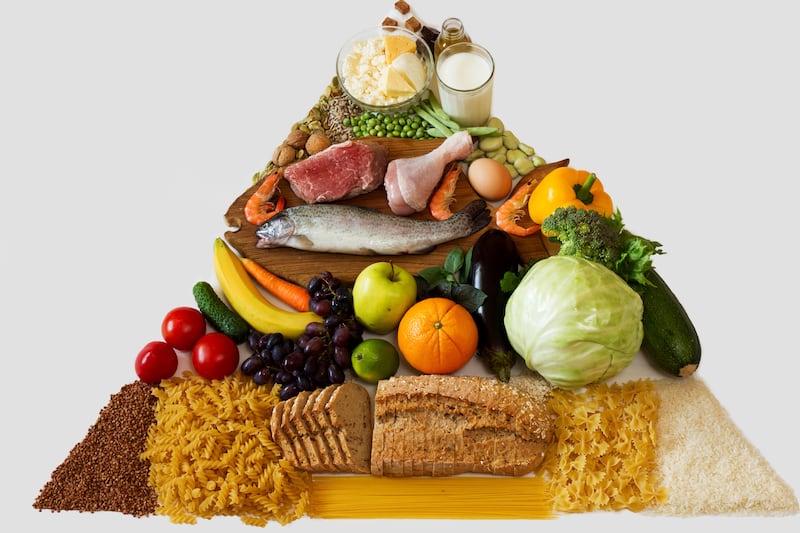
At the beginning of 2026, the new 2025-2030 Dietary Guidelines for Americans (DGA) were introduced, which feature an upside-down pyramid, with various foods throughout. At the surface level, the new food pyramid and recommendations seem to have logical messaging about improving the American diet, including:
- Eat vegetables and fruits throughout the day, focusing on whole forms
- Include healthy fats from whole foods such as meats, seafood, eggs, nuts, seeds, olives and avocados
- Focus on whole grains while sharply reducing refined carbohydrates
However, as you dive deeper into the recommendations, there are several confusing and conflicting messages that could lead to health risks. Realfood.gov provides information on the prevalence of poor health and chronic conditions that many Americans face. It includes a picture of the old food pyramid with a caption, “we’ve been misled for decades” about nutrition recommendations. While this may seem compelling, there’s a serious problem with this argument; the old food pyramid hasn’t been used for 15 years.
What happened to MyPlate?
In 2011, MyPlate was launched as a replacement to the old food pyramid. The visual of the plate demonstrated the nutrition recommendations: half the plate was fruits and vegetables, and half was grains and protein. Dairy was included as a smaller circle at the top of the image.
This model was a useful reminder for how to plan your meals in a way that the old — and the new — food pyramids lack. Claiming that the public has been misled for decades about food guidance while ignoring MyPlate’s role for the last 15 years is dishonest at best. This has created a harmful message that nutrition experts have been misleading the public about evolving nutrition guidelines.
The new pyramid
The inverted pyramid gives readers a false impression about what foods should be recommended or limited. Madeleine Weems, MS, RDN, a Utah-based dietitian speaking in a personal capacity, explained: “The new Dietary Guidelines for Americans suggest 2-4 servings of grains per day, but their placement at the bottom of the inverted pyramid gives consumers the false impression they should consume them in lower quantities.”
Weems also expressed concern about how the inverted pyramid features red meat: “High in protein, iron, zinc and vitamin B12, red meat is certainly a part of a healthy diet when consumed in moderation. However, observational data suggests diets high in red meat are correlated with certain cancers and cardiovascular disease. Health professionals are concerned that the new guidelines may give the wrong impression when they say ‘prioritize protein at every meal’ and the first thing you see when you look at the inverted pyramid is a raw steak, directly next to a container of ground beef.”
These types of food are high in saturated fat, and when recommending cooking strategies for flavor, the new guidelines encourage the use of beef tallow and butter, which are also high in saturated fat. The old MyPlate recommendations encouraged eating a variety of proteins low in saturated fat to reduce risk of cardiovascular disease. Unfortunately, while the new pyramid does recommend plant-based proteins and fats, such as legumes, nuts and soy products, they are promoted much less than previous DGAs.
What impact could this have on us?
While the 2025–2030 guidelines aim to simplify healthy eating, their visual design and emphasis on certain foods may unintentionally mislead the public and worsen health outcomes. These new guidelines may have effects beyond simple nutrition suggestions. Weems shared, “The DGA informs the guidelines for the National School Lunch Programs. Schools adhere to the guidelines set by the school meal standards to be reimbursed by the federal government. The new DGA will eventually impact Utah’s school children. This could mean more saturated fats in their diet, but also less ultra-processed foods.”
There is also concern for the ability of all Americans to be able to access food. RealFood.gov claims that these new recommendations are rooted in “personal responsibility.” This does not account for how food prices have continued to rise while wages have not, nor for recent federal funding cuts to nutrition assistance programs such as WIC and SNAP.
The suggestion of personal responsibility for nutrition, while understandable in theory, ignores the reality that when on a very limited food budget, choosing fresh, protein-rich foods may cost more than a frozen pizza. Gina Cornia, executive director for Utahns Against Hunger, said, “There needs to be an acknowledgment that SNAP benefits are inadequate for a wholefood diet.”
Neil Rickard, Child Nutrition Advocate for the same organization, expanded on her concern, stating, “While there may be downstream impacts on SNAP, WIC and the school meal participants on programs as a consequence of the changed dietary guidelines, these impacts pale in comparison to the ongoing assault on the mere existence of these programs. We know that food insecurity itself worsens nutritional and health outcomes, and there’s plenty of challenges on that front.”
They put pressure and blame on individuals who may be unable to follow the guidelines due to financial strain. These guidelines ignore the growing reality that our food system faces serious structural challenges, and that government policies are perpetuating the problem, rather than making America healthy again.