

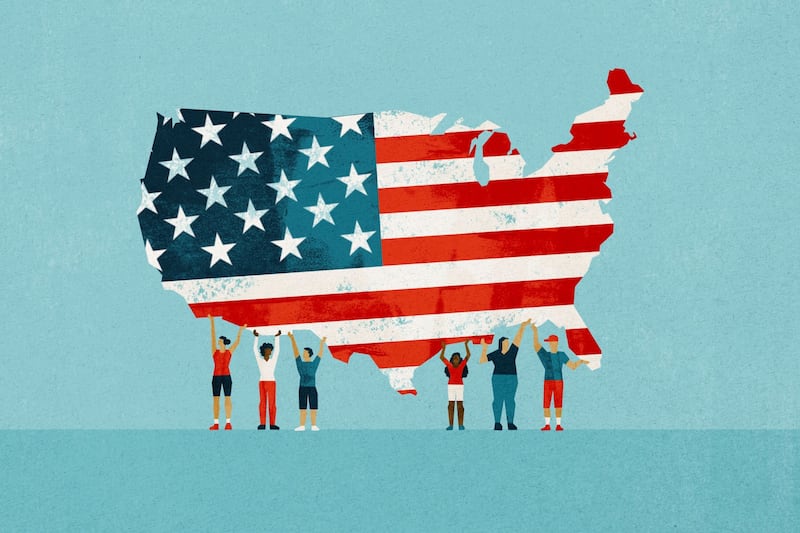
True patriotism is tough love. It requires participation, criticism and persistence, especially when doing so is inconvenient or uncomfortable.
Earlier I understood patriotism mostly as symbolism: flags on porches, the national anthem before games and fireworks on the Fourth of July.
Learning more about our republic in an American National Government class at Utah Valley University challenged my comfortable definition and replaced it with something more demanding. I learned that genuine American pride is not passive admiration of a flawless nation; it is the active responsibility of holding the country accountable to its own promises.
My understanding began shifting when I listened to the podcast “What Does It Mean to Be Patriotic in America?” from “Top of Mind with Julie Rose.” The speakers argued that real patriotism often looks like criticism. One noted that waving a flag while ignoring injustice resembles nationalism more than patriotism. Another recalled that the Founders themselves were “troublemakers” who refused to accept taxation without representation.
For me, the most memorable idea was that loving America means caring enough to fix her flaws for the next generation. As someone preparing to serve in the Army National Guard, I had long equated patriotism primarily with military service. This podcast widened that lens. Service can also mean speaking up, marching, voting and refusing to remain silent. From that point forward, I approached the course and its assignments not as a spectator, but as a participant.
With that in mind, I wrote to my congressman about the unfunded clinical hires authorized under the PACT Act. I chose this issue because my future career is dedicated to helping veterans heal from trauma, and it troubled me that Congress expanded benefits without fully funding the staff required to deliver them.
Writing to Washington felt different from any of my academic assignments. It was not about the grade; it was about calling for accountability. For the first time, I experienced patriotism — not as gratitude for what government provides — but as insistence that government honor the commitments it has made. That small act taught me that democracy only works when ordinary citizens refuse to be passive observers.
A class simulation of the New York ratification convention drove this point deeper. I was assigned the role of Henry Oothoudt, chairman of the convention.
Over three class periods, we students debated and voted on the Constitution as delegates did in 1788. My responsibility was to keep Federalists and anti-Federalists engaged while guiding the discussion toward a decision.
I left each session somewhat exhausted and profoundly grateful. Those original delegates were willing to risk their property, reputations and even their lives because they believed ordinary citizens could govern themselves. Stepping briefly into their position helped me understand that the Constitution was not born as a finished product; it was a leap of faith sustained by civic courage. My acts of listening critically and writing assertively were part of the same long relay of citizens refusing to let self-governance fail.
This new understanding of patriotism has permanently reshaped how I view the uniform I will wear and my future family. When I commission as an officer and later practice as a clinical therapist in the Guard, I will not see my service as separate from civic engagement; it will be one single obligation.
Healing veterans’ invisible wounds is patriotic. So is teaching my future children that love of country shows up in school-board meetings, letters to senators, jury duty gladly served and voting every time — even in primaries and midterms when nobody is watching. Civic responsibility is not something we outsource to elected officials; it is something we practice daily.
As long as we keep writing the letters, casting the ballots and raising children who understand that tough love is the truest love, the American experiment will not fail.
The founders knew the Constitution was unfinished. They left the last article open for “We the People” to keep perfecting it. My acts of patriotism are small amendments in this endless project.
American pride becomes not a feeling but a responsibility. It is showing up when it is inconvenient, speaking up when it is uncomfortable, and voting when it feels pointless.
As long as we keep writing the letters, casting the ballots and raising children who understand that tough love is the truest love, the American experiment will not fail. I intend to spend my life — on battlefields, in therapy rooms and at kitchen tables — proving that this promise is still worth keeping.
The Constitution and our children are counting on us.
This bit of civics is supported by the Center for Constitutional Studies. Learn more about how we are marking the Declaration of Independence’s 250th anniversary.