

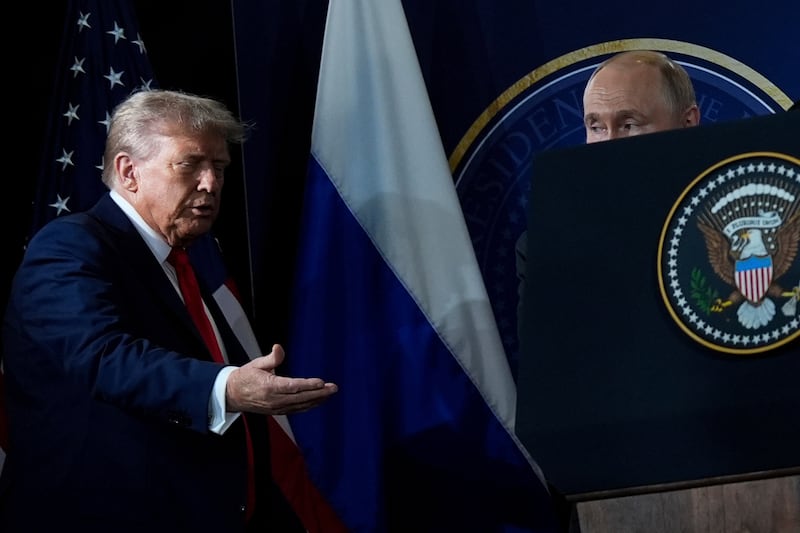

Could President Donald Trump’s recent decision to draw down U.S. troops from allied European nations embolden Vladimir Putin to spread his flagging war in Ukraine to some of NATO’s smaller nations along the Baltic Sea?
A Russian drone struck an apartment building Friday in Romania, injuring two people. It was the sort of incursion into a NATO country that heightened tensions but probably didn’t rise to the level of widening the war between Russia and Ukraine.
Russia is becoming adept at that sort of thing, pushing the limits of the alliance.
Sweden and Lithuania
Sweden, for instance, has been putting up with acts of sabotage in recent months. Politico reports that the strategic Swedish island of Gotland, a key to controlling the Baltic Sea, has a list of such attacks, including a water leak caused by sabotage to a critical pump, the severing of a fiber-optic cable under the sea and a spate of radio interference affecting emergency services and aircraft communications.
Michael Claesson, Sweden’s defense chief, called these attacks concerning. “Obviously the Russian doctrine … is actually to try to identify weaknesses and vulnerabilities and do whatever they can to exploit them,” he told Politico.
In Lithuania, air raid sirens forced the government into a bunker last week because of concerns that Russian drones were approaching Latvian airspace.
In America, few of these stories get attention. Europe’s problems rank far down the list of daily concerns — certainly below the war in Iran, with its immediate impact on gas prices and inflation. But they dominate discussions in Europe, as I have learned through recent trips to Sweden.
Trump’s drawdown
Many experts are predicting they could suddenly dominate America’s attention, too, if the worst happens. Would President Trump honor the nation’s agreements to fully defend its NATO allies?
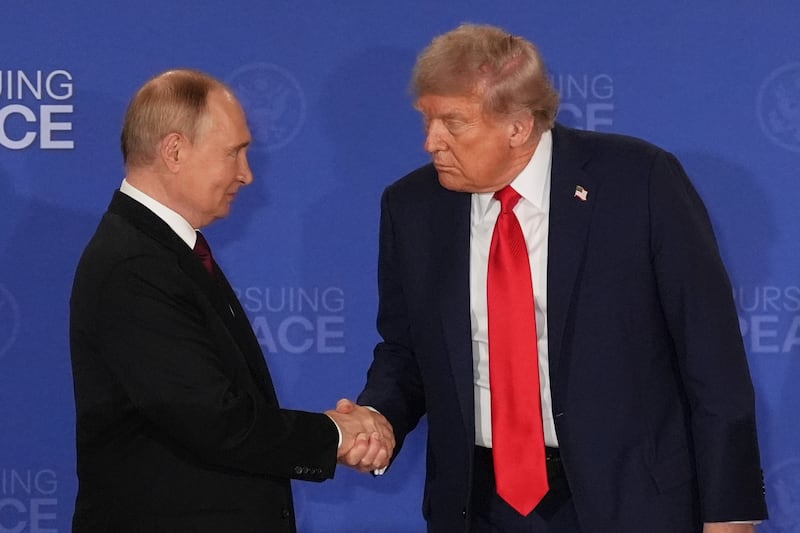
Trump recently announced the withdrawal of about 5,000 U.S. troops from Germany and canceled the deployment of a battalion trained in long-range precision strikes. As an essay in Foreign Affairs noted, he also called into question the need for a rotating combat team headed for Poland, much as he had canceled one bound for Romania last year.
The author of that essay, Penn Washington’s executive director and former assistant secretary of defense during the Biden administration Celeste A. Wallander, noted that “the Pentagon has informed NATO that it will shrink the forces Washington would rapidly deploy to Europe in a crisis — that is, in the event of a Russian attack on alliance territory.
Wallander and others believe Putin is watching with interest. The drawdown, she said, increases the risk of a nuclear showdown.
“By pulling the unit and signaling that the United States will commit less to reinforce the alliance in a crisis, the Trump administration has effectively delegated conventional defense to Europe, weakening the elements of deterrence Moscow fears most,” she wrote.
“Now, Russia could be tempted to seize territory in the Baltics or Poland through its client state Belarus and dare NATO to escalate, knowing that its doctrine permits limited nuclear strikes against even conventional forces that threaten newly held territory.”
Why would Putin escalate?
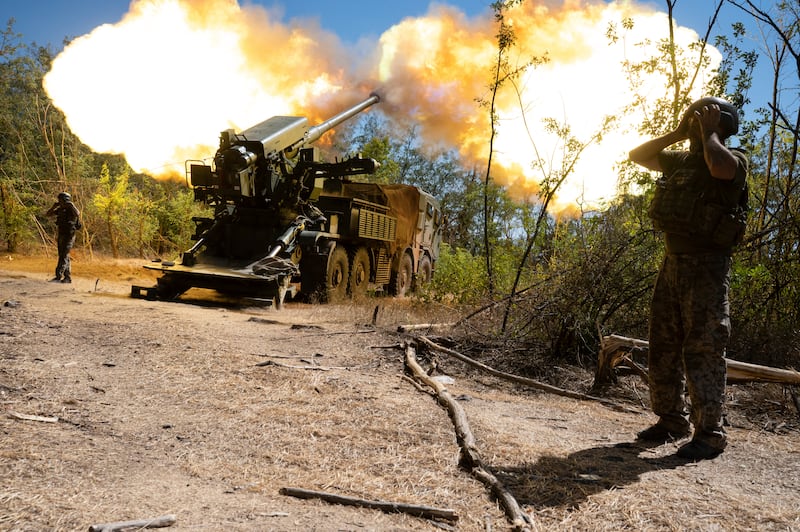
But why would Putin do such a reckless thing at a time when, according to The Wall Street Journal, Russian forces are suffering casualties in Ukraine numbering about 35,000 per month?
The answer is in the question, according to Kaja Kallas, the European Union’s head of foreign affairs and security policy. Russia needs to recruit a lot more soldiers.
“If you just mobilize for this war (in Ukraine), then you would send a signal that you are not really winning this war,” the Journal quoted her saying. “So there comes the point where they need to escalate in order to justify the mobilization. And that’s a very dangerous point.
“Of course, nobody sees in the head of Putin, but this could be the calculus to move forward and change the linearity of this war.”
Others note that Putin is well aware of the Trump administration’s lack of enthusiasm for NATO and how the war in Iran has raised fuel prices in Europe as well.
The Journal quoted Swedish Defense Minister Pal Jonson saying, “The security environment in Europe has deteriorated during the last 24 months, and we see a greater inclination from the Russian side to take greater operational risks in their hybrid operations, moving up also to kinetic elements.”
No signs of a pending attack
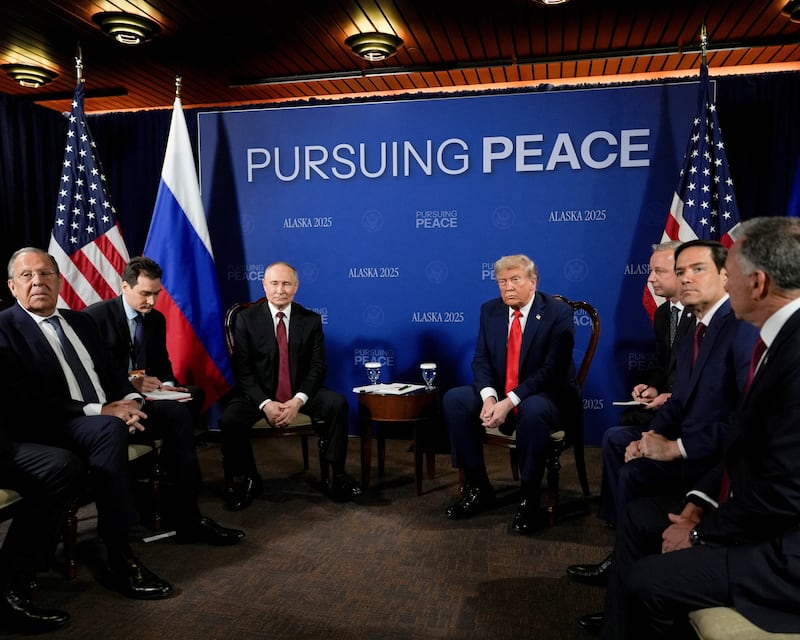
All of this chatter must be tempered by the fact that Russia shows no signs of amassing soldiers or military assets for an attack on any NATO country. World War III is not imminent.
This also isn’t the first time Europe has sounded alarms about Russian belligerence.
What makes this different, however, is the backdrop of what appears to be waning U.S. support for Europe. As Wallander wrote for Foreign Affairs, “Moscow will be deterred only by an integrated strategy that promises Russian failure.”
For a jittery Europe, it would be nice if the United States would send a strong message of support.