

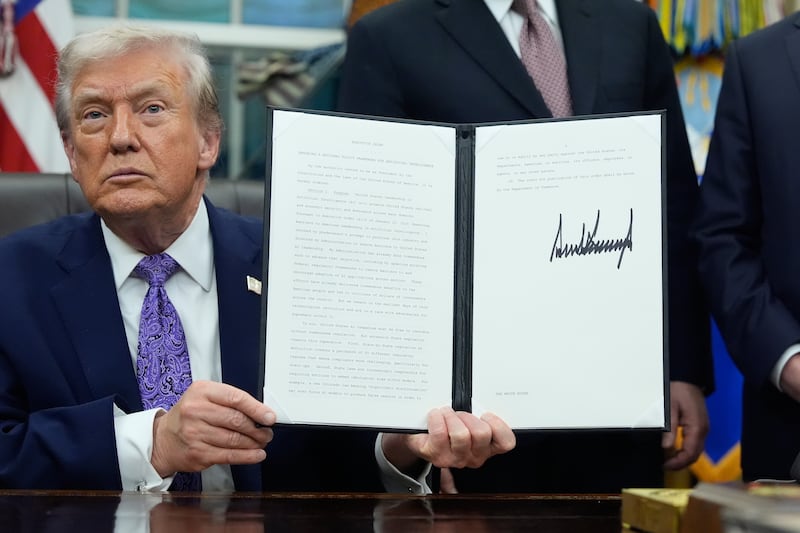

After weeks of dithering back and forth, the Trump administration has finally moved forward with an executive order on federal oversight of new AI systems. I’d applaud if the order was worth the paper it’s written on, but it’s not.
The context for this long overdue move was Anthropic’s unveiling of its AI system called Mythos, which apparently has an unprecedented ability to find and exploit vulnerabilities in computer code, putting software systems related to security (such as infrastructure, utilities and military systems) at risk of unnoticed infiltration, overt capture-and-control, or even destruction. It finally dawned on the administration that America’s approach to AI, which amounts to “all gas, no brakes,” might result in unforeseen mayhem for the United States, from its own AI companies.
But what to do? After all, the Trump administration has staked out a supremely pro-AI position, insistent that there must be no impediments to American companies beating the Chinese in the race to achieve “global AI dominance.” But a large majority of Americans — and apparently even some close advisors in Trump’s inner circle — have grave misgivings about letting our AI companies do whatever they want. A recent Gallup poll shows that “80% of U.S. adults believe the government should maintain rules for AI safety and data security, even if it means developing AI capabilities more slowly.” As a populist, Trump should not be ignoring such an 80-20 issue.
Even Congress was roused enough by the risks to propose bipartisan bills that would rein in the use of AI by the Department of War, barring the use of artificial intelligence for such purposes as domestic surveillance or autonomous weapons systems. There is a very good chance such bills will make it out of committee and to the floor for a vote — and that these bills will easily pass.
If the president had his ear to the ground, he would pick up on a grassroots rage building in our country against obscenely rich tech companies promising to eliminate our livelihoods, waste our land, electricity and water, and in so doing, steal the patrimony of human creation, de-skill adults and never-skill our children. The Box Elder County skirmish is only one of many throughout the country. The American people are fighting back against a product that openly boasts of an agenda that many consider completely antithetical to human flourishing.
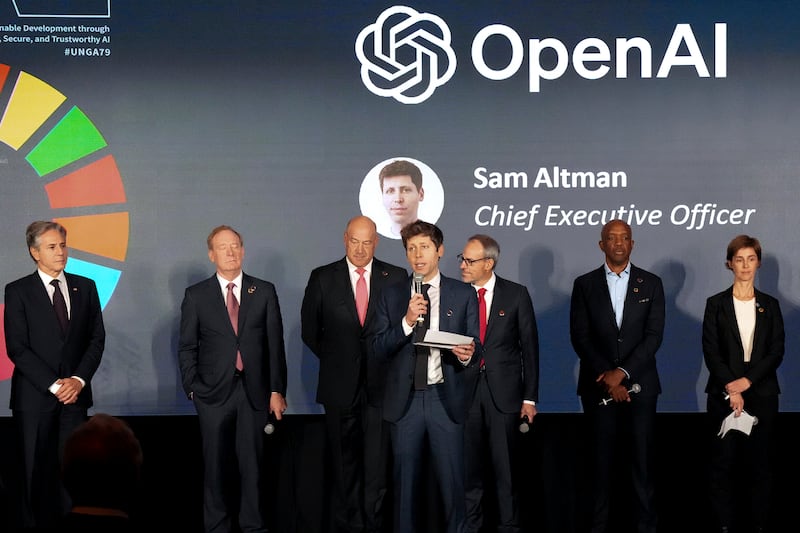
Someone near the president must be raising these issues, for the new executive order is being touted as a welcome compromise between safety and innovation. However, it’s no compromise at all. Let’s take a good, hard look at the provisions.
First, the federal government will, through a joint agency task force, determine which AI models have the capacity to undertake a serious level of mayhem. These models are called “covered frontier models” in the executive order, and though the checklist for this designation is classified, no doubt the term targets the most sophisticated LLMs approaching a general intelligence level of functioning.
Under the order, companies seeking to deploy these frontier models have the opportunity to voluntarily submit their models to the Department of the Treasury for a 30-day confidential review designed to test the model’s capacity for mayhem and alert stakeholders of the need to swiftly patch or otherwise defend software that will be rendered vulnerable by the deployment of the model.
However, the executive order notes, “Nothing in this section shall be construed to authorize the creation of a mandatory governmental licensing, preclearance, or permitting requirement for the development, publication, release, or distribution of new AI models, including frontier models.” Furthermore, “This order is not intended to, and does not, create any right or benefit, substantive or procedural, enforceable at law or in equity by any party against the United States, its departments, agencies, or entities, its officers, employees, or agents, or any other person.”
Translated into English, no AI company in the U.S. will be forced to submit their model for review before the model can be deployed in the real world. Even if a company chooses voluntarily to undergo the review, it can deploy the model in 30 days flat, even if that is not enough time to create the needed patches or defenses for other stakeholders to guard against the damage the review suggests it would foreseeably cause. And if the model creates problems subsequent to the review, the government’s review process cannot be blamed in court for being inadequate to prevent harm.
Let’s be candid: This is tissue paper. The administration is performing a masquerade designed to make it look like it is doing something about serious AI safety risks, when in fact it is doing nothing at all.
Some optimistically believe the executive order is the first step toward mandatory regulation in the future and that it presents a way to buy time while the government hires more specialists who can staff an office capable of more robust testing. However, I am not an optimist by nature. By the time this wished-for regulatory future finally comes into being — if it ever does — what will have already been unleashed? And how can such genies ever be put back into their bottles?
The short answer is that they cannot.
Let the record show that at this critical moment in human history, when the federal government should have stood up on behalf of its people, it sat on its hands instead.
