


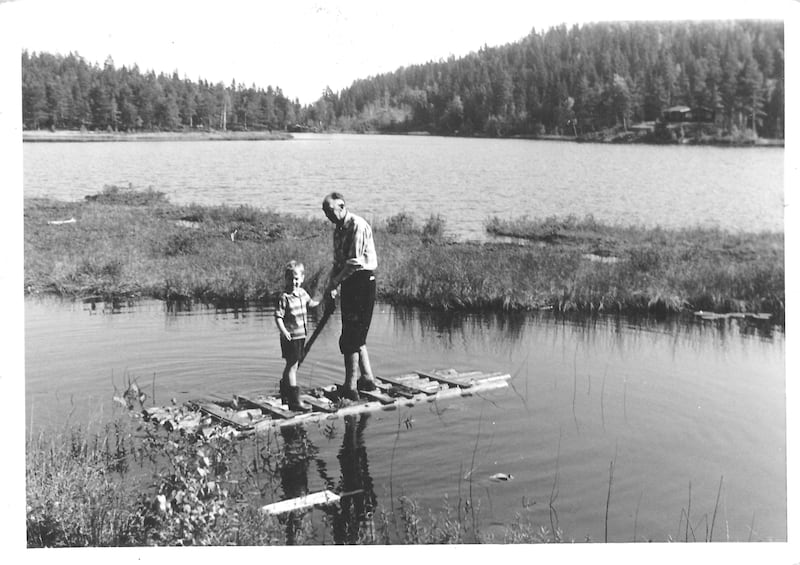
I spent two full summers of my childhood in Norway. The only time I actually came in contact with rowing was as a 4-year-old teetering on a makeshift raft on a mountain lake with my grandfather.
I know this because I fell in.
I don’t know enough to describe the commotion this caused. I can’t remember much about it. But it must have been considerable, because the mere fact that it happened was seared in my memory long after I dried off and stopped shivering. Every time it came up in conversation, relatives would look toward me and pout, as if to say, “Poor thing.”
Maybe if my grandfather had banged a drum and ordered me to “Ro!” I would not have failed so early and spectacularly as a Viking.
Norwegians have a saying: “Det er bedre å gå på isen enn i vannet.” Translated: “It’s better to walk on the ice than in the water.” I had learned this the hard way.
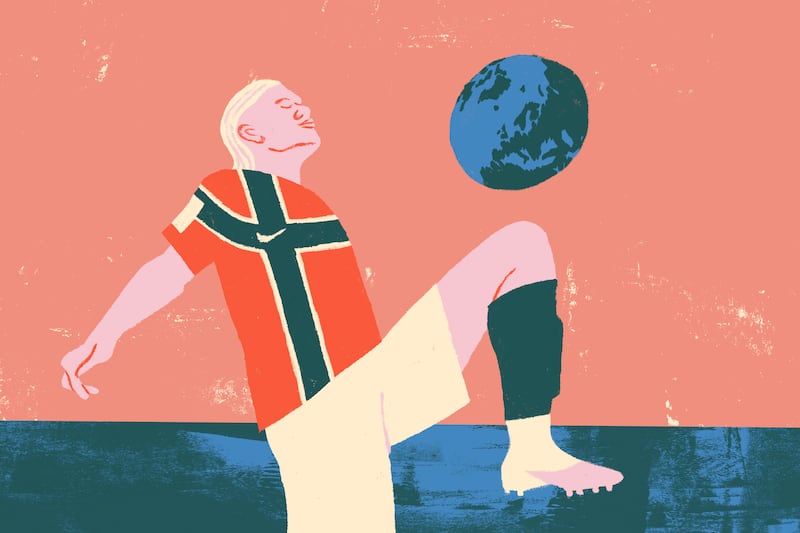
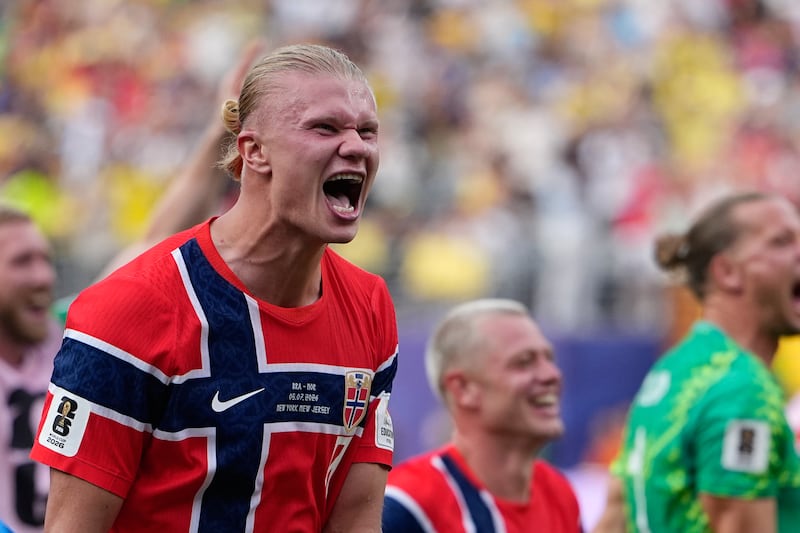
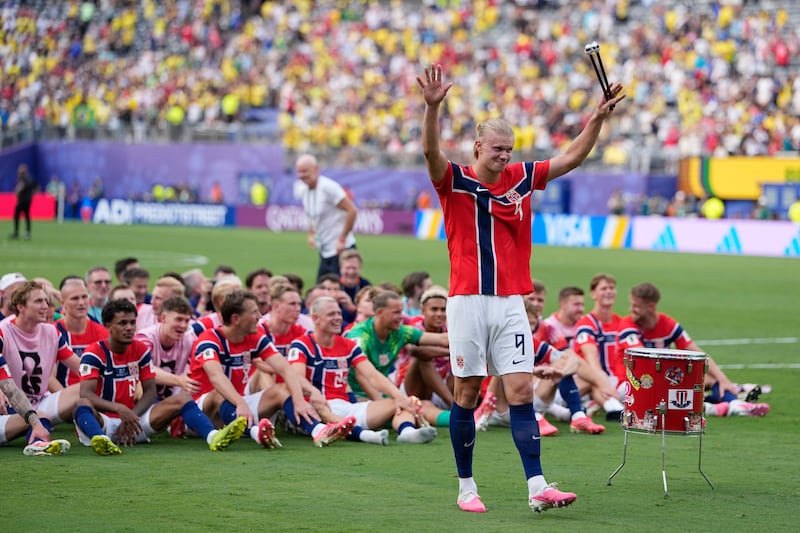
Norway is having a moment right now, thanks to the World Cup, the enormously talented soccer star Erling Haaland, and that catchy and invigorating “Ro!” chant, accompanied by a synchronous rowing motion that combines team support with aerobics.
Not since the wave debuted in American football in the 1980s has anything captured stadium crowds like this.
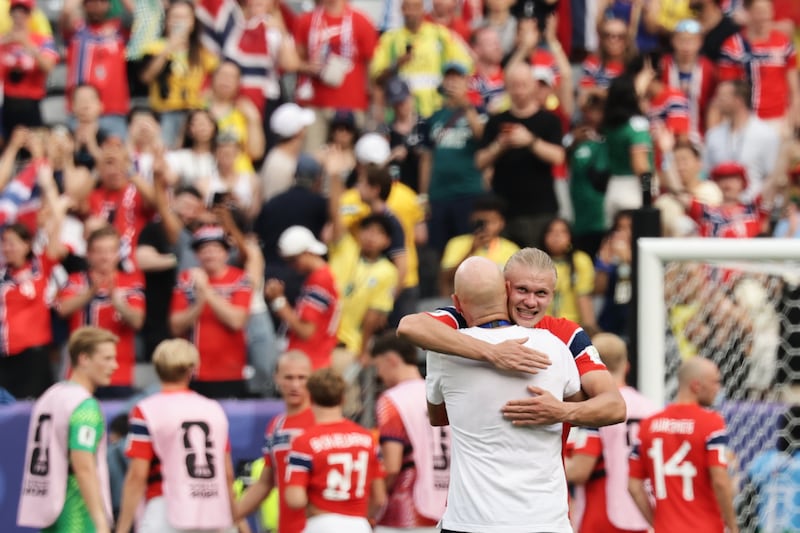
And the fact that it originated in Norway, created, as ESPN reported, by elementary school teacher Ole Frøstad, is remarkable. Although, we shouldn’t expect him to accept any accolades for what he has done.
I watched a video of a Norwegian fan who, although he enthusiastically participated in the group rowing exercise, described it as a little bit “cringe.” I thought, there’s the Norway I know!
Norwegians have an unwritten code known as Janteloven (the law of Jante). It originated in a work of fiction but has come to define the culture. Generally speaking, you are not supposed to draw attention to yourself, never boast or brag, and don’t act as if you’re better than other people. That’s why, while American athletes (and others) flex, pound their chests and yell, Haaland is more likely to engage in self-deprecation. It’s why he approached a group-stage match with France saying his team would probably lose.
But it’s hard to follow Janteloven when this little nation of 5 million people is having so much success in a tournament it hasn’t been in since 1998.
Yes, Norway is having a moment, but my Norwegian moment happened long before I was born, and it’s quite a love story.
Thank goodness for pen pals
My father, who also descended from Norwegian immigrants, was a child about 10 years old, living in Durango, Colo., in the mid-1930s when his older brother, who also was his Sunday School teacher, thought it would be fun to correspond with children in a similar class in Oslo, Norway.
When the first batch of letters arrived, Anne Berit Strand, the young girl who would one day become my mother, insisted on getting one from a boy. That was her feisty and flirtatious manner. Her teacher said there were only two letters from boys, and he randomly chose one for her. Her spirits fell when she saw the name on my father’s letter. Evensen was such a common Norwegian surname. Every other boy was an Evensen. She wanted an American name, like Smith or Brown.
Nevertheless, she wrote back to the Evensen boy, starting a long correspondence. In one of these letters, my Dad, Glenn Stivers Evensen, promised he would come to Norway on a church mission some day and meet her, a rather audacious promise considering the location of his mission wouldn’t be up to him. In another letter he said something to the effect that she should let him know immediately if she didn’t receive that particular letter, a childish absurdity almost equal to predicting his mission call.
The letters ended abruptly when German soldiers invaded and occupied Norway on April 9, 1940. Norway was shut off from the world for five years.
I’ve often wondered what my Dad’s emotions were as he mailed a hopeful letter after the fighting stopped in 1945, not knowing whether his pen pal, my mother, was alive. The war had indeed been hard on young Anne and her family. Food was scarce. Nights were spent huddling with neighbors in the apartment building’s basement storage areas while aircraft shot at each other above. My grandfather was active in the anti-German underground and had been arrested more than once.
But she answered with a long, detailed letter, and the correspondence continued.
In 1948, Dad was called on a church mission to, of all places, Norway. My mother was waiting for him at the train station in Oslo. She invited him to her parents’ home for dinner. The whole street where she lived knew he was coming and gave him a rousing reception.
Later that night, he finally made his way to the mission home, where the mission president demanded to know where he had been. He quickly replied he had been out “visiting some of the saints.”
It didn’t fool anyone. He was told the president was aware he knew a girl in Oslo and he would be sent promptly to a city far away from his pen pal.
He came home in 1950. Mom and Dad were married later that year after Anne came to America.
Norway has an existential meaning for me. I have contemplated what might have happened if my mother’s teacher had given her the letter from the other boy, or if my dad hadn’t reached out to my mother after the war.
Life sometimes teeters on the razor’s edge of seemingly insignificant and random events.
Norway’s moment is about more than just a game. It is about the spirit of its unpretentious people. The nation’s most patriotic holiday, May 17, reflects this spirit best. It doesn’t feature military parades. It features parades in which ordinary people, especially children (many in folk costumes) join in, waving flags.
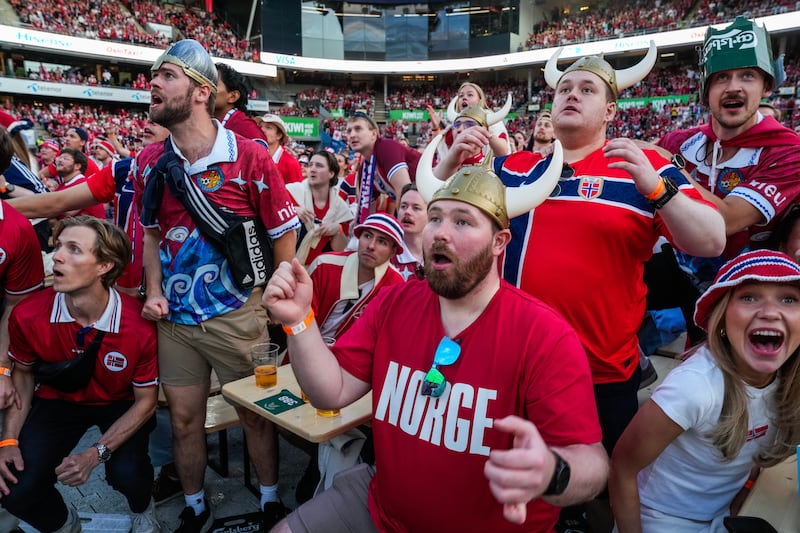
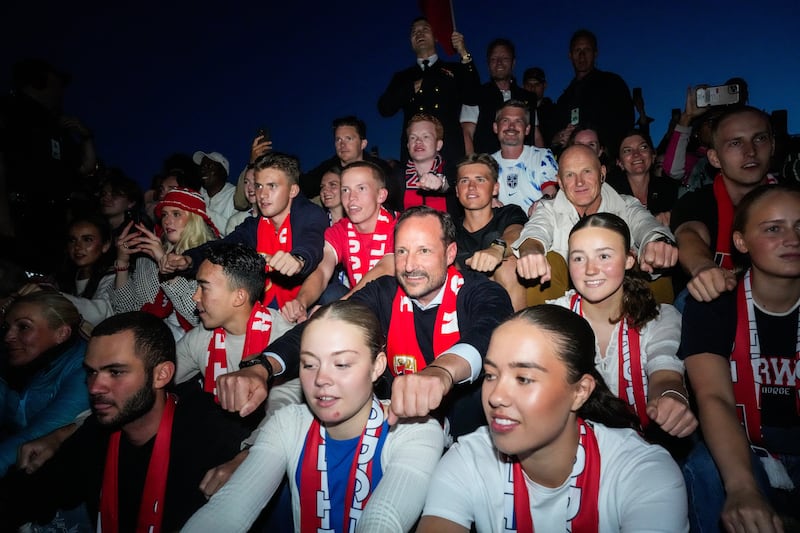
That spirit has accompanied every event involving Norwegian fans, from a gathering in Times Square to the post-game “Ro!” chants involving team members.
I’ve spent the last few weeks wondering what my grandfather would think of this World Cup. How would he react to Norway’s moment? He had played professional soccer in the early decades of the 20th century.
The sport was in his blood. When I spent my second summer in Norway, at the age of 10, he regularly took me to professional games, especially at Ullevaal Stadion, the nation’s largest. It has a capacity of only 28,000, less than half that of BYU’s LaVell Edwards Stadium.
World Cup broadcasts often cut to images of Norwegian fans who have filled Ullevaal for watch parties.
I imagine myself there with him and all the other fans, rowing away with confidence, knowing that this time I can’t fall in any water.