

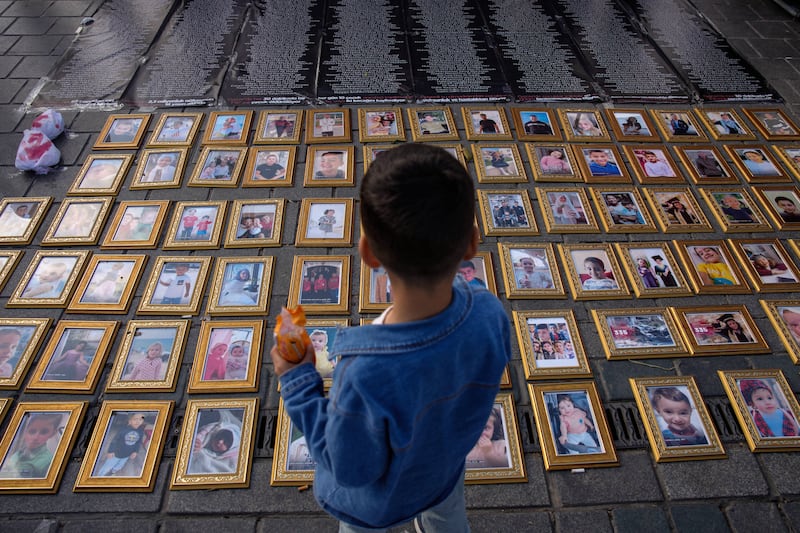


For children, hope means dreaming of a positive future where they can see themselves living full and happy lives. Yet it has become increasingly difficult for many children to see such a future.
Nearly 1 in 5 (or 473 million) children worldwide live in areas affected by armed conflict, a figure that has nearly doubled in the past 30 years. These statistics reinforce the tragic reality that, as UNICEF notes, “Children do not start wars, but they pay the highest price for them.”
War is not the only threat to children’s hope. Millions more children face displacement, poverty, social isolation, mental health challenges, food insecurity, natural disasters and uncertainty about the future.
As child and family scholars from BYU’s School of Family Life, we attended the Global Summit 2026: Fostering Hope for Children in Vatican City this summer — sponsored by the Society for Global Flourishing along with World Vision International, Harvard University and the Institute for Global Human Flourishing at Baylor University.
This gathering of humanitarian leaders, faith leaders, researchers, practitioners and representatives from organizations serving children worldwide met in the Patristic Institute Augustinianum, a pontifical university institute on the Vatican campus that looks out over St. Peter’s Basilica. There were representatives from many faith traditions, including Roman Catholic, Latter-day Saint, Anglican, Evangelical, Hindu, Muslim, Buddhist and more.
In the front of the large auditorium was a large abstract black stone sculpture of a man reaching toward the sky so that his outstretched arms almost resembled angels’ wings. This beautiful centerpiece provided a visual focus as we discussed the state of children’s spiritual development globally and what solutions are needed to promote child flourishing.
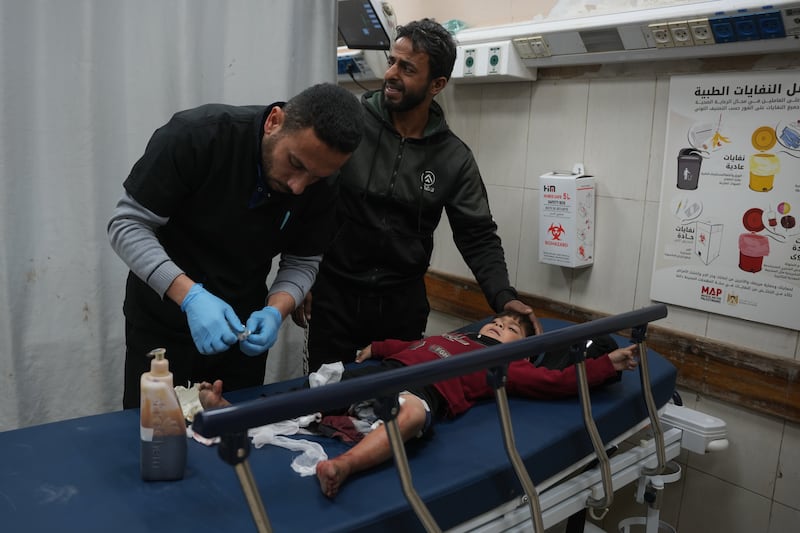
Hope for children in a world of conflict — key takeaways
We want to share three observations from our experience.
1. Basic survival needs come first
First, many speakers focused on the challenges of meeting children’s basic needs before focusing on their flourishing. Approximately 190 million children under the age of 5 globally experience undernutrition and many experience stunted physical growth and cognitive development.
Almost 50 million children have also been forcibly displaced due to conflict. These desperate relocations make it difficult for these especially vulnerable children to have consistent access to healthy food, clean water and adequate healthcare.
Muslim Aid USA emphasized that for the most vulnerable children to have the hope of flourishing in their lifetime, we must first focus on their immediate survival, including providing emergency food assistance.
2. Ensuring children feel deeply loved
Second, hope is intrinsically tied to a child’s sense of identity and belonging. Many organizations emphasized the need to help all children feel loved and safe.
Some, like Arigatou International, expressed this in terms of familial and community connection and belonging. Others, including World Vision International, called it experiencing the love of God.
“Hope is what happens when love is made real,” said the Rev. Andrew Morley, World Vision International president and CEO.
“The love of God is an infinite ocean — deep with no boundaries,” added Anantanand Rambachan, professor of religion at Saint Olaf College. “My heart trembles when another person’s heart trembles,” the scholar continued, recounting a Hindu teaching. “To tremble when a child’s heart trembles is to know intimately the fear and terror and sorrow of a child.”
We agree with all of the above. Children who feel that they possess unconditional worth can better envision a future where they are not just safe and happy but also capable contributors to their communities.
3. Supporting children by supporting families
Third, the family context emerged as a vital component of this ecosystem of hope. Parents, siblings, grandparents and other family members can all help children envision a future that is not just bright but also attainable.
We believe that the family is the birthplace of hope, where children first learn that caring adults will support them as they dream and grow. It is at those earliest ages where the seedlings of hope are nurtured.
Thus, institutions such as governments, religious denominations, community organizations and NGOs can further support the strengthening of children’s hope by way of strengthening families.
We saw evidence of this practice at the Global Summit in the form of many NGOs and humanitarian groups partnering with religious institutions that serve families and have a long-term stake in their community. For instance, Sikunye, a South African nonprofit, focuses on helping ecclesiastical leaders understand the importance of the first 1,000 days in a child’s life so that they can better minister to the families of young children in their congregations.
So much we can do
What can we do now to promote children’s hope? Here are three action invitations:
1. Be a strong source of hope in our circles of influence
Adults should frequently prompt the children in their care to envision their futures — not just what they will do for a job, but what kind of relationships, hobbies and character traits they will have. Caring adults can then help children map out routes toward those happy goals and enthusiastically cheer children on, which will increase their agency.
The Rev. Keishi Miyamoto from Arigatou International said, “Hope is not something we give to children. It is something we cultivate with them. This is why hope is an act of faith.”
2. Support reputable local and international charitable organizations with our time, money, service, or professional expertise, where possible
This kind of expanded support will address the basic human needs that are essential to higher hopes any child might have in their future.
3. Be a voice for children by being civically engaged in collaborative, constructive ways that promote measures and policies that protect children’s hope both locally and internationally
These community efforts can include contacting your elected leaders to help them understand why children’s safety, family stability, humanitarian relief and global cooperation matter to you.
Perhaps the most powerful takeaway from the Global Hope Summit came from our perspective not as scholars but as parents. Especially this: Children do not start wars, create famines or choose to become refugees — but again, they suffer the worst from these situations.
While we should fiercely advocate for the end of such conflicts, we can also support the communities, churches and families directly involved in helping these vulnerable children so that they can hope for a brighter future.
We invite you to join us in this effort, because all children deserve to have hope.