


Fourteen years ago — and I remember the year exactly because I was very pregnant with my third child — I was one of the first victims of cancel culture. This was in the era before what Rep. Alexandria Ocasio-Cortez recently referred to as “Woke I.”
I was a regular blogger for the Chronicle of Higher Education, writing once or twice a week about questions and controversies facing college campuses. I had written a couple of books on higher ed — one on religious colleges and one on the institution of tenure — and the Chronicle decided to add a little intellectual diversity to its stable of commentators who ranged from liberal to progressive.
Once or twice a week, I would submit a short piece for the assignment. I didn’t have to run the topic by anyone, and the only edits were for typos. I was working on a new book and this seemed like a decent side gig.
The Chronicle itself was often a source of fodder, and one week, the editors published a cover story gushing over a few brilliant newly minted Ph.D.s in African American studies. The dissertations of the scholars were discussed at length in breathless terms. “The 5 Up-and-Coming Ph.D. Candidates” were described as engaged in nothing less than “rewriting the history of race.” I, however, was underwhelmed by their work, and my article that week reflected not only my disappointment with the topics and findings of the papers but also that an entire discipline had been built on such thin gruel.
As I wrote at the time, the dissertation topics of the graduate students were obscure at best and “a collection of left-wing victimization claptrap” at worst.
Within a day, my editor called me to say they had received some complaints about my piece and would I like to respond. No thanks, I said. I thought what I wrote stood fine on its own merits and I didn’t want to engage in a long back-and-forth with critics. They were welcome to write letters to the editor and the Chronicle was welcome to decide whether to publish them.
Over the course of a few days, the commentary became more virulent, with my fellow bloggers offering their own takes. Senior faculty who advised these dissertations accused me of bigotry and cowardice. A fellow blogger who was a professor at the University of Connecticut composed a poem mocking me. (It began “A certain white chick — Schaefer Riley / decided to do something wily.”) MSNBC host Melissa Harris-Perry ranted about me on her show, invoking the memory of Trayvon Martin and accusing me of “small-mindedness.”
A former boss of mine who was following the whole matter from a distance called me a few days later and asked if I thought I would be fired. That would be crazy, I told him. The Chronicle published what I wrote. There was nothing defamatory or libelous in it. What would be the grounds?
Within a couple of hours, though, I was canned. More than 6,700 academics had signed a petition demanding my removal. The blogger who wrote the poem about me remained under contract.
This experience wasn’t traumatizing for me. I didn’t depend on the job for my livelihood. I have a pretty thick skin (this episode made it thicker). I had some wonderful defenders. And the episode made transparent the vast infrastructure in place to ensure that certain scholars in certain fields — fully grown adults with advanced degrees — would never have to endure the kind of real scrutiny of their research that should be the hallmark of rigorous academic institutions.
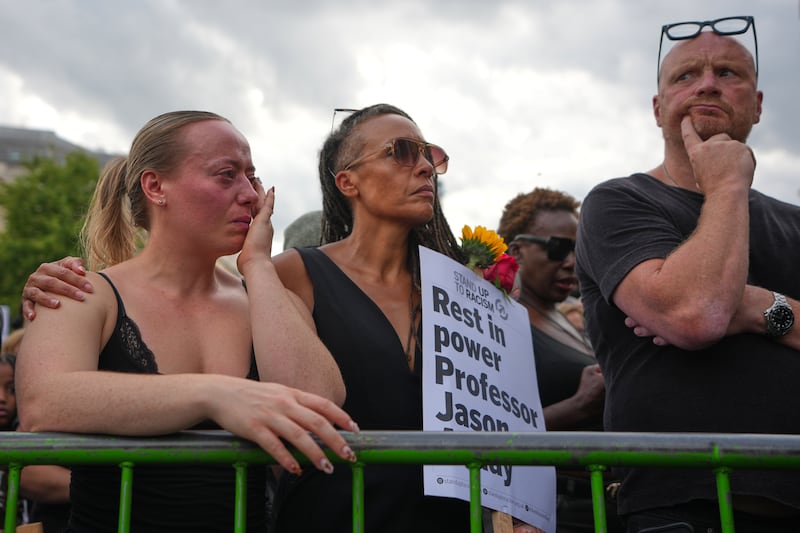
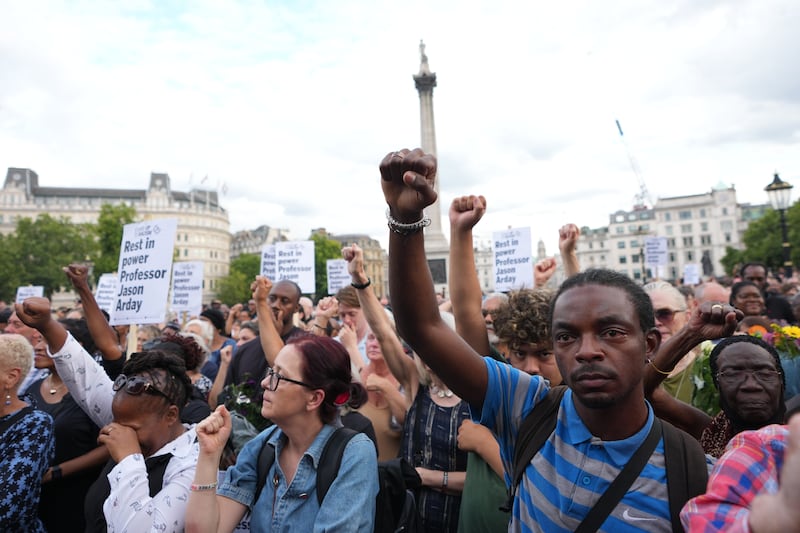
Which brings us to Jason Arday, the Cambridge University sociologist found dead after it was learned he fabricated his academic oeuvre and personal biography in the most astonishing ways. From his exploits in marathon running to extensive plagiarism, made-up disabilities and fabricated research, Arday was practically daring people to call his many bluffs. The few who did, it turned out, were threatened with legal action, job loss and even police investigations.
Except none of this was astonishing at all. Over the course of decades, scholars who are seen as a member of certain protected classes have essentially been infantilized within academia, while those who have been critical of their work — and the system — have been accused of racism.
In his recent cover story in The Atlantic on his experience as a Black tenure-track professor at Bates College, Tyler Austin Harper describes hearing a fellow professor propose “a system in which students of color could call out ‘oops’ or ‘ouch’ if somebody accidentally said something racist — as though these were not young adults with basic human dignity paying minor fortunes to be taught by ostensible subject-matter experts, but toddlers learning not to bite their friends when someone grabbed their toy truck.”
Harper seems shocked by the efforts made to accommodate the feelings of Black college students, graduate students and even candidates for faculty, sometimes holding them to lower academic standards and suggesting that any criticism of their work is tantamount to racism if not violence.
Harper is not wrong. But to me, his naïvete is surprising. How did he not know this had been going on in academia for decades? If 6,700 academics were champing at the bit to banish me in 2012, how much earlier must this problem have begun? And, perhaps more importantly, how many decades will it take to fix?