


- Canada is not just any trading partner, importing roughly double the volume of goods as China.
- In the trade war game of hot potato, Canadian firms will simply pass the tax on to American consumers, in higher prices or in layoffs.
- American business may also get hurt. For instance, by banning Bombardier jets, assembled in Toronto, we also impact the companies in Texas, California and Kansas involved in making components and providing maintenance.
- This is why the Founders built a system in which the power to tax, including through tariffs, belongs to the people’s elected representatives — so that economic policy couldn’t be set by unilateral whim.
In 1775, American hubris led Generals Richard Montgomery and Benedict Arnold on an ill-fated invasion of Canada. Montgomery marched his army from Fort Ticonderoga toward the Saint Lawrence while Arnold clawed his way across the Maine wilderness with a second force, enduring starvation and desertion along the way.
The two armies planned to converge on French Quebec, lay siege to Montreal, and bring Canada into the war as a co-belligerent against the Crown. The reasoning was simple and, in hindsight, naive: American soldiers would be welcomed as liberators, freeing fellow colonists from a common British oppressor.
Canadians did not see it that way. Military historian Rick Atkinson details the fiasco in “The British Are Coming,” the first volume of his American Revolution trilogy. Rather than a warm embrace, the Americans found themselves chased across the frozen Plains of Abraham and back into upstate New York.
Atkinson recounts a chaplain who, surveying the dead and dying being loaded into open boats, could only conclude, “God seems to be greatly angry with us.”
Never had the Americans looked less like victors: They crawled south across Lake Champlain in open boats, ravaged by smallpox and dysentery, leaving hundreds of shallow graves along the shoreline.
Montgomery died in the retreat; Arnold, brooding over the humiliation, later sold the plans to West Point’s fortifications and defected to the British. The Canada campaign, largely ignored in American classrooms, remains one of the more instructive failures in U.S. military history — especially when it comes to demonstrating how ill-considered hubris leads to disaster.
And yet, despite that rocky beginning, Canada and the United States built the closest relationship between any two nations on earth; allied through two world wars, bound by the world’s largest bilateral trading relationship under NAFTA, and spared the bitter rivalries that defined Europe’s neighbors.
Who’s really paying the tariff cost?
That history feels like a prescient warning regarding what’s now taking place between the countries.
In Learning Resources v. Trump on Feb. 20, 2026, the Supreme Court ruled 6-3 that the president lacks authority under the International Emergency Economic Powers Act to impose tariffs. Following that ruling, the administration has used strained legal justifications — unsupported claims of slave labor and vague accusations of decades-old cheating — to impose 50% tariffs on Canadian goods.
Left out of the argument, as usual, is the basic mechanics of a tariff: Canadian firms will simply pass the tax on to American consumers, in higher prices or in layoffs. In the trade war’s game of hot potato, American workers and shoppers hold the cost while both countries end up poorer for no strategic gain.
Consider the administration’s unilateral ban on Bombardier jets. Final assembly happens in Toronto, but the wings are built in Red Oak, Texas; maintenance and repair run through Wichita, Kansas; and the cockpit instruments come out of Los Angeles. An executive order aimed at punishing Canada has, in practice, blocked American Airlines from buying an airframe that is substantially American-made.
Why this will hurt Americans more
That’s the deeper problem with this fight. A tariff’s real cost depends on the volume of imports from the country you’re taxing and how easily you can replace it. When the administration imposed its “Liberation Day” tariffs on much of the world, many targeted countries supplied only a small volume of any given good or had ready substitutes.
Canada is different. It is our second-largest trading partner and supplies considerably more goods to the United States than China does. Decades of integration also mean the two economies’ supply chains aren’t easily pulled apart.
Canadian firms will simply pass the tax on to American consumers, in higher prices or in layoffs.
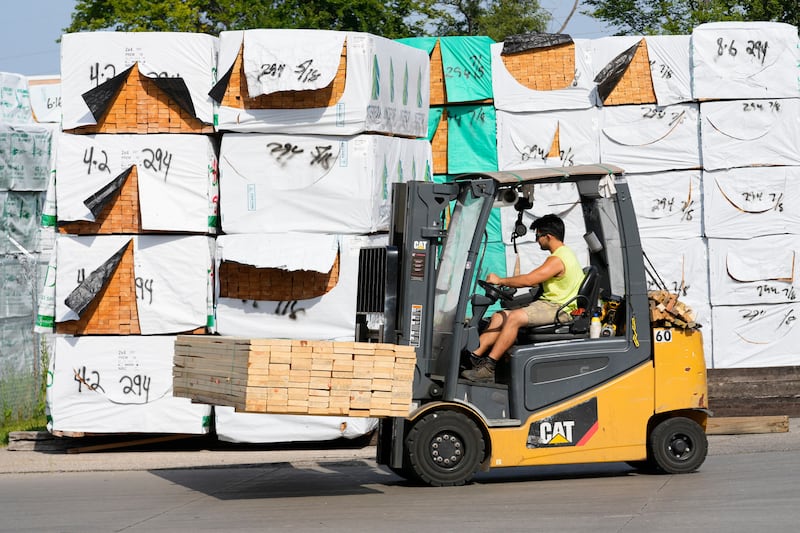
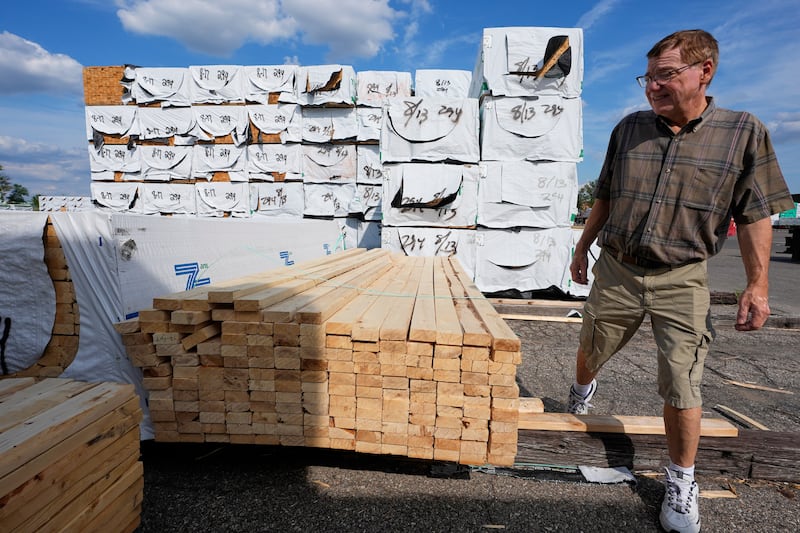
Canada supplies nearly two-thirds of the crude oil the United States imports, and while oil was exempted from the new tariffs, softwood lumber was not; the same lumber the homebuilding industry needs at the exact moment the country faces a severe housing shortage.
Canada is also a major supplier of automobiles, auto parts, meat and dairy: precisely the goods Americans already complain are unaffordable.
Canada has retaliated with its own tariffs on American agricultural exports, striking farmers already squeezed by rising fertilizer costs, drought and shrinking foreign markets. Both countries end up worse off, and neither gains anything durable.
Tariffs by whim — or by the people?
Supporters of the tariffs will argue they protect domestic lumber and dairy producers from foreign competition. That’s a real trade-off, and reasonable people can debate it — but it should be debated in Congress, with evidence, not imposed by executive fiat on national-security pretexts that don’t survive scrutiny.
Beneath the pocketbook math is a more basic question of self-governance. The Founders built a system in which the power to tax, including through tariffs, belongs to the people’s elected representatives, not the executive alone, precisely so that economic policy couldn’t be set by unilateral whim.
When Congress cedes that power by silence, it isn’t just American consumers who pay the price. It’s the constitutional design itself. Two hundred fifty years after the Founders enshrined that principle, checking executive overreach on taxation isn’t a partisan preference; it’s the Republic doing what it was built to do.