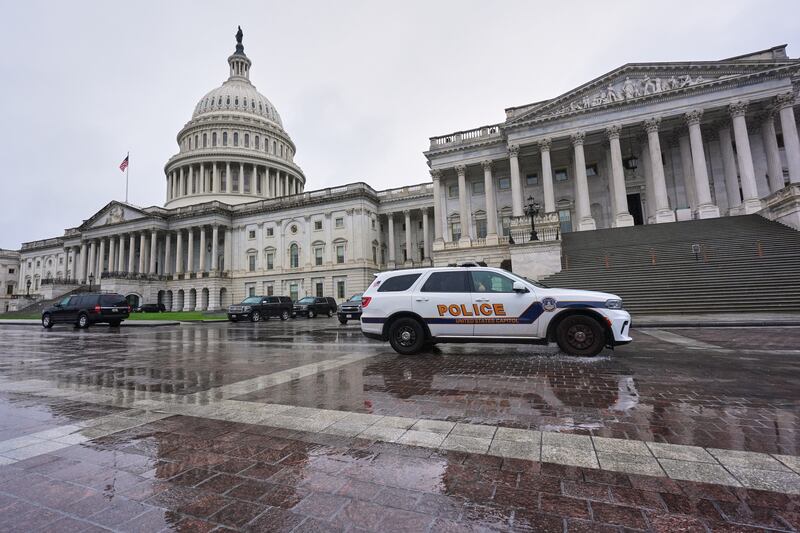

WASHINGTON — Lawmakers are pushing for increased security while in Washington and at home after a pair of shootings in Minnesota over the weekend have rattled several members who say they have received similar threats in recent weeks.
Senators held a closed-door security briefing with the Senate sergeant-at-arms and U.S. Capitol Police on Tuesday morning as law enforcement officials shared details about recent threats as well as possible solutions to increase security for members. Senators emerging from the meeting said no decisions have been made about how to counter potential threats, but members said there was bipartisan support for increased resources.
“There needs to be more resources and investigation of these threats in real time and right now, very often, they’re discounted as a prank or a joke,” Sen. Richard Blumenthal, D-Conn., told reporters. “But political violence is a scourge that is spreading like a virus, and it needs to be countered more aggressively.”
Senators inside the meeting said many of their colleagues shared details of threats they’ve received in recent days and weeks, which some lawmakers described as “disturbing.” Solutions were proposed to increase security for lawmakers, but no decisions have been made, senators said.
“Rather than offer the suggestions when there’s no decisions, I think I’ll leave it there,” Sen. Tim Kaine, D-Va., said. “But the degree to which colleagues are getting targeted in all kinds of ways is very disturbing.”
The briefing comes after Senate Minority Leader Chuck Schumer, D-N.Y., requested increased security for Minnesota Sens. Amy Klobuchar and Tina Smith after the shooting in their home state.
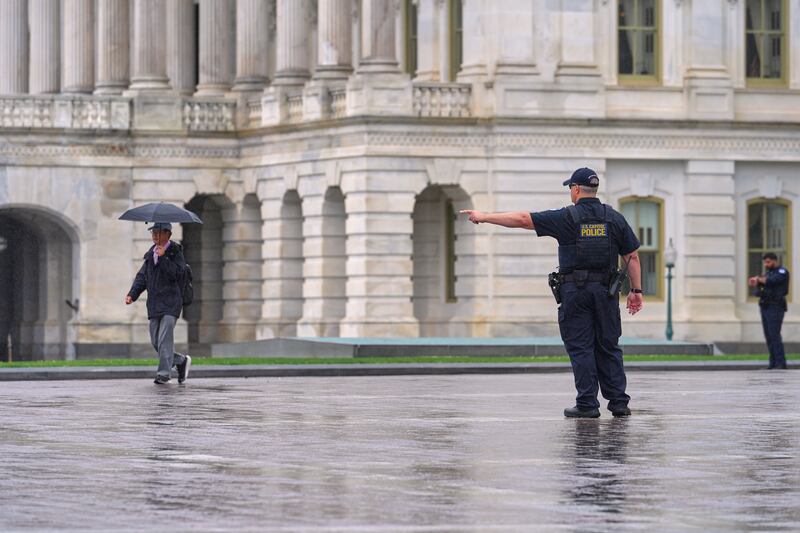
Schumer reiterated those concerns after Tuesday’s briefing, telling reporters “we need more money” when it comes to protecting lawmakers.
“The violence and threats against elected officials, including people in the Senate, has drastically increased,” Schumer said. “And that means we need more protection.”
But allocating those resources could be easier said than done. As of Tuesday, there is no agreement on what additional protections to implement for lawmakers or who to extend those resources to.
House Democratic leaders called for increased security for all members and to expand the Member Representational Allowance, which allocates money to each member to use for security and other staffing needs.
But that could be expensive — especially if Capitol Police are instructed to increase resources for all 535 members of Congress. As a result, some members are urging careful consideration.
“It’s always a resource issue. It’s making sure it’s proportional to the threat and not an overreaction,” Sen. John Cornyn, R-Texas, told reporters. “So that’s, I’m sure, going to be the subject of a lot of conversation.”
Other senators such as Sen. James Lankford, R-Okla., have suggested looking toward “cultural solutions” rather than just legislation.
The attention to lawmaker security comes as members of Congress have experienced increased threats in recent years, according to data from U.S. Capitol Police.
The agency reported 9,474 concerning statements or direct threats toward lawmakers, including their families and staff, in 2024. That’s a sharp increase from the 8,008 similar threats recorded in 2023 and the 7,501 threats in 2022.
Conversations are ongoing about how to address those concerns, lawmakers said. It’s unclear how quickly any decisions may be made.