



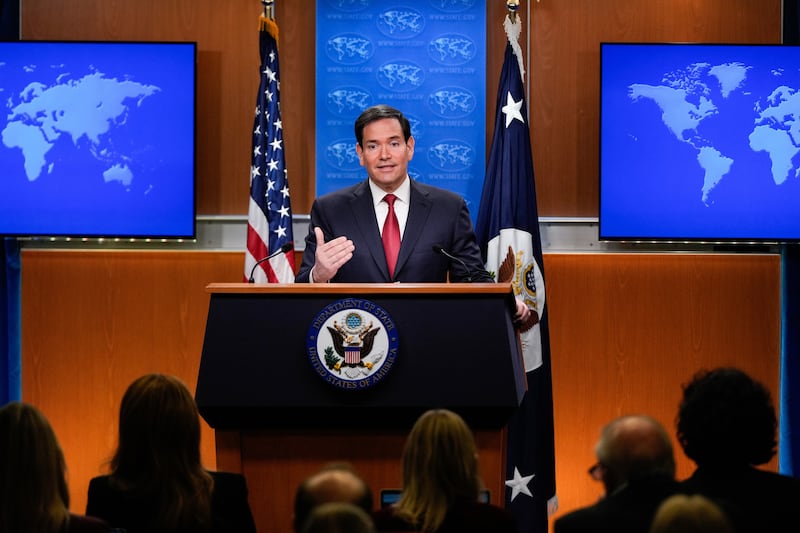
Secretary of State Marco Rubio foreshadowed a new U.S. embassy initiative related to mass migration, in a late December press briefing.
“Mass migration over the last decade has been highly disruptive — not just to the United States, but also to continental Europe and in some cases in the Indo-Pacific as well,” he said.
Following up in an X thread on Tuesday, the State Department instructed all U.S. embassies based in Western Hemisphere countries to report on “human rights abuses caused by mass migration.”
Embassies have been asked to analyze any policies that facilitate mass migration or privilege migrants over the country’s own citizens.
“The United States urges governments to protect their borders and defend their citizens against the human rights abuses caused by mass migration,” the announcement said. “The United States stands ready to work alongside nations across the Western Hemisphere to end the global crisis of mass migration.”
Report shows massive worldwide migration
The 2025 International Migrant Stock report, released by the United Nations, found that 304 million people migrated internationally in 2024 — a figure that has doubled since 1990.
Europe received 94 million migrants, the most of any continent in 2024, followed by North America at 61 million, and northern Africa and western Asia tied at 54 million.
The report shows migration within continents as well as from continent to continent.
Though Europe received more migrants than North America, migrants made up a smaller share of their population at 12.6%, which was less than North America’s 15.9%.
Further, about half of Europe’s international migrants came from other parts of Europe, while most international migrants to North America came from Latin America and the Caribbean.
State Department says mass migration brings consequences

“Mass migration has endangered American citizens, threatened the economic security of American workers, and strained America’s asylum system,” the State Department said in Tuesday’s announcement.
In a foreign press briefing in November on how mass migration affects human rights, a senior State Department official called mass migration an “existential threat to Western civilization.”
Issues he listed related to mass migration included national sovereignty, sexual assault, economic viability of housing, two tiered-policing and cultural implications.
“We want to help our friends ... but in order for us to have a strong alliance, we need a strong citizenry,” he said.
The State Department official added that though illegal immigration has been an issue for the U.S., “mass migration more broadly is a concern itself.”
The department’s announcement from Tuesday paid special attention to narco-terrorist organizations. These drug traffickers “routinely engage in child trafficking, forced labor, sexual assault, and other heinous human rights abuses that threaten the citizens of nations throughout the Western Hemisphere and undermine the rule of law,” the announcement said.
U.S. pushes to change immigration policy
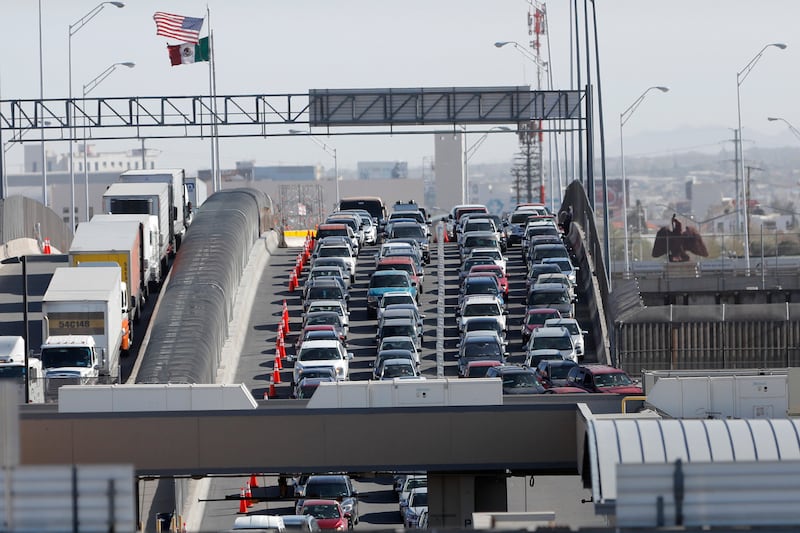
Tuesday’s statement falls in line with the Department of Homeland Security’s move from mid-November to repeal a 2022 public charge rule that changed who was allowed to come into the country legally.
The eased immigration rules are “inconsistent with congressional intent, unduly restrictive, and hamper DHS’s ability to make accurate, precise, and reliable determinations of whether certain aliens are likely at any time to become a public charge,” the DHS said.
The statement says rescinding the rules would restore “broader discretion to evaluate all pertinent facts and align with long-standing policy that aliens in the United States should be self-reliant and government benefits should not incentivize immigration.”
In response, more than 100 federal lawmakers signed a letter, urging DHS Secretary Kristi Noem to withdraw the proposed rule change.
“The proposed public charge rule will lead to mass uncertainty, disparate and arbitrary outcomes for individuals applying for permanent status or admission into our country, and undue harm to U.S. citizens,” the letter says.
The lawmakers say they worry the old rule is being done away with before new guidelines are established.
“To be very clear, the proposed rule will trigger a massive chilling effect, driving eligible families away from essential assistance in health care, nutrition, childcare, and education, with the heaviest harm falling on U.S. citizen children,” the lawmakers say.
In regard to illegal immigration, more than 2.5 million immigrants who were living in the country illegally have left the United States since President Donald Trump took office in January, the DHS reported.
ICE deported more than 600,000 people, and more than 1.9 million have self-deported. “We encourage all illegal aliens to use the CBP Home app to get a free flight home for Christmas and $1,000,” the DHS press release said.
In late December, the department said it would pay migrants $3,000 to leave the country voluntarily through the end of the holidays.
There were significantly more deportations in 2025 than in 2024, when the total reached 271,484, according to NPR.