

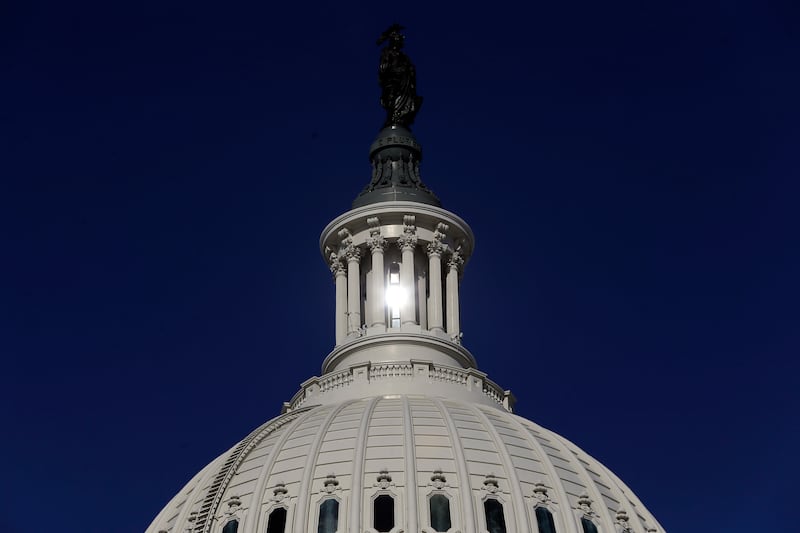

The Senate passed its compromise spending package Friday evening, funding five of the six remaining appropriations bills for the 2026 fiscal year while extending negotiations for the Department of Homeland Security budget.
The chamber approved a deal brokered by Senate Democrats and the White House to remove the DHS portion from the final spending package and extend current spending levels for the agency until Feb. 13. That gives lawmakers two weeks to negotiate new limits for immigration officers while avoiding a shutdown for the dozens of other departments and federal agencies.
The bill passed with bipartisan support with only a handful of Republicans bucking party leadership to oppose it, including Utah Sen. Mike Lee, who opposed some of the spending provisions tucked into the trillion-dollar package. Sen. John Curtis, R-Utah, voted in favor.
The package passed in a 71-29 vote, overcoming the 60-vote threshold required to advance.
“This funding package is chock full of wasteful earmarks — the currency of corruption — and spends taxpayer money on discretionary government programs that need to end,” Lee said, referring to earmark requests from lawmakers to fund programs specific to their states. “Americans demand fiscal responsibility from Congress, so I voted no.”
Lee filed three amendments to the spending package, one of which sought to strip earmarks from the bill. All of the amendments were dismissed during a marathon voting session on Friday.
Senate leaders reached the deal on Thursday evening but a vote was delayed as Sen. Lindsey Graham, R-S.C. stalled action on the package until he got assurances of an amendment vote on the final DHS bill to eliminate sanctuary cities.
Graham was initially frustrated with another provision that was tucked into the spending bill to repeal a controversial law allowing senators to sue the federal government for hundreds of thousands of dollars — a measure that was passed in the last funding package that directly benefits the South Carolina senator.
That language remained in the spending package passed on Friday despite Graham’s objection.
The package now heads to the House for approval, where it could face an uphill battle as conservative Republicans have opposed removing Homeland Security from the bill that already passed the lower chamber in a bipartisan vote last week.
A temporary shutdown is still likely to take effect over the weekend as the House isn’t expected to return until Monday, two days after the shutdown deadline. However, the effects of the shutdown will be largely mitigated as federal agencies are typically closed during weekend hours.
What’s next for government funding?
The House will need to approve the five-bill minibus and the DHS continuing resolution next week. Although a deal was made between Democrats and the White House to negotiate immigration policy reforms, there’s still a lot of daylight between what the two parties are willing to put into law.
Senate Democrats were ready to sign off a bipartisan deal funding DHS for the remainder of the 2026 fiscal year, but that changed after a man was fatally shot by federal immigration officers in Minneapolis last weekend. After that, Democrats demanded to remove DHS from the spending package so its contents could be renegotiated — a position the White House initially rejected but later agreed to.
Democrats outlined three main demands in exchange for DHS funding: tightened rules on requiring warrants for arrests; prohibiting agents from wearing masks and requiring them to wear body cameras and identification; and implementing a universal code of conduct for use-of-force policies that reflect what is required by state and local law enforcement officials.
Those demands are likely to be adjusted as negotiations continue, and some conservative Republicans in the House have signaled they have requests of their own they want to see implemented.
The Department of Homeland Security will only receive funding for the next two weeks, after which the agency could shut down if a new spending agreement isn’t made.
Democrats have said that’s plenty of time to hammer out new immigration policy, but Republicans are more skeptical. Still, President Donald Trump endorsed the two-week time frame — giving it a stronger chance of passing both chambers of Congress.