

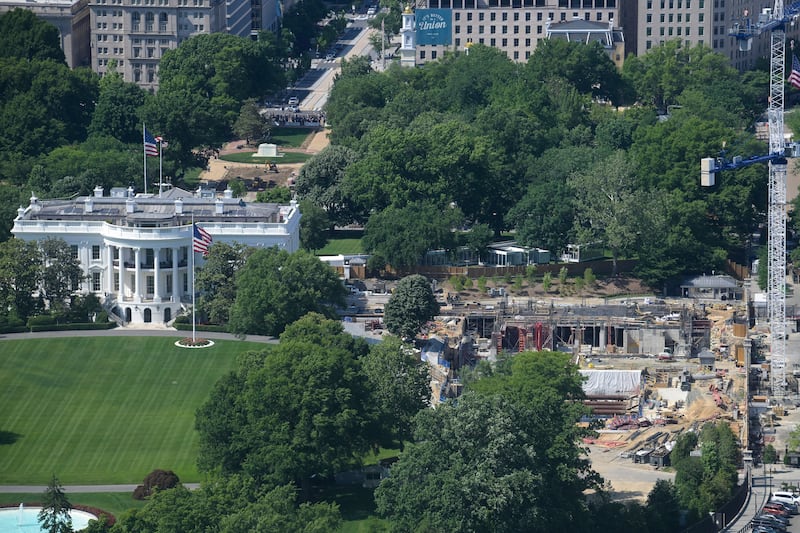

Republicans are tweaking the language that would secure $1 billion for security adjustments related to the White House ballroom project after the Senate parliamentarian ruled the first draft of the bill did not adhere to rules that would exempt it from the 60-vote filibuster.
Republicans are racing to put their multibillion-dollar immigration funding package on the floor this week before leaving town for the Memorial Day holiday, but they could hit a snag as they work to ensure all provisions are eligible for the reconciliation process.
It’s not clear what disqualified the funding for the East Wing Modernization Project from being included, but Senate Majority Leader John Thune, R-S.D., suggested it was a matter of how the bill was worded.
“We usually don’t litigate the conversation with the parliamentarian, but there’s been a back-and-forth, and that continues,” Thune told reporters on Monday. “I don’t think it should come as any surprise, there’s feedback, and if this idea doesn’t work as it doesn’t fit within the parameters of the restrictions that Byrd requires you to meet, so you try another approach.”
What is the Byrd rule?
The budget reconciliation process allows senators to avoid the 60-vote filibuster if it adheres to what is known as the Byrd rule, which requires the legislation to only advance budget-related legislation such as taxes, spending and the debt limit. If it does not adhere to those rules, it must go through regular consideration, which requires a 60-vote filibuster.
If Republicans want the ballroom security money included under the 50-vote threshold, the parliamentarian ruled, the provision must be rewritten.
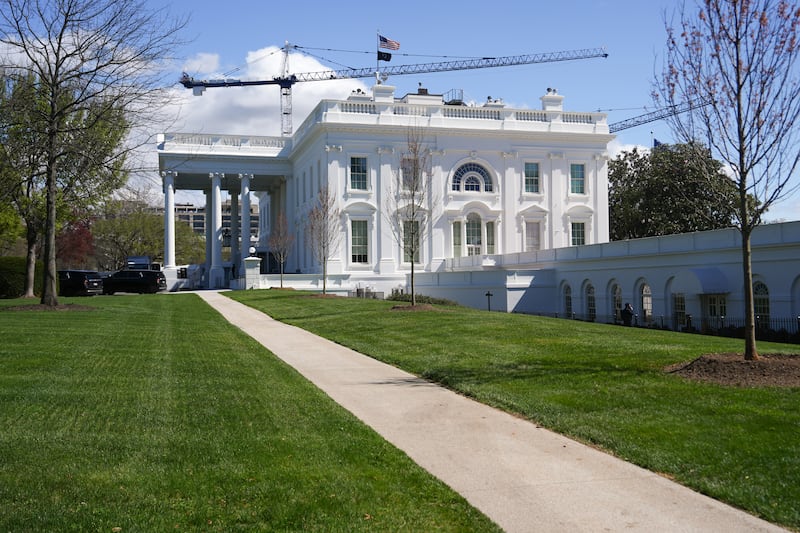
But even if Republicans can get the language attached to the budget package, it still faces a challenge getting through the Senate. Democrats are planning to challenge the immigration funding package by introducing dozens of amendments seeking to add their own provisions or strip controversial language, such as ballroom funding.
If Democrats can get four or more Republicans to vote for removing ballroom-related language, it could be in peril — dealing a major blow to President Donald Trump, who has made the White House ballroom project one of his top priorities.
Utah Sen. John Curtis is among the handful of Republicans carefully considering the ballroom funding, telling reporters last week the $1 billion price tag has raised questions about whether it’s justified.
The parliamentarian similarly ruled against a number of other provisions in the package that she said must be reworked if Republicans want to be exempt from the 60-vote filibuster.
Those objections were mostly in relation to funding for immigration enforcement and screening of individuals trying to enter the United States, which the parliamentarian said would affect policy outside the Homeland Security and Governmental Affairs Committee’s jurisdiction.
Republicans will need to act fast if they want to meet the deadline given by Trump to have the bill through the Senate and House and on his desk by June 1. Both chambers of Congress are scheduled to be on recess for the holiday next week.