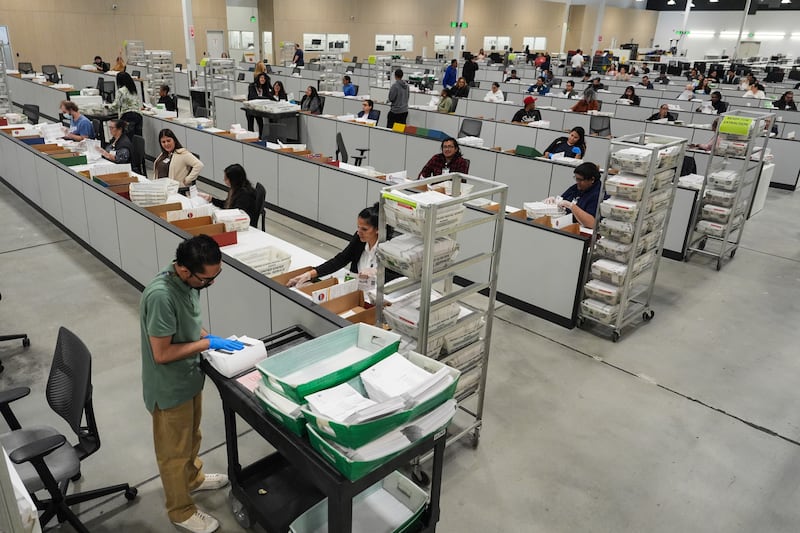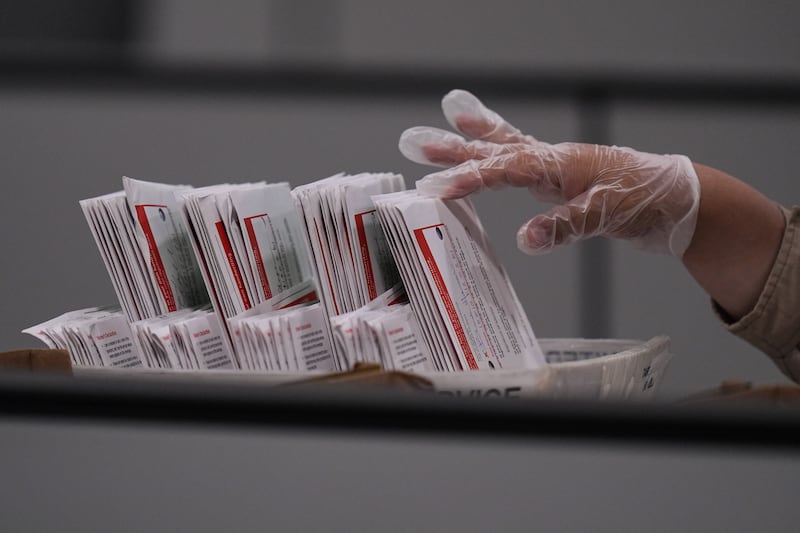

All eyes are on California after its primary election earlier this month took weeks to find the winners.
While President Donald Trump claims Democrats rigged the election for Los Angeles mayor, California’s election process didn’t raise any alarm bells for Stephen Richer, a former elected election official and a Republican.
He served as the Maricopa County Recorder in Arizona, and has gained national prominence for defending the integrity and validity of the 2020 and 2022 elections.
“The speed itself is not unique in the United States,” said Richer, a Republican, of California’s vote counting, criticized for its slowness by both sides of the aisle.
Even though this lengthy process “is completely consistent” with California’s primary and general elections in 2020, 2022 and 2024, it became “the departing point for a lot of the concern and allegations” about election integrity this year, said Richer.
The Beehive State also takes time to count its ballots, Richer, who grew up in Sandy, Utah, noted.
“On the day after the election in 2024, Utah had about 63% of the expected number of ballots tabulated,” he said. These delays can be traced back to Utah’s “all mail” election system.
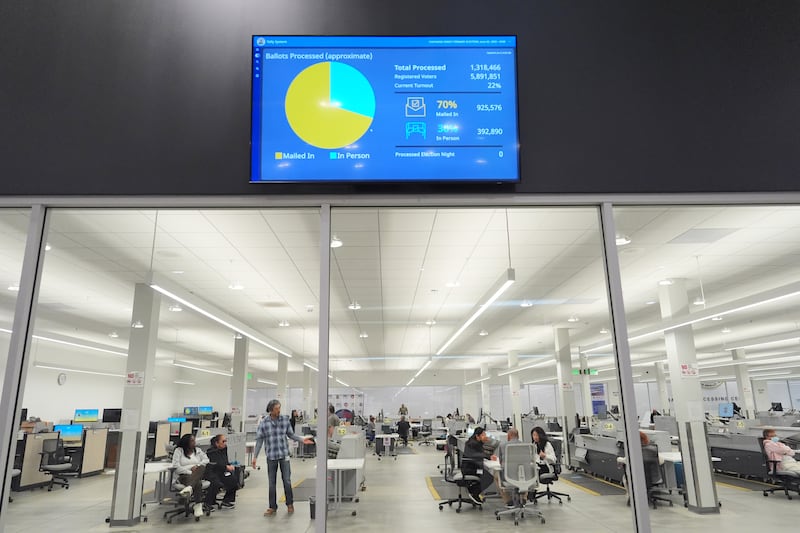
The question of widespread fraud in California emerged after the slow count created the illusion of a “red wave” that disappeared as additional ballots were counted.
“Every election has some fraud; we’re not talking about five people,” Richer said, pushing back against the online controversy over the election results.
Is there evidence of fraud?
California deploys signature verification processes to verify the authenticity of ballots, he noted.
“A lot of people think, ‘If I’m not showing my ID, then something must be wrong.’ It doesn’t mean that something’s wrong,” said Richer.
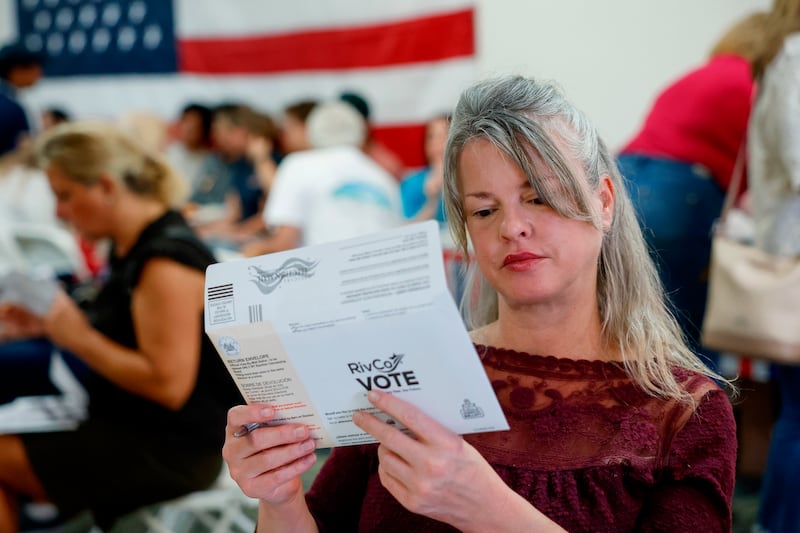
California is one of eight states with universal mail-in voting, where all eligible voters receive a ballot by default. It is one of 18 where elections are primarily conducted by mail. Voters still have the option to vote in person in all states.
A majority of states still ask voters to vote primarily in person and verify their identity on the spot through a photo ID, with various options for mail-in voting.
Trump claimed that the lack of a result a week after Election Day in the Los Angeles mayoral race served as adequate evidence for fraud.
“Watch California, everybody!” said Trump. “Our Election process is as bad, or worse, than any Third World Country. The biggest difference is, they count their votes much faster — they don’t wait seven days to tell you who won, rigging the Election during each and every one of them.”
Bill Essayli, the first assistant U.S. attorney for the Central District of California, said the U.S. Department of Justice would conduct a wide-ranging audit of California’s voter roll, a move Gov. Gavin Newsom has pushed back against.
“I expect people will be charged,” said Essayli during an appearance on “The Glenn Beck Program.” Although he stated there are “multiple election fraud investigations underway,” Essayli hasn’t offered any specifics.
Richer said California follows the fundamental rules when it comes to the elections. For starters, all equipment is tested before and after the election to weed out any inconsistencies. Ballots go through a hand-count audit in case any machine is manipulated.
“There are ample opportunities for observation, whether it’s at all the different locations or even just online,” Richer added. “There’s partisan certification.”
In the controversial race in question, Spencer Pratt, a former reality TV star, initially held an early second-place lead on election night, but ultimately lost his spot to progressive City Councilwoman Nithya Raman, who advanced to the runoff alongside incumbent Mayor Karen Bass.
Richer didn’t consider it unusual for Pratt to gain about 26% support in a three-way race where voters primarily skewed left.
“Young voters, in particular, held their ballots later in the process, and they disproportionately favored Raman over Bass,” he added.
What are the signs of election fraud?
When asked how to spot widespread fraud, Richer noted a few obvious ways to spot major discrepancies, like when a precinct returns more ballots than it has registered voters or when a district begins voting unusually.
In the case of Maricopa County, Phoenix remains deeply blue with a ring around it that’s red or shades of purple.
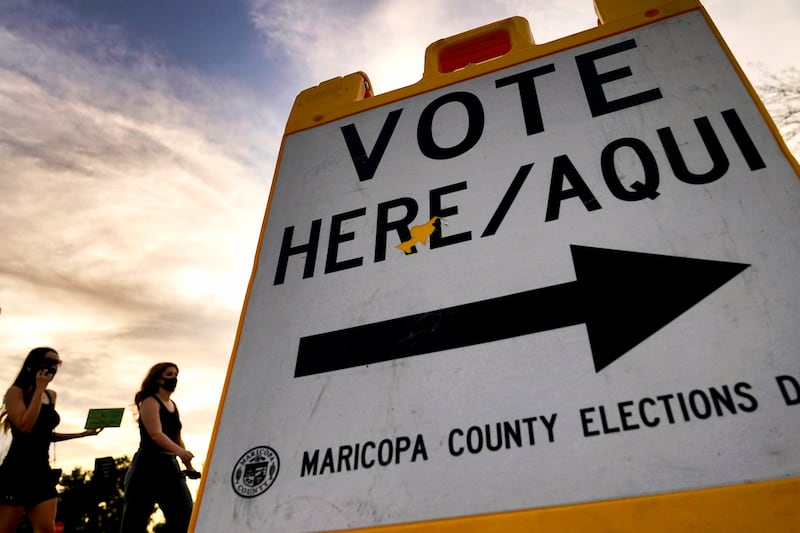
“But if there’s all of a sudden a red blotch in the middle of the blue of Phoenix, that’d be something that I would look at,” said Richer.
It’s also worth paying attention to reports from election workers or voters observing the process, but the best way to witness the transparency is by becoming an election worker, he said.
“You’ll see that it would be really stinking hard to manipulate this process,” said Richer.
“You’ll see that most election workers are just trying to get through the night (or) the week, so that people can stop saying, ‘When’s the next batch of results drop?’”
He pointed to a recent incident in Arizona as an example of the intense monitoring.
An authorized staffer removed a digital ballot scanner from the Maricopa County Tabulation and Election Center in March earlier this year, sparking a political and legal battle over the custody of the machines.
Surveillance footage, released by county officials, tracked the staffer loading the machine into a private pickup truck, driving off and returning nearly an hour later. Although the staffer was authorized to be at the facility, it’s unclear whether the office of the county recorder was allowed to take the hardware out of the facility.
“You can like watch the whole sequence,” said Richer of the video. “There are lots of securities built into the system.”
What we can learn from Utah?
In response to federal attempts to investigate California’s voter rolls, Newsom’s office told Fox News that “every federal court to consider the issue has ruled U.S. DOJ’s demands violate federal law.”
“Unlike this federal administration, we don’t do things that are illegal,” the spokesperson added.
Utah Lt. Gov. Deidre Henderson’s office released a report on the findings of noncitizens voting in the state elections in May.
The yearlong investigation found 27 confirmed noncitizens and 25 probable noncitizens. For reference, Utah has about 2.1 million registered voters.

“The Trump administration should be saluted — they made some of these federal resources more widespread,” said Richer, while also praising the Utah lieutenant governor for a “top-notch job.”
Utah ran its voter rolls through the federal Systematic Alien Verification for Entitlements, or SAVE, database for this investigation.
More than two dozen states have conducted similar audits, with more than 60 million nationwide registrations checked within the span of a year, as The Associated Press reported.
“It’s not a perfect database — you have to go and investigate,” said Richer.
But it provides a critical data point; Richer warned it’s important to keep the percentage of fraud in mind.
“If we wanted to say we want zero fraud,” said Richer, “then we would have retinal scans and DNA tests for every single person who shows up to vote, and everyone would hate voting.”
What’s next for California
On the day of the election, Silicon Valley Rep. Ro Khanna tried to further conversations about election reform, especially when it comes to the speed.
The progressive lawmaker proposed investing in “improvements and resources” for speedier vote counting.
“Right now the system is eroding trust and spawning conspiracy theories,” said Khanna.
Suggestions to increase countin speed includg hiring more workers and expand warehouse space to get through millions of ballots that come in on Election Day more quickly.
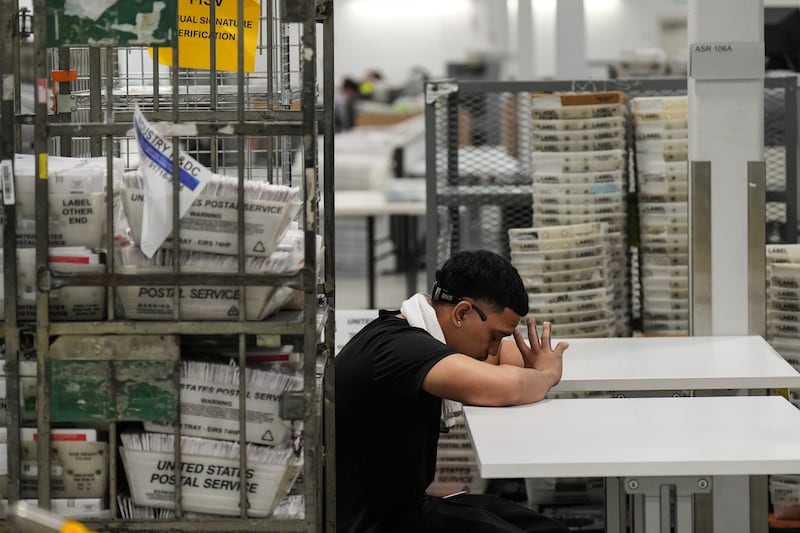
But the Golden State’s Election Day is like a “python swallowing the pig,” where a bottleneck appears when millions of mail-in ballots flood the systems, all because people choose to hold on to their ballots until the very end, as Kim Alexander, president of the California Voter Foundation, has previously said.
Still, Richer said it’s reasonable to want results faster.
“That doesn’t mean you have to throw out all access,” he said. It’s about balance.
Utah’s Republican-controlled Legislature successfully passed a law that removed the grace period for mail-in ballots. Under the new law, ballots must now be physically in the clerk’s possession by 8 p.m. on Election Day to be counted. Utah also instituted additional ID requirements.
In Arizona, the Republican-controlled Legislature has proposed earlier deadlines for mail-in ballot voters, only to be vetoed every year by Democratic Gov. Katie Hobbs.
Richer argued early deadlines can help election workers tabulate results earlier.
“Is it absolutely necessary to be able to let people drop off their ballot on Election Day when you have 27 days of early voting?” Richer said. “I would argue that’s a fair conversation,” especially if it guarantees faster results.
Richer added, “The pendulum needs to swing back at least a little bit, not necessarily for the security reasons — that’s important and I think we’re pretty good on that front — but for the speed.”