



Across the United States, voters are losing trust in elections. But government intervention to address this growing concern and impose reform creates a debate: Should elections be the responsibility of the federal, state or local governments?
Several leaders met at a panel discussion hosted by the Sutherland Institute to examine how federalism plays into modern voting reforms and what both voters and candidates can do to uphold the integrity of elections.
“If we collectively begin to lose confidence in the validity of our elections, the integrity of our elections, we lose everything,” said Brian McKenzie, Davis County clerk. “That’s why this is so important.”
How should federalism factor into election reform?
A recent survey by the Sutherland Institute shows that partisanship influences a voter’s trust in local, state and federal governments to run fair and accurate elections.
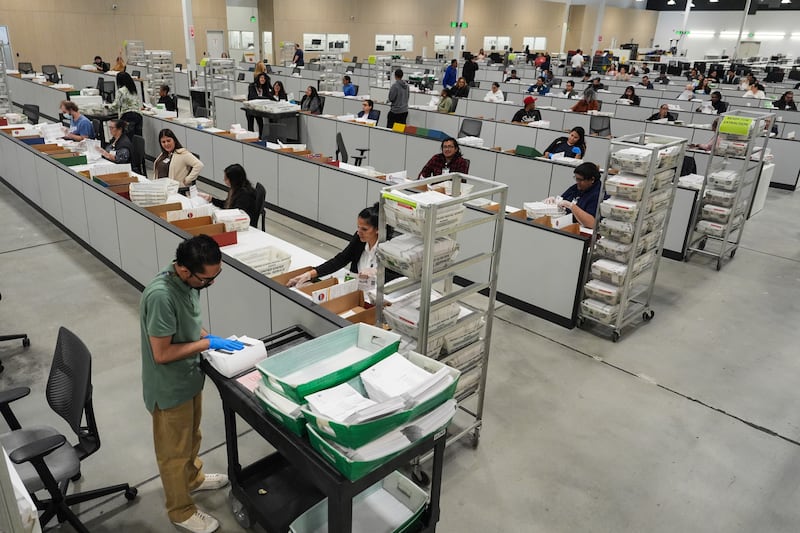
Nationwide, Democrats trust state and local the most to run elections and trust federal entities the least. Republicans trust federal and state governments the most and local government the least. Political independents trust state government the most with local government coming in second and the federal government a distant third, the survey showed.
These partisan differences are worth noting, said Derek Monson, executive director at the Sutherland Institute, but he argued that creating effective change in the system requires a deeper look into these influences.
In the Sutherland Institute survey, U.S. respondents who indicated they trusted the federal government most to handle elections said they do so because the federal government is the most legitimate and authoritative level of government, meaning it can enforce nationwide uniformity in election procedures and has the greatest resources to implement those reforms.
On the other hand, U.S. respondents who indicated they trust state and local government listed the proximity and size of local governments and distrust in the federal government and/or current administration as the reasons for their opinion.
McKenzie said the debate over the appropriate balance of federalism in the electoral process is a time-old conversation.
“This is not a new concept for our country. We’ve always had this battle between states’ rights and the federal government’s power and authority,” McKenzie said.
The solution: National impact through local solutions
Panelists suggested several ways to balance the jurisdiction between separate levels of government as both parties push for election reform.

Increase local jurisdiction: Electoral reform will continually evolve, McKenzie said, but modifications are best made closer to home.
“There’s always some tweaks, some adjustments that we need to work on,” McKenzie said. “But I do believe, this is my personal belief, that those solutions are best found at the state. They’re best found locally with the people who answer for and interact with those processes.”
Encourage voter participation: Panelists said participation is a significant indicator of voter trust.
“I think the most important polling result that you can find about voters’ faith and confidence in elections is the fact that they show up and continue to vote,” Josh Daniels, director of election policy at the Raine Center for Public Policy and previous county clerk in Utah County, said. “What we need to do is ensure that voters continue to participate.”
Matthew Weil, vice president of governance and bipartisanship at the Bipartisan Policy Center in Washington, D.C., said when people voice concerns over the integrity of the electoral process, he invites them to go see the process firsthand by working as a poll worker.
“Almost always, they feel much more confident about how voting happens once they’ve actually touched the process, because it is very secure, and there are good processes and procedures in place everywhere,” Weil said.
Get to know leaders: One of the reasons voters cited trusting their local and/or state governments more than the federal government was that they had a a sense of familiarity with the leaders in their community. This connection is what Daniels called the “magical” part of local government.
“There’s something important about the principle of self-government that was created in our system when you really do know, or can at least become familiar with, the people that are operating your government locally,” Daniels said.
The more intimate relationship between voters and local officials helps voters trust and support leaders both in their own party and across the aisle, Daniels said.
Embrace civic responsibility: McKenzie said that both citizens and candidates have an important role to play in maintaining trust in elections.
“We talk about civic responsibility as voters to be engaged, to participate, you know, interacting with our elected officials,” McKenzie said. “But those who choose to run for office have a civic responsibility as well.”
Candidates have an obligation to “learn and understand the election process” and “speak truth.” And most importantly, he said, they are bound to uphold the integrity of the electoral system.
“In the end, there will be winners and losers. If you happen to be a losing candidate, you have the responsibility to stand up and and defend the process.”
The future of elections relies on federalism — and funding
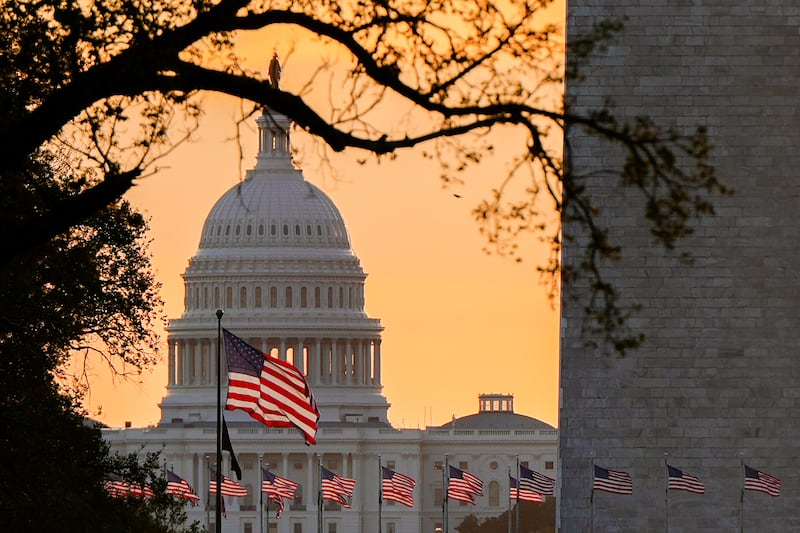
As more regulations are placed on the voting process, funding is crucial to implementation, which requires collaboration between all levels of government.
“Funding is a huge issue that election officials constantly are talking about because a lot of these new requirements — security, access, voting system improvements — require funds," Weil said.
Whether funds should be from state or fed is up for debate but the bottom line is clear: “The funding isn’t there right now,” Weil said.
“This is a federal, state, local problem. We need to find a way to reliably fund our elections,” he said. “The system will break if we cannot fund these changes that are happening. And that requires the federal, state, and local governments to find a way to work together on this.”

Weil said both parties are interested in voting reform, but it can only be accomplished through bipartisan collaboration.
“This is not going away as an issue,” Weil said. “There’s going to be continued efforts to reform the system.”