

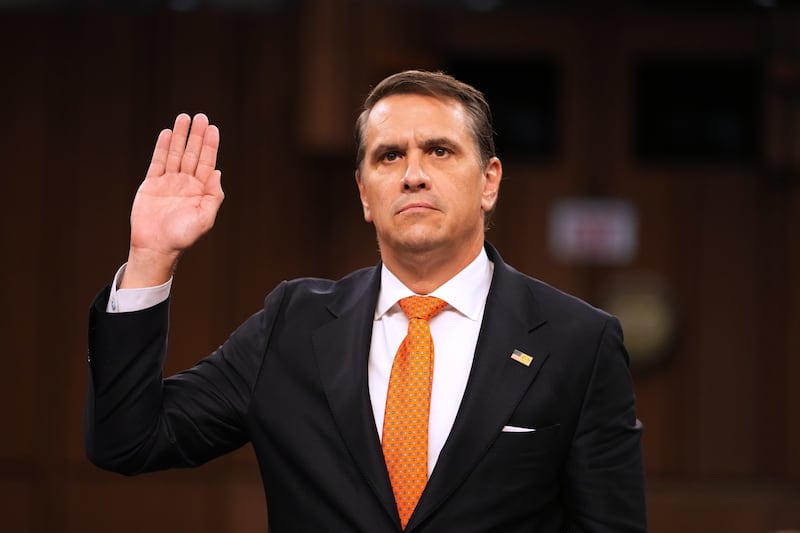

Todd Blanche, the acting attorney general, faced questioning from the Senate Judiciary Committee as he seeks confirmation to permanently serve in his position after President Donald Trump dismissed Pam Bondi from the role earlier this year.
He faced some tougher questioning from Democrats on the committee concerned that Blanche would cater the Department of Justice to Trump’s agenda.
However, Blanche faces a pivotal vote among Republicans, as it would take just one GOP vote against him to tank his nomination.
Two Republicans on the committee — both of whom are leaving office — Thom Tillis of North Carolina and John Cornyn of Texas — have raised questions about Blanche’s role in creating a $1.8 billion anti-weaponization fund for those who claimed to be victims of prosecution under the Biden administration.
After testifying before the Senate Judiciary Committee for five hours Wednesday, all 100 senators will debate the nomination, which requires a simple majority of 51 votes.
Relationship with Trump and the anti-weaponization fund confusion
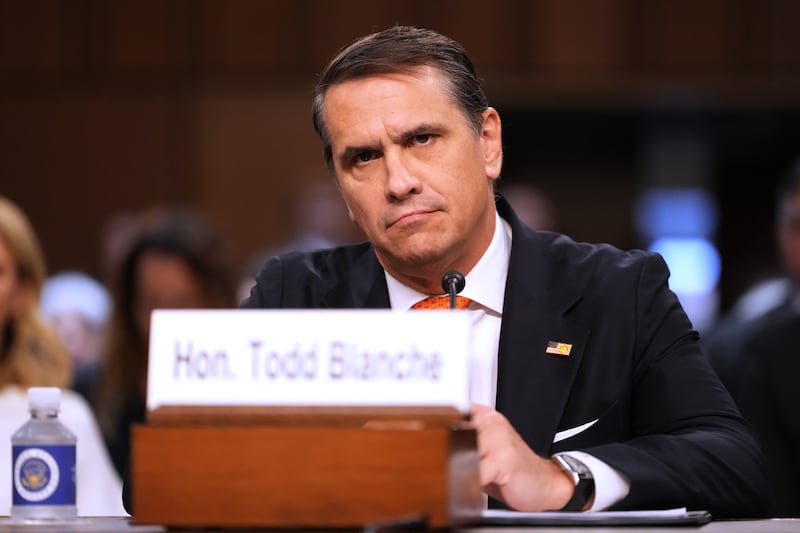
It’s something Blanche said the administration was walking back after strong criticism from both sides of the aisle. But it’s still something that those two senators are wanting to ensure won’t happen.
“It is a moot issue, meaning there is no weaponization fund,” Blanche said in response to a question from Cornyn. “The weaponization fund is dead. It’s not moving forward.”
While Blanche said the fund is dead, the language in the settlement agreement filed in federal court has yet to be amended by the parties. Senators raised questions about how the settlement states that any changes to the fund must be agreed upon by all parties involved, but to date, no one from the government or the president’s personal legal team have made any formal changes to the agreement.
Cornyn didn’t seem satisfied with Blanche’s response, saying there were still ways contractually the weaponization fund could be used. During a break in the hearing, he told CNN’s Manu Raju that Blanche’s remarks “basically confirm that it’s not dead.”
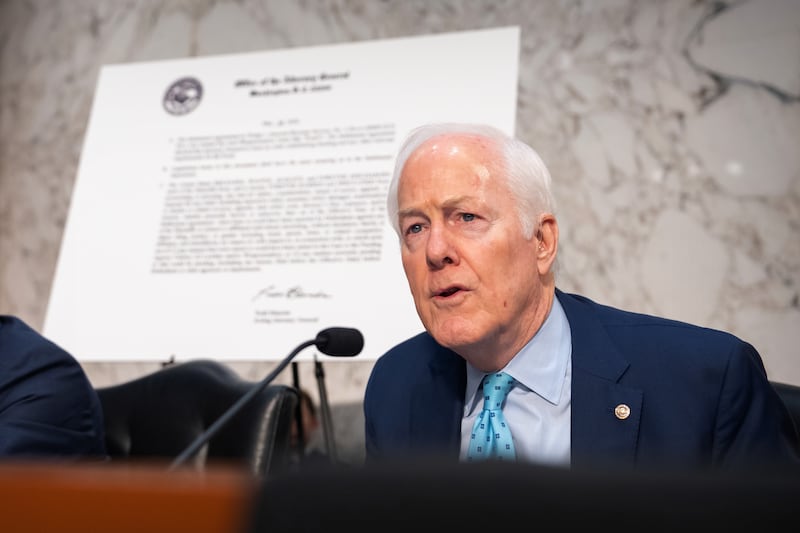
“I continue to have some concerns, but I’m not going to make any decisions at this point. I’m going to wait till we actually vote on the confirmation in a week or so,” Cornyn said.
Cornyn confirmed that he was truly undecided to vote through Blanche. He’s a vote that the Trump administration desperately needs but is partially a rogue actor at this point after the president backed Ken Paxton instead of Cornyn in a Texas runoff election earlier this year, putting an end to his more than 20 years in the Senate come 2027.
Blanche’s relationship with Trump is also in the spotlight. He first was introduced to the president as his criminal defense attorney, but questions about his relationship with Trump forced the acting attorney general to slip up.
Sen. John Kennedy, R-La., asked Blanche if he and Trump were friends.
“I’m his lawyer — was his lawyer,” Blanche self-corrected.
The clip is reportedly being circulated in offices on Capitol Hill as an example of how Blanche would serve should he be voted through to become permanent attorney general.
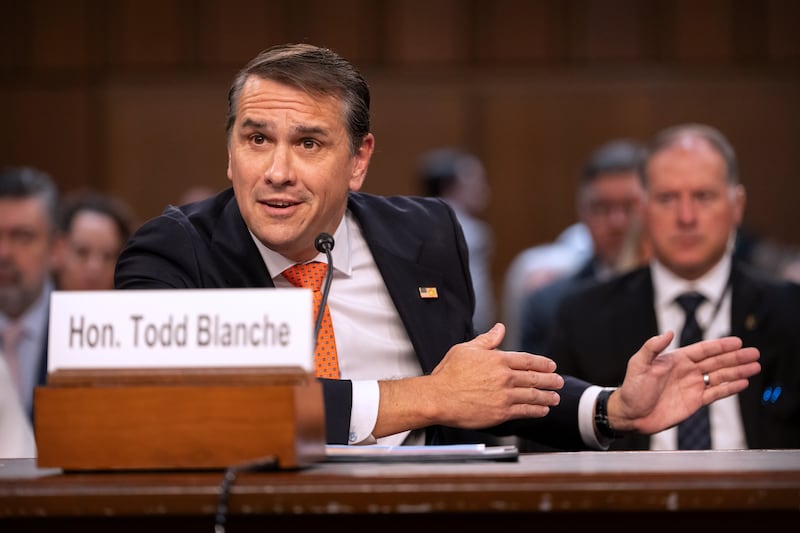
During his 2025 confirmation hearing, Democrats raised the same concerns and Blanche downplayed the concerns and said he still has an “attorney-client relationship” with Trump but won’t violate ethical obligations. He also said he doesn’t think Trump would ask him to do anything “illegal or immoral.”
Additionally, in response to a questioned by Sen. Chris Coons, D-Del., Blanche confirmed that he did not think Trump would be eligible to run for a third term.
Epstein file rollout raised questions
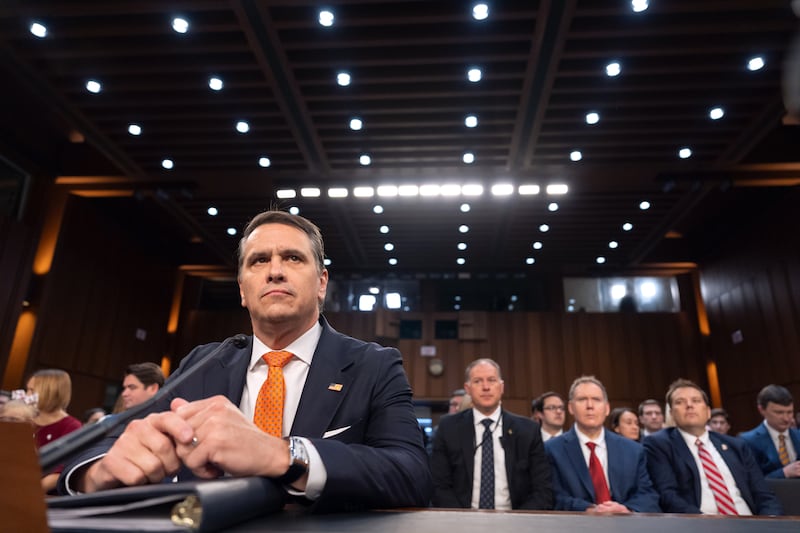
Blanche, who served under Bondi before her firing, faced questions about immigration and late sex offender Jeffrey Epstein.
As deputy attorney general, Blanche oversaw the review and release of the Epstein files that Congress demanded over the last year. The release sparked drama for Bondi, who said contradictory things at times about the files. The release of the files was supposed to happen by a certain deadline but the release was slow and delayed.
Blanche has insisted that the review of the files was handled professionally, but some critics say certain things were not redacted that should have been. He admitted that there is “a hunger or a thirst” for information and didn’t think people would be satisfied by the review of the documents.
“And there’s nothing I can do about that,” he previously said.
During the hearing, Blanche said under the Epstein Transparency Act, the DOJ took on a “Herculean task” to review the millions of files “expeditiously.”
“The reviewers were qualified, experienced attorneys within the department and the FBI. They took pains to apply appropriate redactions, there were mistakes that were made, and so approximately 1% of the redactions had to be fixed after we released the Epstein files,” Blanche said, adding, “Whenever we learned that any victim’s name had been improperly not redacted, we immediately took the document down and fixed it as soon as we could.”
“That doesn’t excuse the mistakes of which I take responsibility, but it does mean that we tried to fix them.”
Blanche repeatedly highlighted how the Trump administration was trying to be transparent about the Epstein files and meanwhile for “four years there wasn’t a peep bout Jeffrey Epstein” and the Biden administration didn’t release anything.
“We worked hard, hardworking lawyers within the department to do the right thing ... to comply with the Act, and we did, and we’ll continue to do so,” he said.
Blanche said as of now, the information they have is that no other man who worked alongside Epstein to traffic young women and girls. If new material is learned, or other people want to come forward, Blanche said he’d be receptive and encourage it.
Sen. Mike Lee questions Blanche over fraud, Biden’s special counsel
Utah Sen. Mike Lee questioned Blanche about some things he’s done in his role as acting attorney general so far, including former special counsel Jack Smith obtaining text messages sent from members of Congress to White House officials during Trump’s first term.
Blanche highlighted that they are being transparent about findings with the committee because they believe one way to not have things like that happen again is by “exposing ourselves and letting the American people see what we did.”
Lee also questioned Blanche over fraud and how the DOJ would work with other agencies to catch fraud in taxpayer-funded programs and organizations.
“We’re making it a high priority. We’re working with the White House and the Anti-Fraud Task Force,” he replied, noting that prosecutors are focusing on fraud and the DOJ is working with the FBI and the Department of Homeland Security to build out its fraud division.
“We’ve already had tremendous success just in the past four weeks in recovering billions of dollars that had been stolen.”