

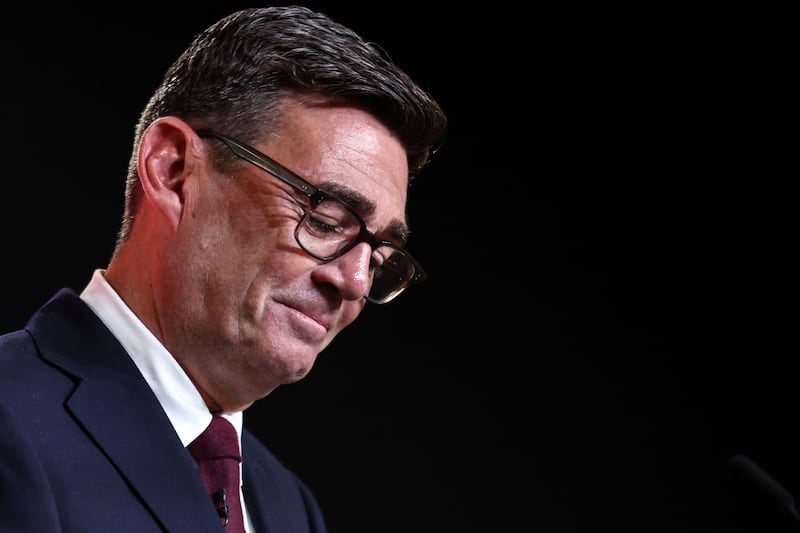

- Andy Burnham was elected unopposed as Labour leader and will become the U.K.'s prime minister on Monday, following Keir Starmer resignation two years into office.
- Burnham, the longtime mayor of Greater Manchester and former cabinet minister, pledged to reverse decades of privatization and argued the government should regain greater control over essential services.
- Burnham's first speech drew mixed reactions, with critics calling it vague and supporters saying the public is ready to give him a chance after years of political instability.
Andy Burnham was elected unopposed as leader of the United Kingdom’s Labour Party on Friday.
He will formally take office as prime minister on Monday, after seeking permission from King Charles III to form a government in the Crown’s name.
The U.K.’s former prime minister, Keir Starmer, announced his resignation from office in late June, just two years after taking office.
Starmer’s administration was tainted by his appointment of Lord Peter Mandelson as Great Britain’s U.S. ambassador. Mandelson resigned in February amid political pressure to step down over his past associations with the convicted sex offender Jeffrey Epstein.
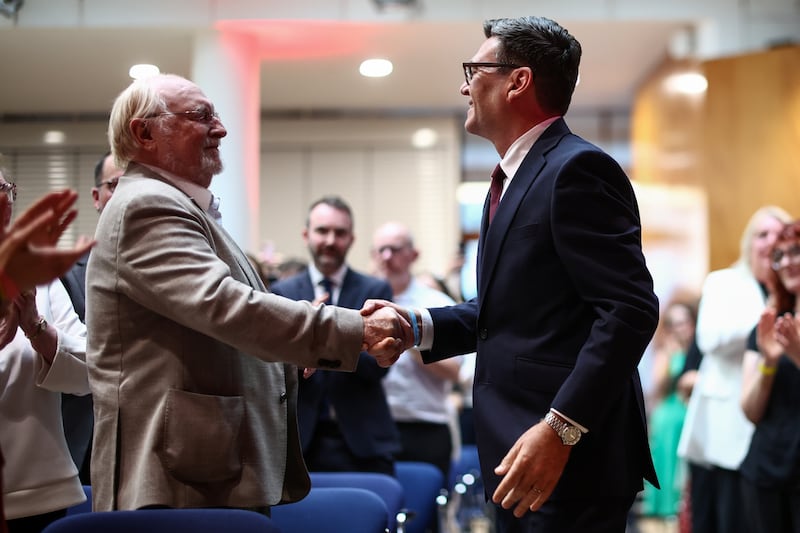
However, Starmer’s approval ratings were on the decline before the Mandelson saga. Since his election in July 2024, Labour’s Parliament voting intention dropped more than 15 percentage points, with Reform UK being more favorably viewed since April 2025.
As of this past April, only 18% of the British population and only 41% of his own party were satisfied with Starmer.
Who is Andy Burnham? What are his politics?
Burnham, 56, has been involved in Great Britain’s political scene for decades.
A northern England native, Burnham studied English at Cambridge University.
Upon graduating, he began his career as a journalist, then pivoted into politics after several years. Through his political career, he served as a Member of Parliament for Makerfield, in various cabinet positions and as mayor of Greater Manchester from 2017 to 2026.
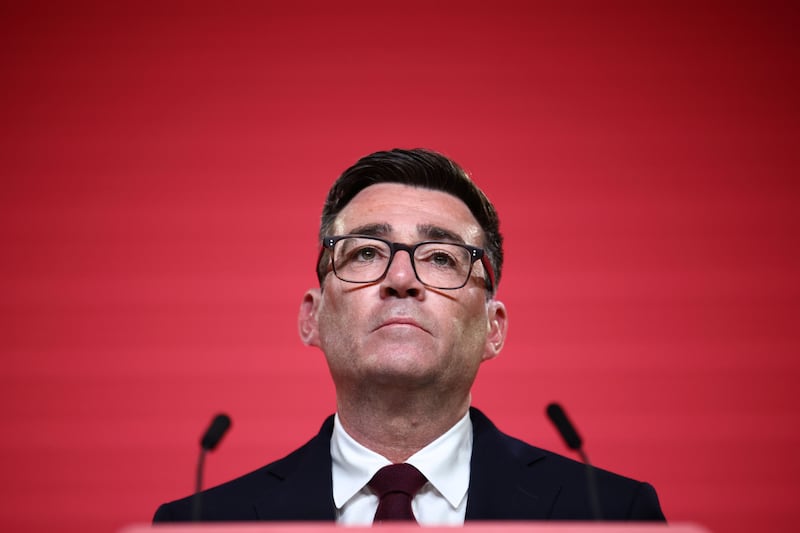
He was born Roman Catholic but has described himself as “not particularly religious.”
Addressing members of his party on Friday, Burnham described his appointment as “the most significant change” in politics in the last four decades.
The U.K. took “a series of wrong turns in the 1980s,” Burnham said.
In the 1980s, conservative Prime Minister Margaret Thatcher privatized major government-run sectors of the economy, including British Airways, British Gas and British Telecom. Thatcher also passed legislation, which made it easier for tenants to buy the government-owned housing they lived in.
Referencing these policies, Burnham said that under Thatcher, the U.K. had “surrendered control of the essentials — housing, water, energy, transport — and left people exposed to higher costs."
“That in turn led to the concentration of more wealth and power in the hands of fewer people and fewer places,” Burnham said.
What are the Brits saying?
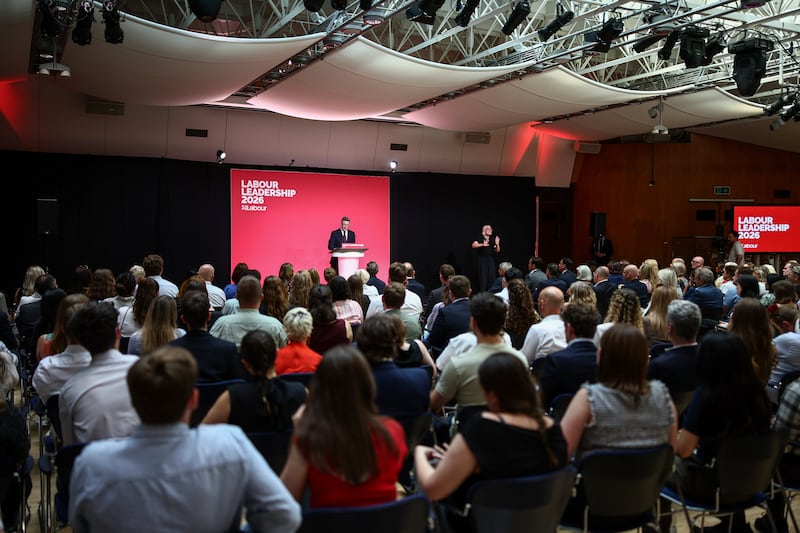
As Burnham cannonballed into the U.K.’s political spotlight on Friday, he drew strong reactions from the British press.
Following the prime minister-elect’s speech, British journalist for The Spectator Madeline Grant wrote, “We know more about Burnham’s views on queuing in pubs and whether milk should go into tea first than we do about his economic policy, plans for government or even who will populate his Cabinet.”
Burnham puts his milk in his tea first, and he is “vehemently against” single-file queuing in pubs.
“Is he just going to flutter his eyelashes at the Labour Party and hope it magically makes them less egregiously psychotic?” Grant added.
An hour earlier, an associate editor of the London-based Telegraph, Camilla Tominey, joined former Member of Parliament Sir Jacob Rees-Mogg in a podcast to discuss Burnham’s speech.
After reading portions of it, Tominey said, “This is all very vague, isn’t it?”
“It’s utterly vacuous,” Rees-Mogg responded. “There is absolutely no meaning to it. No substance to it. No indication as to how he’s going to operate as a prime minister.”
A key criticism Starmer faced in office is that he entered his premiership without a plan, Tominey said. “He’s been undone so quickly in two years, precisely because he has wavered because he hasn’t had any ideological heft,” she said. Tominey expressed concern that Burnham will face the same issue.
On the other hand, British journalist Jonathan Freedland wrote in The Guardian, “Voters do seem ready to give him a chance.”
“There’s a recognition that seven prime ministers in 10 years is not sustainable and that, for the country’s sake, Burnham needs to succeed. That translates into a goodwill that must not be squandered,” he said.