

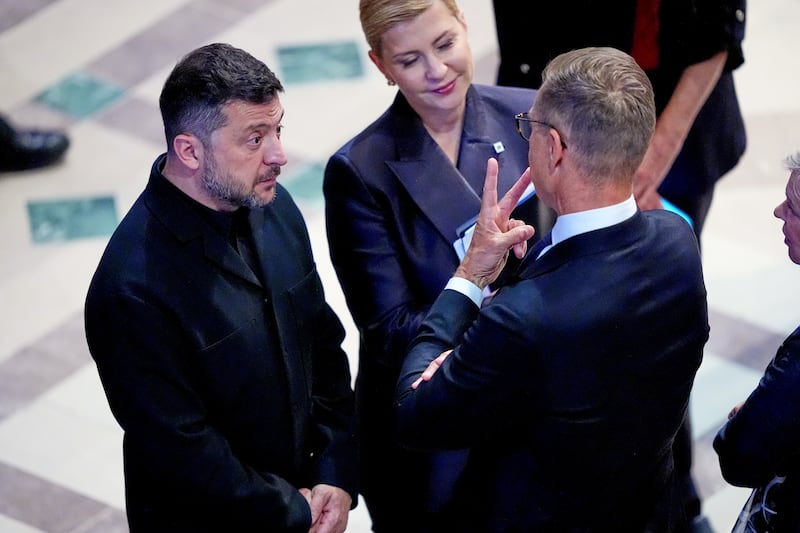

Lindsey Graham’s final act as a U.S. senator was securing a deal with the White House on a Russia sanctions package. On Tuesday, that bill took its first step toward becoming reality.
The Senate on Tuesday overcame its first procedural hurdle to advance a sanctions package on Russia and Iran, a rare bipartisan vote as lawmakers in both parties coalesced around the effort.
The vote came just hours after Graham’s funeral, where Ukrainian President Volodymyr Zelenskyy was in attendance to pay respects to the GOP senator who consistently supported Ukraine after it was invaded by Russia in 2022.
“Today, many of us attended his service at the National Cathedral, and in typical Lindsey fashion, he somehow orchestrated a vote on Ukraine’s future, on peace through strength, on that very same day,” Sen. Katie Britt, who was a key negotiator of the package, said in a floor speech ahead of the vote. “Let’s honor Lindsey’s memory the best way we know how.”
Both Utah senators voted to advance the legislation, with Sen. John Curtis presiding over the vote. Curtis is one of the 62 co-sponsors of the package.
“The United States has, again, made it clear that Russia cannot be allowed to win its war against Ukraine,” Curtis said in a statement. “Proud to preside over tonight’s bipartisan vote to advance legislation, championed by my late colleague Senator Lindsey Graham, that imposes sanctions targeting Putin’s war machine and reaffirms America’s commitment to standing with the Ukrainian people.”
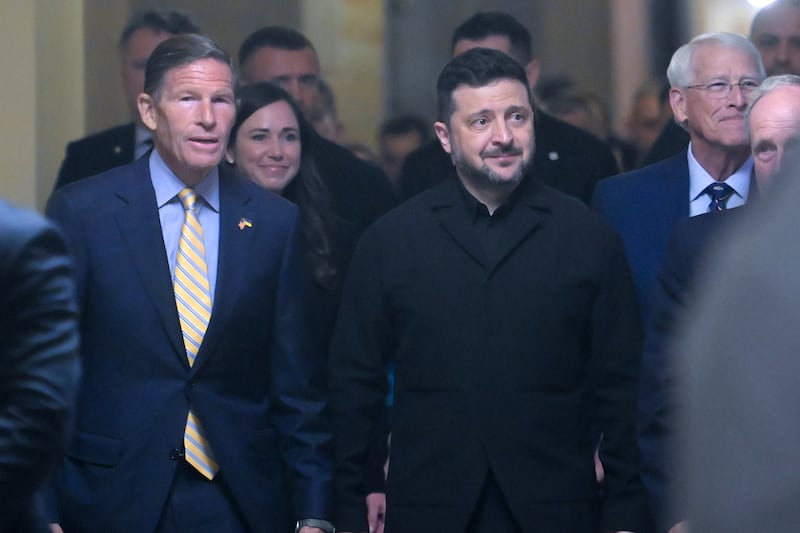
The bill advanced as Zelenskyy, who met with senators moments before, watched from the Senate chamber balcony. As he left, the Ukrainian president put his hand to his heart and thanked the senators on the floor.
Bipartisan group unveils new Russian sanctions agreement
A bipartisan group of senators unveiled the final version of the sanctions package on Tuesday after weeks of negotiations between the two parties.
The bill, named after Graham, would impose primary and secondary sanctions against Russia as well as any other country supporting the Kremlin’s war efforts in Ukraine. Those sanctions would target Russian officials, oligarchs, their family members, foreign persons and Russian banks and financial institutions.
It would also impose penalties against the Russian Shadow Fleet, a network of hundreds of vessels designed to evade sanctions and bypass Western price caps on oil.
The package, as part of the agreement with President Donald Trump, would also allow the president to impose targeted tariffs on countries that purchase the vast majority of Russian oil or gas. Those tariffs would only apply to the five largest importers of Russian oil or gas as well as the top five countries that aid Russia in evading sanctions.
Additionally, the bill includes language to prevent the expiration of sanction authority restricting funds for Iran’s energy and weapons sectors.
“We are proud to announce an agreement on legislation to stop purchasers of Russian oil and gas from fueling Putin’s war machine and to continue restricting the Iranian regime’s ability to support terrorism and build its nuclear program,” the bipartisan group said in a joint statement. “There is no greater way to honor Senator Graham’s legacy than to move forward with this bipartisan agreement, and we look forward to today’s vote.”
Zelenskyy courts senators on Russia sanctions bill
Zelenskyy gathered with senators of both parties in a closed-door meeting Tuesday evening to make his pitch on the sanctions package. The meeting, which lasted roughly an hour, concluded just before the procedural vote was approved.
Zelenskyy traveled to Washington, D.C., to attend Graham’s funeral, honoring their yearslong relationship as the late senator often served as an intermediary for him and Trump.
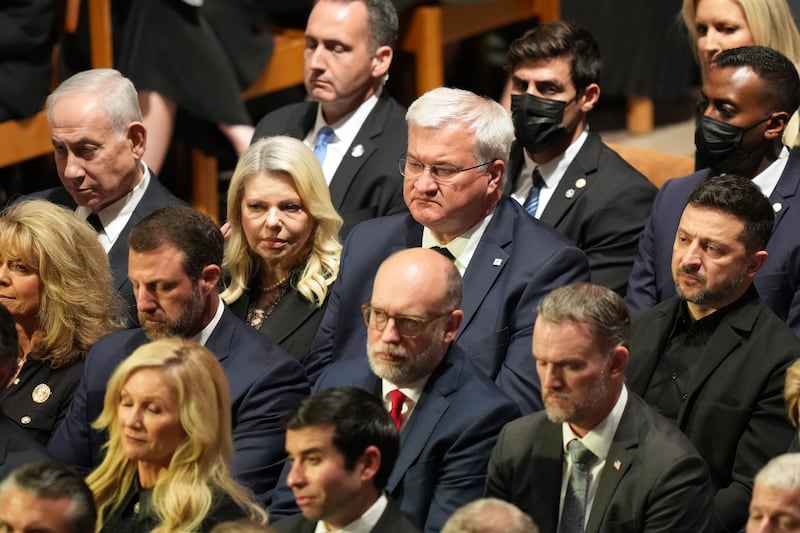
The Ukrainian president met with Trump in the Oval Office hours before the funeral, a discussion described by White House officials as positive. Trump met as well with Israeli President Benjamin Netanyahu on Tuesday, who was also in town for Graham’s funeral.
While Zelenskyy is used to persuading skeptical Republicans to approve aid to his war-torn country and impose sanctions on the Russian regime, he found himself making the same case to Democratic lawmakers who have typically been among Ukraine’s biggest supporters.
Zelenskyy’s main message, according to senators present, was that Russia is at its weakest point militarily and now is the time to drive Russian President Vladimir Putin to the negotiating table by squeezing him economically.
“The discussion was in detail about Ukraine, and we are thankful that this bill is very important,” Zelenskyy told reporters after the meeting. “Sanctions pressure on Russia is very important. It’s not only about money, how to stop financ(ing) this war, but it’s also a big signal to Europe, big signal to Ukraine.”
Shortly after the package was introduced this month, some Democratic senators expressed concern about the tariff authority granted to Trump. Democrats have opposed any effort to expand Trump’s trade powers as they believe it weakens Congress’ authority.
Sen. Ron Wyden, the top Democrat on the Senate Finance Committee, and Rep. Richard Neal, the top Democrat on the House Ways and Means Committee said in a joint statement earlier this month that “Congress would not be able to stop Trump from unilaterally lowering those tariffs or raising them at will.” Wyden ultimately voted against the procedural vote on Tuesday.
“Everybody has spent so much time focusing on affordability, which is cost of living,” Wyden said after the vote. “And all these tariffs that Donald Trump is imposing undermine your argument.”
Zelenskyy addressed the tariff authority language during the meeting, according to senators present, as he defended the financial penalties as essential.
Democratic Sen. Richard Blumenthal, who has worked with Graham for years on a sanctions package, similarly backed the tariff authority — arguing it is narrower than the powers Trump has used to issue tariffs during his second term.
“The tariff authority is narrowly targeted and confined to the five largest purchasers of Russian oil and gas,” Blumenthal told the Deseret News. “None of our European allies are hit (by it). The president simply has no authority under this bill to apply tariffs in a broad blunderbuss way.”
The bill is ultimately expected to pass with bipartisan support. The sanctions package has 62 co-sponsors, split between 40 Republicans and 22 Democrats.
However, the timing of the vote on the legislation is unclear. Senate leaders are likely to push for swift passage this week, but that process could be slowed by senators who oppose the package.
After that, the bill heads to the House, which is scheduled not to return from its recess period until Aug. 31. Britt urged House members to return from the recess period “immediately” after the bill passes the Senate to ensure swift passage, although that is not guaranteed.
Some House Democrats were present for the meeting with Zelenskyy, which the bill sponsors say is a good sign that the package will have bipartisan support when it’s considered in the House.