

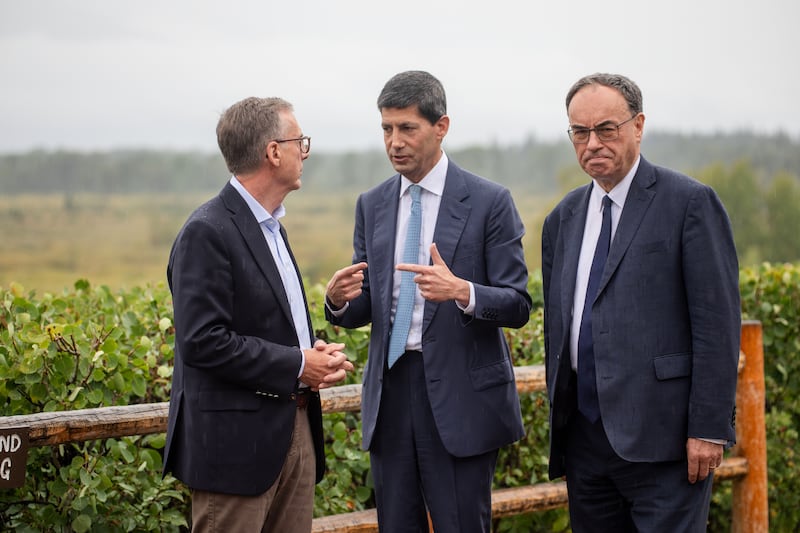

Federal Reserve Chairman Kevin Warsh spoke with investors and economists at the Jackson Hole Economic Symposium on Friday, giving his first keynote address at the annual conference in Wyoming.
Warsh warned of a possible rate hike in the coming months due to rising inflation, but the chairman stopped short of making any official announcements. Meanwhile, he maintained that the economy and labor market are strong.
“For my part, today I am impressed by the overall performance of the economy, which appears to have strengthened,” said Warsh, who took over as the central bank’s leader after Jerome Powell stepped down in May. “One indicator of strength is how well an economy holds up to shocks. On that score, both Main Street and Wall Street have been remarkably resilient.”
The speech comes as the Trump administration looks for ways to ease high prices caused by inflation, particularly ahead of the midterm elections.
Here are three main takeaways from Warsh’s speech.
Inflation, while improving, is still a concern
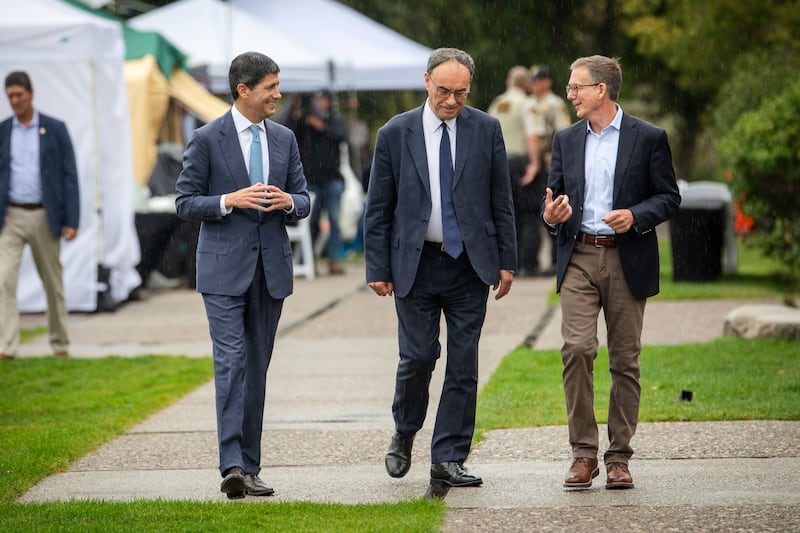
Although Warsh expressed confidence in the economy, the top Federal Reserve official swatted down claims that inflation is not a real threat.
Warsh cited recent reports showing inflation rates cooling in recent months, but noted those statistics “do not tell me that underlying trends have meaningfully improved.”
“We must be confident that underlying inflation is moving to our objective, clearly and at sufficient speed,” Warsh said. “Otherwise, we have work to do.”
His comments sought to ease concerns from those on Wall Street who want Warsh to shift the Federal Reserve’s focus to fighting inflation. Inflation rates have remained above the central bank’s 2% target, according to data Warsh presented on Friday.
Rate hikes a possibility
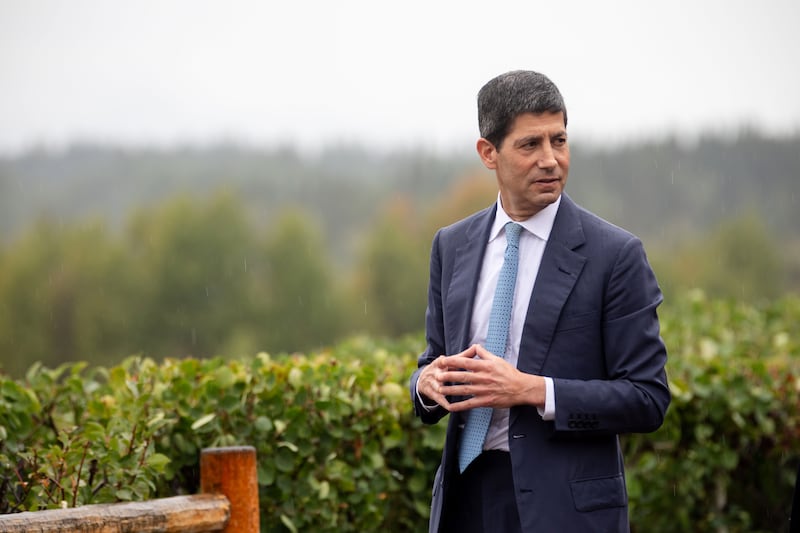
Although Warsh did not indicate that rate hikes were imminent, he hinted increases were possible in the coming months to address the stubborn inflation rates.
An increase could put Warsh in the crosshairs of President Donald Trump, who has long sought to cut rates.
“Let’s be equally clear about another aspect of the objective: Price stability is not self-executing, nor is inflation necessarily mean-reverting. It is the Fed’s job to deliver stable prices,” Warsh said. “Short-term interest rates are the predominant tool to achieve the dual mandate.”
But Warsh stopped short of giving definite predictions, despite pressure from economists to provide a plan for possible data changes in the future.
“I wish our understanding of the economy were so precise as to provide a mechanical, tried-and-true answer,” he said. “But our knowledge just doesn’t extend that far — at least not yet — and the factors most relevant to the proper conduct of monetary policy change over time.”
Optimism with AI
During the speech, Warsh also raised the possibility of the rise of AI having an effect on the economy — for good or bad.
“We recognize that AI is a new variable — potentially a new factor of production — that will have consequences for both the economy and the conduct of monetary policy,” he said Friday.
AI could have positive effects for price dynamics in the labor market, Warsh suggested, but it remains unclear how exactly new technology could impact the economy in the future. The Federal Reserve’s task force on productivity and jobs is expected to handle questions on AI.
But Warsh noted that current rates are not restricting business investments in the AI sphere. However, longer-term rates have risen in recent weeks partially because of borrowing by tech firms to build AI infrastructure.