



The House approved a bill on Tuesday to extend funding levels through early December in an attempt to avoid another government shutdown fight ahead of the midterm elections.
Lawmakers voted 370-48 to approve the proposal, which punts the annual funding deadline from Oct. 1 to Dec. 11. The proposal passed with massive bipartisan support, and all four members of Utah’s House delegation voted in favor of the measure.
The bill now heads to President Donald Trump’s desk for his signature.
The funding bill passed with major bipartisan support as a majority of both Republicans and Democrats backed the effort to avoid another lengthy shutdown before the November elections, during which control of Congress will be up for grabs.
However, not all Republicans were happy with the effort. Party leaders teed up the legislation under suspension of House rules, meaning time for debate or amendments would be eliminated through a fast-track procedure. In doing so, the bill required two-thirds majority vote rather than the simple majority needed for most legislation.
Objections raised over hemp, abortion
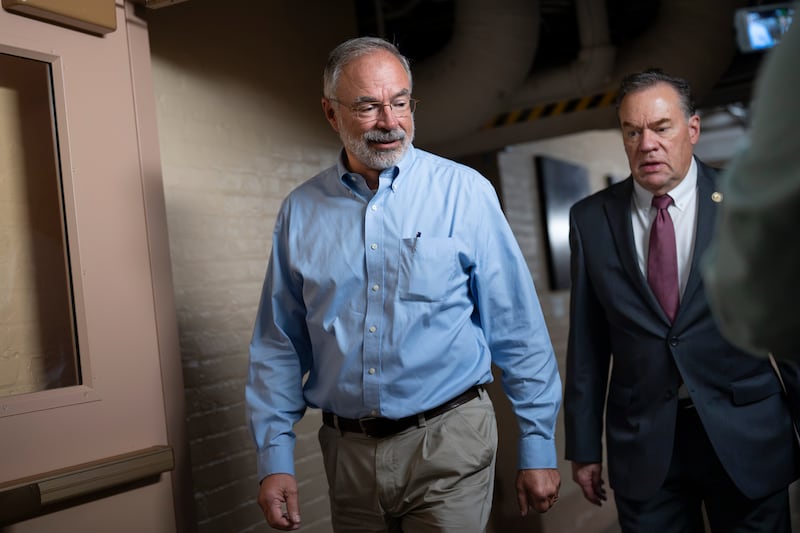
Several members of the House Freedom Caucus rejected that maneuver, insisting lawmakers should have an opportunity to offer amendments and debate the contents of the bill.
Those members specifically opposed language inserted by the Senate that would delay a federal ban targeting intoxicating hemp products, which Trump signed into law last year.
The ban was set to take effect in November, but the Trump administration officials requested that date be pushed back to Dec. 11, the same day that government funding would run out.
Freedom Caucus Chairman Andy Harris told reporters on Monday he would reject the funding bill without an opportunity to strip out that language, which GOP leaders ultimately did not allow.
Other conservatives opposed the funding bill because it did not contain language reviving a ban on Planned Parenthood’s eligibility for Medicaid reimbursements, which expired on July 4. Without a renewed ban, members such as Rep. Chip Roy, R-Texas, said they would not support an extension of funding.
Roy cited a number of other provisions he opposed within the bill, including a lack of funding for U.S. Immigration and Customs Enforcement and Border Patrol, which were funded separately through Republicans’ reconciliation bill earlier this summer.
The funding request does include multiple anomaly requests, referring to specific programs the Trump administration wants to have additional spending for during the two-month extension period. Those include funding for food assistance, disaster relief, assistance for the FBI to prepare for the 2028 Olympic Games in Los Angeles, grants for rental and homelessness assistance, and more.
Once signed by Trump, appropriators say they will continue working on finishing the government funding process.
Budget fight will resume after elections

The Dec. 11 deadline buys lawmakers an additional eight weeks to finish negotiations — but with Congress on recess for the entire month of October, some top appropriators warn it may not be enough time to get everything completed.
Others say it’ll depend on the Senate.
“We’ve been working diligently for months to have our bills marked up and ready to go. I can’t speak for the Senate in their preparation, but we could move our bills across the floor quickly,“ Utah Rep. Celeste Maloy, who sits on the Appropriations Committee, told the Deseret News. “If the Senate’s willing to work with us on what we’ve already done, then it shouldn’t take very long.”
The annual appropriations process handles discretionary government spending, which is divided between 12 bills covering federal departments and agencies. The deadline for that spending is Oct. 1, the start date of the fiscal year. However, Congress has not met that deadline for all 12 appropriations bills since 1996.
As of Tuesday, the House has only passed three of the appropriations bills so far, although the remaining nine have advanced through their respective committees and await a final vote. None have been passed in the Senate or approved by individual committees.