

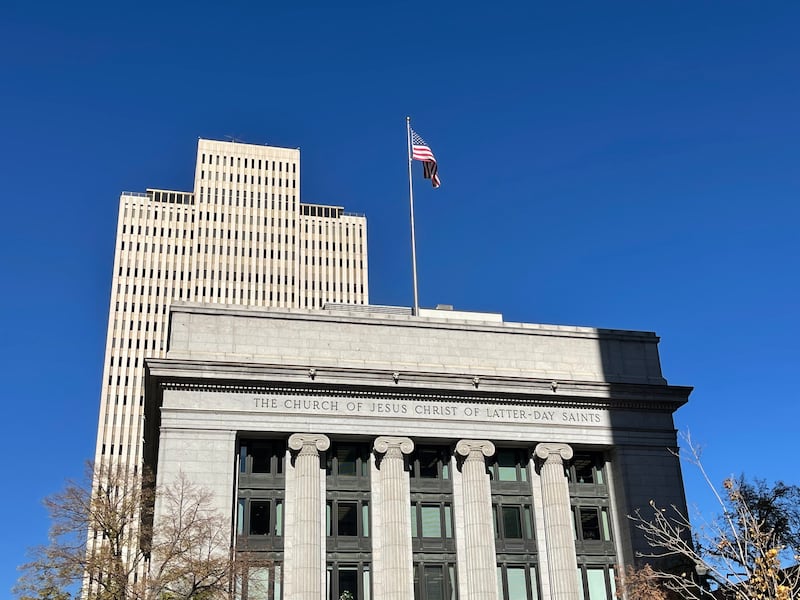

- The Church of Jesus Christ continued a winning streak in federal appeals court cases about tithing use.
- The 10th Circuit Court of Appeals ruled the plaintiffs filed their lawsuit too late.
- The ruling covered four consolidated cases filed in four separate states.
A three-judge panel of the 10th Circuit Court of Appeals handed down a unanimous ruling Monday in a consolidated class-action tithing lawsuit involving The Church of Jesus Christ of Latter-day Saints.
The judges ruled for the church, affirming a 2025 district court ruling that dismissed a lawsuit in which nine people filed four lawsuits seeking the return of hundreds of thousands of dollars in donations they gave the church across a quarter of a century.
The decision handed the church a major victory in the last Latter-day Saint tithing case standing in federal court.
The 10th Circuit judges stated that their role was to determine if the Supreme Court would overturn the district court ruling that the plaintiffs sued the church after the statute of limitations had expired.
“We see no reversible error,” wrote judges Harris Hartz, Gregory Phillips and Nancy Moritz, adding later, “We are not persuaded.”
Three plaintiffs — Daniel Chappell, John Oaks and Masen Christensen — filed a proposed class-action complaint in the United States District Court for the District of Utah in October 2023.
Other plaintiffs then filed similar cases in federal courts in California, Tennessee and Washington. A judicial panel consolidated the cases, which then were heard together in U.S. District Court in Salt Lake City.
The plaintiffs alleged the church fraudulently induced donations, misused donations, concealed the alleged misuse, committed fraud when it said tithing funds would be used only for church purposes and engaged in illegal “enrichment” by retaining the funds.
Judge Robert J. Shelby ruled in April 2025 that all the plaintiffs should have been aware of the information that motivated their claims more than three years limit before they sued. The law bars such lawsuits when they are not filed within three years.
Shelby dismissed the case with prejudice, meaning the nine plaintiffs could not try again. Instead, they filed an appeal in the 10th Circuit.
“Tithing donations made by members of The Church of Jesus Christ of Latter-day Saints are an expression of faith and allow the church to fulfill its divine mission,” church spokesman Sam Penrod said after Shelby’s ruling 16 months ago.
“These donations are carefully used and wisely managed, under the direction of senior church leaders,” he added. “The legal claims brought against the church were rightfully dismissed by the court.”
The Church of Jesus Christ has now won three major cases in 20 months involving claims about tithing.
- In January 2025, the Ninth Circuit Court of Appeals dismissed a lawsuit by James Huntsman, who sought the return of millions in tithing and other donations to the church. The court ruled that “no reasonable juror could conclude that the church misrepresented the source of funds for the City Creek project.”
- In August 2025, a 10th Circuit panel of judges upheld a 2023 federal district court ruling that rejected a lawsuit brought by Laura Gaddy and others that claimed the church propounded false beliefs and misrepresented its history and practices to defraud members of donations.

Hartz and Phillips were judges in both the Gaddy ruling and the one handed down Monday in the consolidated case.
Despite the church’s winning streak, the win on technical grounds left meant the three-judge panel on Monday skirted the issue both sides wanted to address, the church autonomy doctrine that allows religious bodies to determine how their own doctrines, policies and use of donated funds.
The judges in the Huntsman and Gaddy cases also avoided deciding the tithing portions of their rulings on church autonomy grounds.
Many religions would like to see a high court precedent supporting church autonomy regarding religious donations. Plaintiffs hoped for a ruling striking it down, and their appeals provided an opportunity for both sides.
An attorney who filed a friend-of-the-court brief on behalf of multiple religions in support of the Church of Jesus Christ had called the case a “brazen and dangerous assault on a church’s religious authority.”
Gene Schaerr, a BYU law professor and partner at Schaerr Jaffe in Washington, D.C., hailed Monday’s ruling. His brief represented the National Association of Evangelicals, the General Conference of the Seventh-Day Adventists and many other religions.
“It’s another great victory for the church in this whole spate of cases that the church has faced,” he said. “Hopefully today’s decision will just further cement the idea that you can’t sue churches based on how they spend donated funds.”
The judges didn’t rule directly on the church autonomy doctrine, but Schaerr said the decision was helpful.
“It was also a broader victory for the concept of church autonomy, ecclesiastical autonomy,” he said. “This is part of an ongoing battle that we’ve been fighting on behalf of the church and a bunch of other religious organizations. All of them face these kinds of claims all the time.”
The churches use a constitutional argument rooted in the First Amendment’s protection of freedom of religion from government intrusion.
“These plaintiffs are trying to get a court to second guess spiritual judgments that were made by a religious body,” Schaerr said. “That kind of litigation is just foreclosed under the First Amendment. Courts have no business second guessing religious judgments about how a church should spend donations. It would be a violation of the First Amendment to even allow this case to proceed.”
While the Latter-day Saint cases are now at a seeming end, the issue continues in higher courts.
The U.S. Supreme Court recently shot down an effort by the U.S. Conference of Catholic Bishops to fast-track a similar clas-action lawsuit filed by David O’Connell. The Catholic bishops had hoped to create a path to dismiss such suits before standard litigation takes place
The Supreme Court instead sent the case back to a lower court for continued litigation.