


This article was first published in the On the Hill newsletter. Sign up to receive the newsletter in your inbox on Friday mornings here.
The Senate just returned this week from its five-week recess. But that doesn’t mean senators were necessarily on vacation, many were back home working and meeting with their constituents.
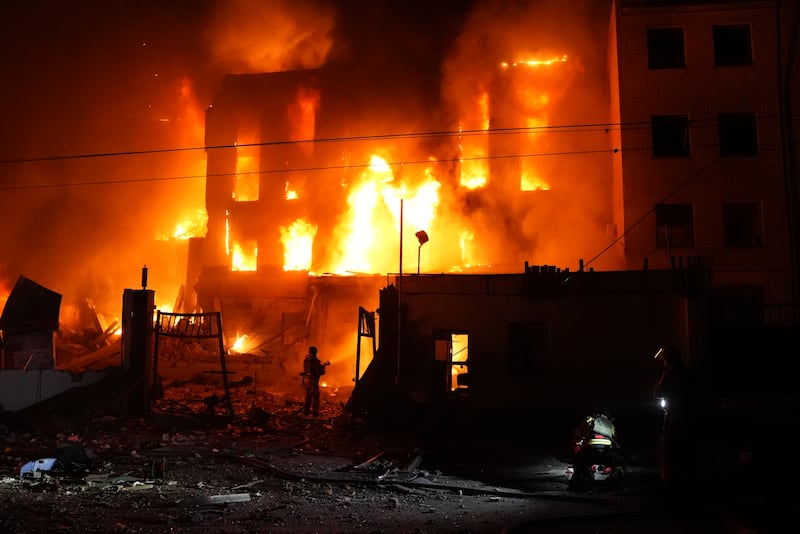
For Sen. John Curtis, his recess break took him far from home — all the way to the war in Ukraine.
Curtis participated in a congressional delegation — known as a “CODEL” in Congress speak — to Ukraine, last week with a handful of other senators from both parties, with a pit stop in Poland first. The “impetus to get the trip going” was the Yalta European Strategy Annual Meeting, or YES Conference, that took place in Kyiv.
While in Poland, Curtis received briefings from the U.S. embassy, the Polish president’s national security adviser, and the Ministry of Foreign Affairs, his office told me. After that, the junior senator traveled to Ukraine where he met with the minister of defense, spoke on a YES Conference panel, and was briefed by Ukraine’s intel services.
The group had hoped to meet with Ukrainian President Volodymyr Zelenskyy while they were there, but scheduling conflicts got in the way of that. “When you go over there, everything is fluid,” Curtis told me.
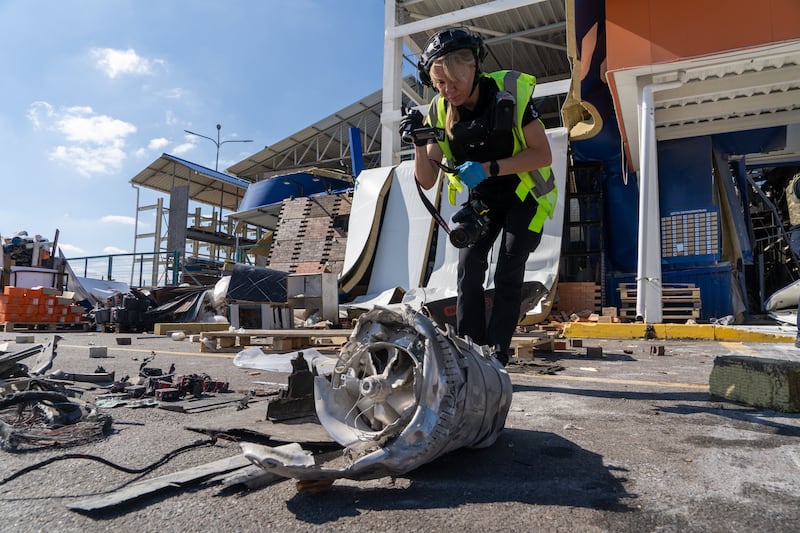
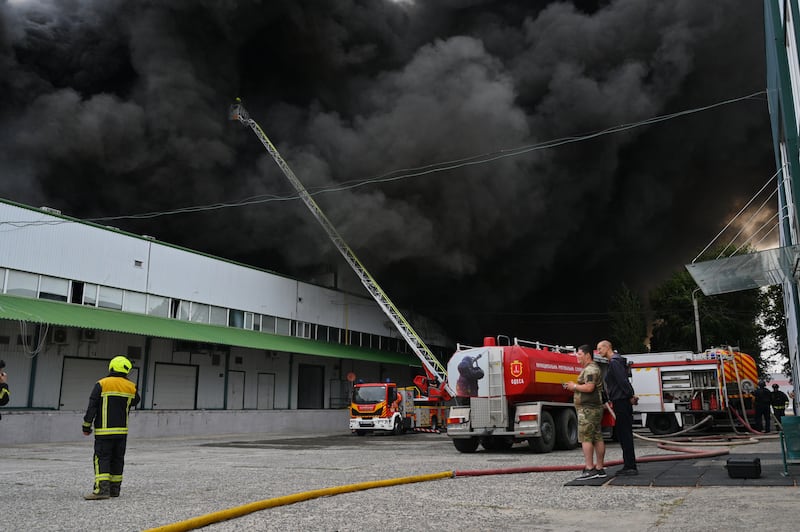
Notably, Curtis and his travel partners went to Kharkiv, one of the earliest targets of the Russian invasion located just 12 miles from the border. There, Curtis toured an underground bunker at an elementary school and he witnessed how the Ukrainian military operates its frontline drone and infantry units.
“This is a war that’s being fought very differently than other wars,” Curtis told me in a sit-down interview in his D.C. office this week. “You go down there, and you watch these drone pilots fly drones into the war zone, and that’s really the way this war is being fought — from a basement 12 miles away with these drones. We went with some of the commanders and the drone pilots and physically watched these drones attack, which was in some cases very dramatic.”
The tour in Kharkiv marks the first CODEL to that area of the war since the Russian invasion began in February 2022, I was told. It was also one of the first congressional trips to Ukraine since the death of former Sen. Lindsey Graham, who was one of the biggest supporters of the war-torn country in its defense against the Kremlin.
I asked Curtis more about what the tone of these discussions were like, especially after the unexpected death of Graham — who died one day after visiting Ukraine earlier this summer.
“Everywhere you went, there was just tremendous respect for Lindsey Graham and a lot of love for him,” Curtis said. “I think it’s fair to say his passing was very fresh on everybody’s minds out there, and the trip, at least for me, and I think for everybody, served the purpose symbolically to say: ‘You have other friends. Lindsey’s not your only friend,’ and everywhere we went, they were looking for signals.”
Here’s more from my conversation with Curtis this week. The transcript has been edited for length and clarity.
Cami Mondeaux: “I’m wondering what the tone of your trip was like, especially after the death of Sen. Graham and the Senate had just passed the Russia sanctions package.” (Which passed the House hours after our interview.)
John Curtis: “Everywhere we went, they were looking for signals. I think it’s fair to say they do get some conflicting signals from the United States. So, in many ways, it just felt like everybody that was talking to us was kind of watching for signals.
To me, it was very fortuitous that we had just passed the sanctions bill because it’s one thing to say we support you, but to say we just passed 87-11 a sanctions bill — and whenever we said that, it almost made them like physically relax a little bit.
That’s a big deal. And we, you know, explained about how things move in the Senate and how rare that is to get an 87-majority vote. It was very reassuring to them.”
CM: “Do you think those conflicting signals are from what they’re seeing in Congress, or conflicting from the White House?”
JC: “I would say the executive branch is where they’re getting the conflicting signals.”
CM: “So do you think with this sanctions package now moving in the House, that does help send the signal of support?”
JC: “Their next question was what’s going to happen in the House. They understand our process enough to know that it had to go through the House. And while we were there, (House Speaker) Mike Johnson was still in a little bit of a mindset of ‘I’m not sure we’re voting on this.’
I think we found out while we were there that he was (scheduling a vote), and then that became part of our dialogue, that the House will pick it up. They were very attuned to symbolically what that meant.”
CM: “I had seen on your social media after your trip that you said you came up with new ideas of what Congress will do moving forward. I’m curious what you think is next.”
JC: “There was a constant request for air defense help. I think most people would think of that as Patriot missiles. It’s not just that, and I think those of us that are over there knew the difficulty of giving them that, but at least coming back and saying, ‘Let’s see what we could do.’
I can say there were other requests that we felt like — whether it was legislation or a letter or just simply working with the administration, almost all of them were not necessarily for money. And I think that’s an important message for the American people.
They’re trying to be very independent, but there are things we could do that don’t cost any money that would make a substantial difference for them.”
CM: “Sure, and as you were saying, the Russia sanctions package was a big bipartisan vote. But it took us years to get there. Do you think there’s enough movement that can happen in the next few months? Do you think it would take much longer?”
JC: “Somebody said this today, and I think it’s pretty accurate. There is a stereotype: the Russians tend to win the winter, and the Ukrainians tend to win the summer. And we’re going into winter.
This is a really precarious time for them, and the sanctions coupled with helping them in a couple of these areas with air defense and things like that could go a long way. There’s a lot of layers.
At least for me, it was more of an unspoken sense that there is a momentum growing on the Ukrainian side, and a lot of that has to do with getting ahead of this drone situation. And then part of that is also going deeper into Russia. So on one hand, you have a strategy right along the frontlines of keeping Russia from advancing, but more and more Ukraine is going past that and really doing some serious damage and really changing the nature of the conflict.”
CM: “Framing the trip in a larger context of Russian influence, because Ukraine’s obviously just one piece of this. There are reports that the DOJ has charged Russian agents because they were plotting attacks in the U.S. Then you have the controversy of a U.S. hockey player who appears in this pro-Putin campaign ad.
Do you believe that this kind of support not only shows Ukraine we are with them, but it also sends a signal to Russia?”
JC: “I would say for me, and I can’t totally speak for the others that were there, but I think I can speak for them. We want to be very clear who our friends are and who our enemy is. And Putin is not our friend, and Russia is not our friend.
I think that it’s very clear that we send those signals, and so I can tell you, from our perspective, that was part of our mission.”
CM: “How would you respond to criticism that lawmakers should be focused on issues domestically, especially heading into a midterm election, rather than on foreign countries?”
JC: “That implies we can’t do both. And I think that’s a false narrative. I think when we ignore issues here, it’s not because we’re visiting Ukraine. It’s because we’re unwilling to take on the hard issues.
I would say we can do both. And our failure to take on these issues at home really has nothing to do with Ukraine.”
Stories Driving the Week
- Data center drama: The House passed a bipartisan effort to shield taxpayers from covering the costs of massive data centers that require upgrades to the electrical grid, addressing an issue that has become a major concern ahead of the midterm elections. The Senate has since stalled on it.
- Russia sanctions: The House approved a long-awaited sanctions package targeting Russia and Iran, sending the bill to President Donald Trump’s desk for his approval in a major bipartisan win ahead of the midterm elections.
- AI mania: Sen. Curtis is calling on congressional leaders to schedule swift hearings with artificial intelligence executives to inform lawmakers on potential regulatory solutions, breaking with President Donald Trump, who has swatted down suggestions to do so.
Utah Rep. Kennedy honors opening of renovated temple
Sometimes in this job, there are some moments that are just quintessentially Utah. And that happened this week on the House floor.
Rep. Mike Kennedy took a moment on Monday to highlight “a landmark moment in the history of my home state of Utah,” previewing the opening of the renovated Salt Lake Temple of The Church of Jesus Christ of Latter-day Saints. The temple will be open for public viewing from April to October next year.
“For generations, this iconic structure has stood as a beacon over Salt Lake City and a symbol of faith recognized around the globe,” Kennedy said. “To stand here today and witness its restoration is to stand at the intersection of our rich history, modern ingenuity, and enduring spiritual devotion.”
Kennedy walked through the history of Brigham Young’s trek to Utah, including the moment in 1853 when Young “stood on that very ground, struck his cane into the earth, and declared that this would be the sport where they would build a temple.”
After 40 years of construction, the temple was completed in 1893.
“Early pioneers quarried massive granite blocks from Little Cottonwood Canyon and hauled those multi-ton stones for days across rough terrain by ox,” Kennedy said. “When times were lean and hardship was near-constant, those faithful men and women gave their labor, their meager savings and their very lives to complete that house of the Lord.”
The temple was temporarily closed at the end of 2019 for construction to design the building to withstand a 7.3 magnitude earthquake — the strongest an earthquake is predicted to be in the state.
The building is scheduled to reopen next year, marking the second public open house for the temple in its history.
Quick Hits
From the Hill: The rise of AI poses ‘genie in the bottle’ moment for Congress. … House Democrat pushes to impeach Trump over ICE. … Sen. Mitch McConnell returns to the Senate after monthslong health-related absence.
From the White House: Trump weighs in on border lasers and his Air Force One playlist. … Kennedy Center board votes to close immediately due to finances, Trump. …
From the courts: Who gets the final say? Parents, the state and gender-affirming care. … 20 states and D.C. sue Trump over change to endangered species protections. … Supreme Court ends Trump’s attempt to change mail-in voting before November.