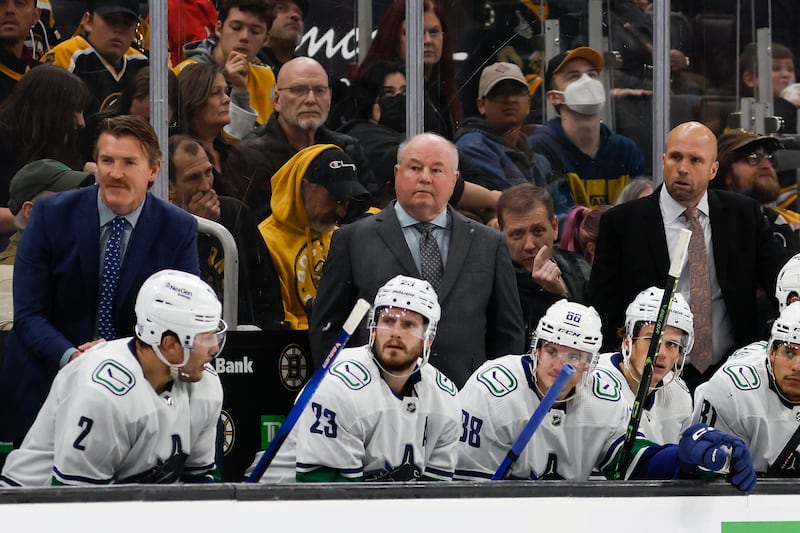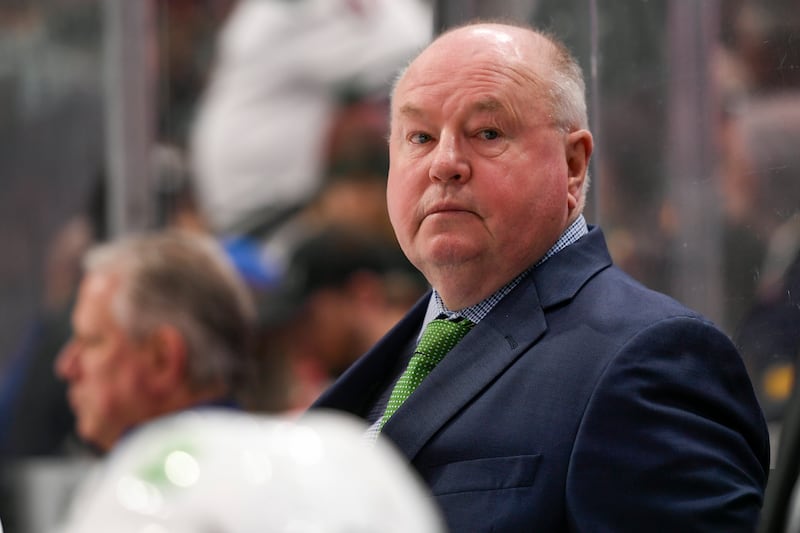
Ahead of the 2008 NHL trade deadline, then-head coach of the Washington Capitals Bruce Boudreau went to the GM asking for a second-line center.
“He came back and said, ‘I think we’ve got (now-Hall of Famer) Sergei Fedorov. Is that going to be good?’” Boudreau recounted in an interview with the Deseret News ahead of the 2026 deadline.
“Yeah, that’s not bad,” he responded.
But in Boudreau’s 15 seasons as a head coach in the NHL, he rarely had that much say in personnel decisions — for better or worse. On one hand, the coach knows what his team needs to succeed. On the other hand, he’s much less likely to see the value in prospects, draft picks and salary cap implications.
Unless you’re Jon Cooper, who has coached the Tampa Bay Lightning since the iPhone 5 was the craze, you’re not likely going to be with the team by the time those prospects make the NHL.
“We’re all about winning, right? We certainly would like — and hope — that our GMs are keeping us informed of what their thoughts are. We’re hoping that, at this time of year, they’re asking us what we think we need. It’s not up to us to make the moves ... but you certainly would like to be asked what you think that we need," he explained.
“I think that GMs that have good rapports with coaches, they talk all the time about this subject here.”
That type of communication between the front office and the coaching staff can help avoid situations like the Carolina Hurricanes’ Mikko Rantanen blunder last year.
The Hurricanes paid an arm and a leg to get the superstar winger, only to realize he didn’t fit their system. Thirteen games later, they sent him to the Dallas Stars for an admittedly decent package, but they still would have been better off keeping Martin Nečas and Jack Drury.
Chuck Fletcher, who managed the Minnesota Wild during Boudreau’s tenure there, was particularly good at the communication aspect of the job.
“He would always tell me, ‘Bruce, I’ve got to know, if I’m going to make a trade for a player, if you don’t like him and you’re not going to play him, why am I going to make a trade?’”
Perhaps the most important aspect of the coach’s job at this time of year, though, is to keep the players focused.
Fans love to see trades, but it’s easy to forget that these are not fantasy hockey rosters — the players are real people, and being traded mid-season means packing up and moving, finding a new place to live and getting to know a new area and new people. And for players that have families, it’s even more complicated.
“You really have to deal with the players a lot and do a lot of communicating with them to make sure that they’re focused on the game,” Boudreau said. “It’s a really difficult time for the players, to be honest. If their name is being mentioned in trades and they’ve got a family, they’re worried.
“I’ve been involved in that a few times, where you have to almost talk players off a cliff and try to keep them at least focused on the games at hand.”
During Boudreau’s most recent coaching stint, when he led the Vancouver Canucks, he could sense that tensions were high leading up to the 2022 deadline.
“I went in the room and I said, ‘Boys, (management is) not talking about trading any of you guys.”
They did end up trading Travis Hamonic, which seemed inevitable given his standing with the organization at the time, as well as depth forward Tyler Motte. But all the big names remained in Vancouver (at least for the time being), despite the outside speculation.
The Utah Mammoth are reportedly in on a number of players this year — and that’s an exciting thing for a coach.
“I think if you got a player like Robert Thomas and you didn’t have to give up three players (from) your own team, then I think it would be, ‘Wow, what an addition.’ Those are the additions that coaches look and they go home and they write potential lineups on a piece of paper at home, going, ‘Wow, this would look great,’” Boudreau said.
He cautioned that it’s not always worth giving up impactful players from your current roster, but if the package mainly contains draft picks, “the coach would be rubbing his hands and going, ‘Great, that’s really going to improve our team.’”
Even if it’s a small move, coaches and players appreciate when management adds to the team during a playoff push. You don’t want to alter the team’s identity, but even a depth acquisition can signal the GM’s confidence in his team.
“I think that’s always been an important thing,” Boudreau said.
Boudreau will join a panel of experts for NHL Network’s trade deadline coverage on Friday. Fans can access the channel through their cable providers.