



Everything looked bright for Alice when she signed a letter of intent to play soccer for a Utah university. She couldn’t wait — and didn’t. Her college coach encouraged her to graduate early to get a head start on her college career. What kid could resist such a proposal from her future college coach? It was flattering and exciting, and it was another indication that he valued her.
It seemed like a great idea at the time.
It wasn’t.
A few months later, the coach cut her from the team.
Just like that, Alice, who had been playing soccer since she was 3, was an ex-soccer player.
Every athlete faces the day when his or her playing days are finished, but this was cruel. Her short college soccer career came with a steep price: She lost half of her senior year of high school.
She lost prom, hanging out with friends, dates, another year with her family. She lost her spring high school track season, another sport in which she excelled. Those things were gone, and there was no turning back. She gave up a once-in-a-lifetime experience for a few months of soccer.
“I was blindsided,” she says. “I went to a meeting with the coach thinking we were going to discuss what I needed to work on. I played a lot as a freshman. I was shocked when he cut me.”
I asked another local college coach about this situation via text. This is how the coach responded: “It’s definitely tough. College sports is so cutthroat now in so many ways and there is so much money involved it’s made it worse. Where she’s local and came early I wouldn’t have cut her.
“I had several high school kids enroll early,” the coach continued. “I wanted to cut two of them but knew it wasn’t right — and I wasn’t the coach that signed them so it probably gave me more of a leash to cut them. Pretty bad by (Alice’s coach). I wouldn’t do it. Local kid that enrolled early. That’s bad business.”
The school’s reputation will suffer. Word will spread via her friends and family. Don’t trust this coach, this school, this program. Buyer beware.
Early graduation has become a common practice for high school athletes, especially among football players. They graduate in the winter of their senior year and enroll at a university in time to participate in spring practice, giving them early preparation for the season when it begins in the fall.
No one has tracked the number of high school athletes who choose to graduate early, but there are estimates that place the number as high as 40% for football players. There also has been no research to indicate how it works out for those athletes. What percentage of them fail to see playing time or end up transferring elsewhere or are simply cut? What percentage regret it?
There is no shortage of cautionary tales. A local football star was lured out of high school in the middle of his senior season to enroll in time to participate in spring practice at what was then a prestigious Pac-12 school. A year later, feeling ignored and cast aside, he left the school and regretted that he gave up half of his senior year of high school. He has bounced around ever since, attending four schools in four years.
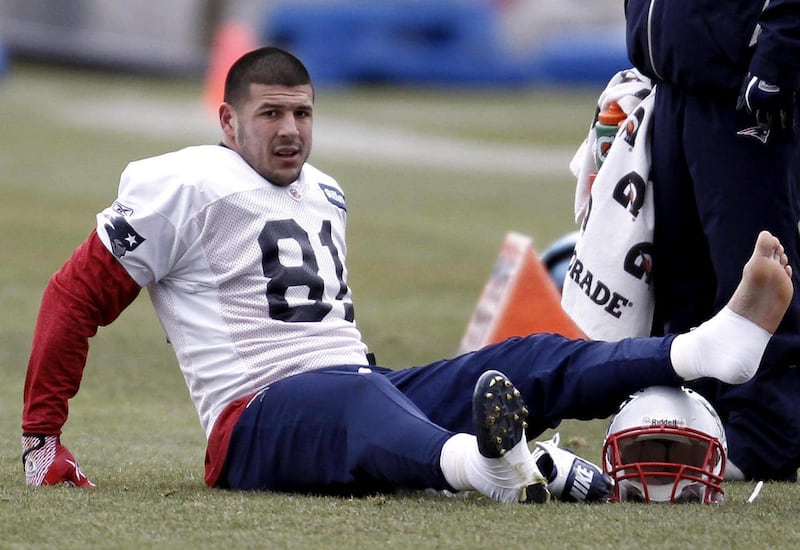
Then there is the extreme and tragic case of Aaron Hernandez. His college coach, Urban Meyer, wanted Hernandez to graduate early against the advice of high school administrators who believed he wasn’t ready emotionally or academically. Meyer met with the principal and pleaded his case. The latter relented — and later regretted it. Hernandez was barely 17 when he reported to Florida, troubled, immature, conflicted, angry, violent. Hernandez played for the Gators for three years before leaving for the NFL. He was convicted of murder and died in jail in 2017.
Alice had turned 18 just days before enrolling in college in January of her senior year. She played in every game of the spring season, which serves as a warmup for the official fall season. Four months later she was shown the door, and her scholarship was taken away. The coach’s commitment to her lasted from January to April. Her commitment (and sacrifice) to him was considerably deeper.
“He told me I wasn’t good enough to play at that (Division I) level,” she says. “I asked him if there were specific things I needed to work on and he told me. Why didn’t he tell me at the beginning so I could work on them?”
Either such coaches are bad recruiters — bad evaluators of talent — or they are just playing fast and loose with kids’ futures and don’t care. If a kid isn’t a sure thing, why encourage him/her to enroll early? And even if the athlete is a sure thing, what’s the rush? Why not stay in high school and gain a little more maturity? Why not enjoy the high school experience fully, because life is never the same afterward. The opportunities offered by a university will still be there.
Alice will never have prom again. She’ll never have a multisport experience again. She’ll never experience the buzz of the school hallways again, or family life in the same way. She’ll never hang out with her high school pals again on a regular basis.
Almost as soon as Alice was cut by the school, her bio was removed from the internet. It’s as if she never existed there. Meanwhile Alice turned in her papers to serve a mission for her church. Maybe something good will come of this.