

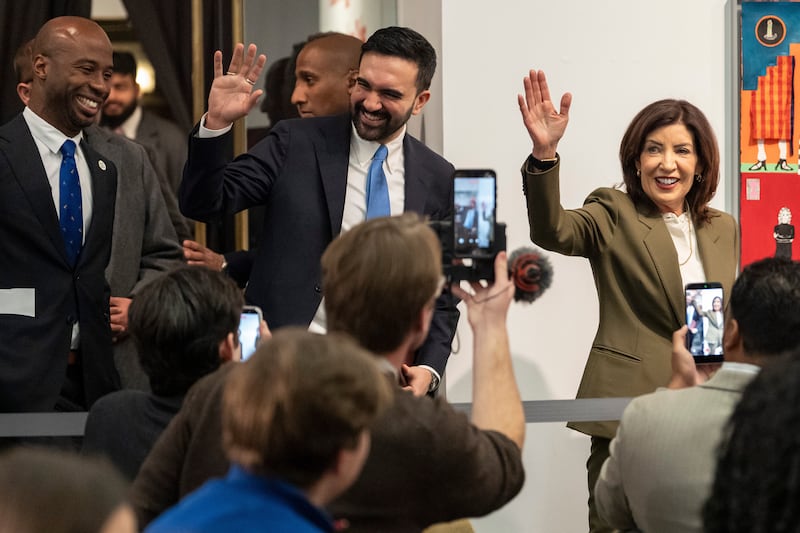

New York Gov. Kathy Hochul proposed a tax on Tuesday targeting New York City second homes worth $5 million or more, The New York Times reported.
The proposal comes as New York City Mayor Zohran Mamdani threatened a 9.5% property tax increase to cut budget deficits that are estimated to reach $5.4 billion in the coming years.
“New York City is the greatest city in the world, and the people who call it home should not be left carrying the burden alone,” Hochul said in a written statement. “If you can afford a $5 million second home that sits empty most of the year, you can afford to contribute like every other New Yorker.”
Should the tax be passed, it will generate an estimated $500 million annually from annual surcharges on some of the most expensive homes in the country, from billionaire Ken Griffith’s $238 million penthouse to Alexander Varshavsky, a Russian auto dealer who owns a $20.5 million home purchased in cash, NYC.gov reported.
Hochul and Mamdani both stressed the goal is to target the ultra-wealthy who don’t live primarily in the city, avoiding a greater burden on the backs of middle-class citizens who live in New York City full time.
In a video on X, standing outside of Griffith’s penthouse, Mamdani said he was going to tax the rich when he was elected. “Well today, we’re taxing the rich.”
“This pied-à-terre tax is specifically designed for the richest of the rich. Those who store their wealth in New York City real estate, but who don’t actually live here,” he said. “They’re able to reap the huge financial rewards of owning property in, dare I say it, the greatest city in the world.”
He said it has always been a fundamentally unfair system to working citizens, but now it is coming to an end.
“As mayor, I believe everyone has a role to play in contributing to our city, and some a little bit more than others,” Mamdani said.
“Happy tax day, New York.”
Will the tax actually work?
While the tax is celebrated as a victory, many fear it will do more harm than good.
William Zeckendorf of the firm Zeckendorf Development called the proposed tax a “poorly conceived tax wall around a city whose credo is to welcome everyone,” he wrote in Crain’s New York Business.
Predicting that many wealthy second-home owners will sell instead of paying the tax, he wrote, “This is an international city that has benefited greatly from part-time residents who, when they come, spend a considerable amount of money on goods and services here.”
This is not the first time New York officials have considered taxes on high-income earners. Similar ideas were floated around in 2014, when one proposal targeted pied-à-terre owners who would pay a 0.5% tax on the amount the second home is worth more than $5 million.
More recently, after Griffin bought his $238 million luxury residency on Central Park South in 2019, a similar idea gained momentum until it died after a campaign from politically powerful developers lobbied to have it stopped, arguing the tax would not bring in the expected tax revenue and would make New York City a less attractive place to live, The New York Times reported.
Hochul’s Republican challenger, Bruce Blakeman, made a statement on the current tax proposal.
“Kathy Hochul’s ‘No Tax Hike’ promise has expired faster than the families fleeing New York’s affordability crisis,” he said in a statement. “Unlike Hochul, I’ll actually keep my word when I’m governor: I’ll cut your taxes, slash your utility bills in half, and protect the American Dream.”
New York is not alone when it comes to taxes on secondary homes or finding ways to make the rich contribute their fair share. Rhode Island, Montana, New Jersey, Connecticut and Washington are included among those imposing some form of “mansion tax,” Northjersey.com reports.
April 16, New York extended its budget for the fourth time. The tax proposal will either be accepted or rejected with the budget when it eventually comes to fruition. The current extender runs through April 20.