

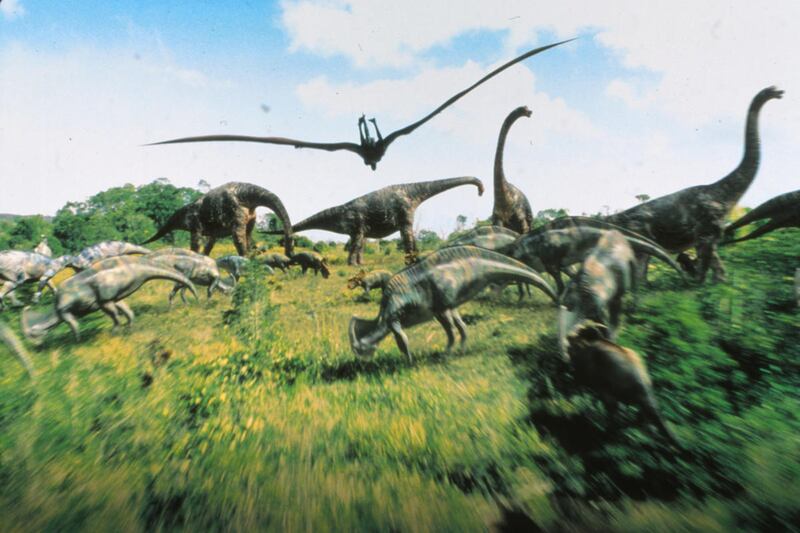
With the help of advanced imaging and 3D modeling techniques, researchers from the U.K.’s University of Bristol successfully reconstructed the brain of a Thecodontosaurus.
CNN reports that the Thecodontosaurus — whose name means “socket-toothed lizard” — was a dinosaur the size of a large dog that roamed the area that is now England in the late Triassic age, some 205 million years ago.
Fossils of the Thecodontosaurus, sometimes referred to as the “Bristol dinosaur,” have been discovered as far back as the 1800s — but only recently have scientists been able to study the fragile fossils in detail without destroying them. This is made possible through scientific advancements with 3D modeling and CT scans.
According to Futurism, experts scanned the interior of a Thecodontosaurus fossil and identified anatomical details about the dinosaur’s brain that had not yet been revealed.
Antonio Ballell, a Ph.D. student at the University of Bristol’s School of Earth Sciences, recently shared his team’s findings in a statement reported by CNN:
“Our analysis of Thecodontosaurus’ brain uncovered many fascinating features, some of which were quite surprising. Whereas its later relatives moved around ponderously on all fours, our findings suggest this species may have walked on two legs and been occasionally carnivorous.
“Our analysis showed parts of the brain associated with keeping the head stable and eyes and gaze steady during movement were well-developed. This could also mean Thecodontosaurus could occasionally catch prey, although its tooth morphology suggests plants were the main component of its diet. It’s possible it adopted omnivorous habits.”
CNN reports that experts also digitally reconstructed the dinosaur’s inner ears, revealing that the Thecodontosaurus had a high hearing frequency and could recognize noises from other animals.