

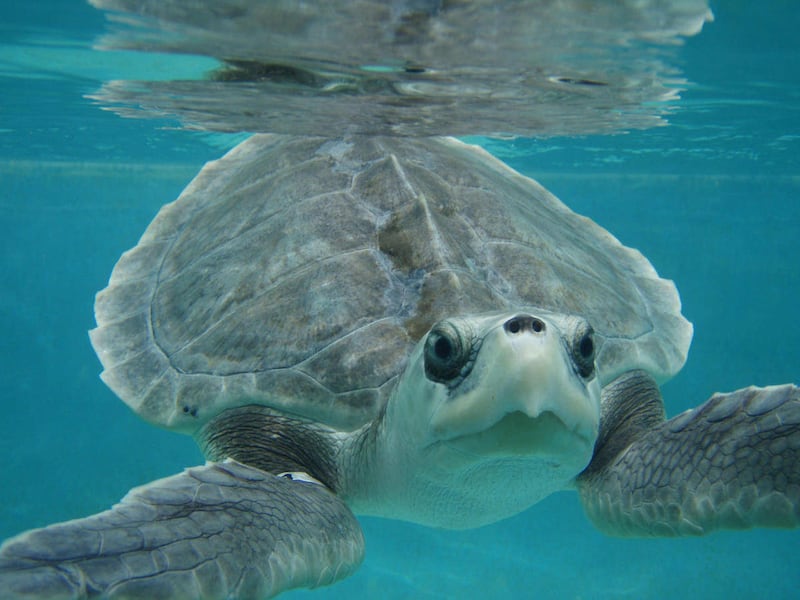

Six of the seven sea turtle species around the world are considered endangered or threatened, according to the conservationist group See Turtles.
The main threats to the species are overfishing, poachers and pollutants — particularly plastics. The See Turtles organization estimates that more than 100 million marine animals are dying each year due to plastic ingestion or entanglement.
But why are turtles drawn to the plastic? New research may have found the answer.
While previous theories centered on the fact that a plastic bag or other form of plastic in the ocean could be mistaken for a jellyfish, CNBC reports the new research points to an entirely different sense — smell.
The study, published Monday in the journal Current Biology, found that plastic that has been sitting in the ocean for a long time emits a chemical gas called dimethyl sulfide, which is produced by phytoplankton — an actual food source for many marine species such as sea turtles, fish and seabirds, Science News reported.
The study observed 15 captive loggerhead sea turtles. The turtles’ response to the smell of plastic that had been exposed to a marine environment for a while was substantially stronger than the response to newer plastic — the turtles didn’t differentiate the biofouled plastic smell from the smell of their actual food, CNET reported.
In a recent statement, researcher Joseph Pfaller called the phenomenon an “olfactory trap” and said the study could explain why sea turtles are frequently eating and becoming entangled in plastic waste.