

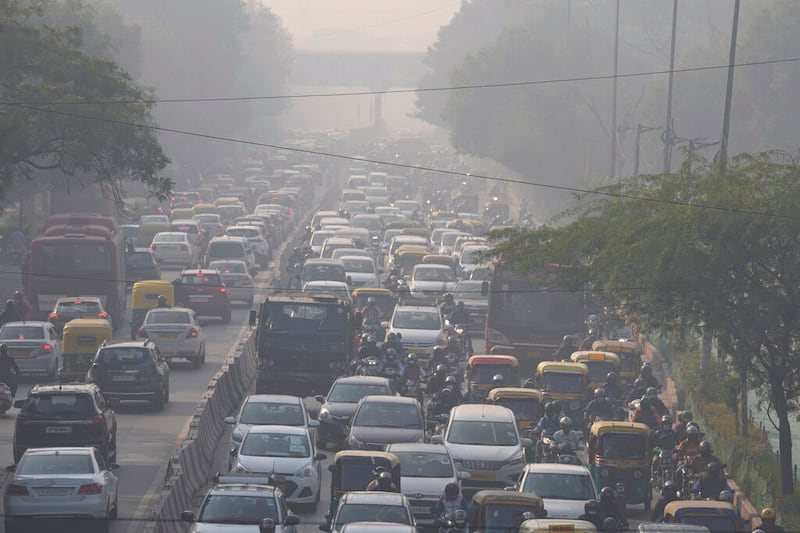

India’s capital city Delhi is edging toward another lockdown. But this time, it isn’t related to COVID-19. It’s air pollution.
The Delhi government closed schools and colleges indefinitely, implemented work-from-home and halted any construction or demolition activities, according to a notice filed by the Delhi Pollution Control Committee.
According to the notice, air quality levels (AQI) touched 471 this weekend in Delhi, beyond the safe limit of 100.
Since then, a small percentage of pollution has disappeared, bringing the AQI into the lower 400s.
The Delhi government is open to the idea of a weekend lockdown and is now waiting for India’s Supreme Court to make a decision according to ABC News.
It is unclear how long it would take for a lockdown to reduce pollution levels.
The main culprits of this toxic smog in the city are vehicles, dust and industries. Though many blame the smoke from crop-burning after the harvest, according to a study.
Delhi is in the top 10 most polluting cities in the world, as per IQAir, which tracks air quality data. But citizens say that current levels are much more intolerable.
“My eyes are constantly irritated and I have an incurable cough right now,” said Sanjay Chadha, 57, a South Delhi resident, told the Deseret News. “There is no way to keep the pollution out and not everyone can afford air purifiers.”
In 2019, 1.67 million people in India died to air pollution-related issues, according to a study, which does show that Delhi isn’t alone. Other north Indian states like Punjab, Haryana and Uttar Pradesh have also imposed work from home orders, per The Guardian.
The Delhi government has taken steps to bring pollution levels down in recent years, according to a study, such as closing 11 coal-fired power plants within 200 miles of the city, pollution checking of vehicles and banning stubble burning for farmers. But managing this vast and recurrent will take more effort.