

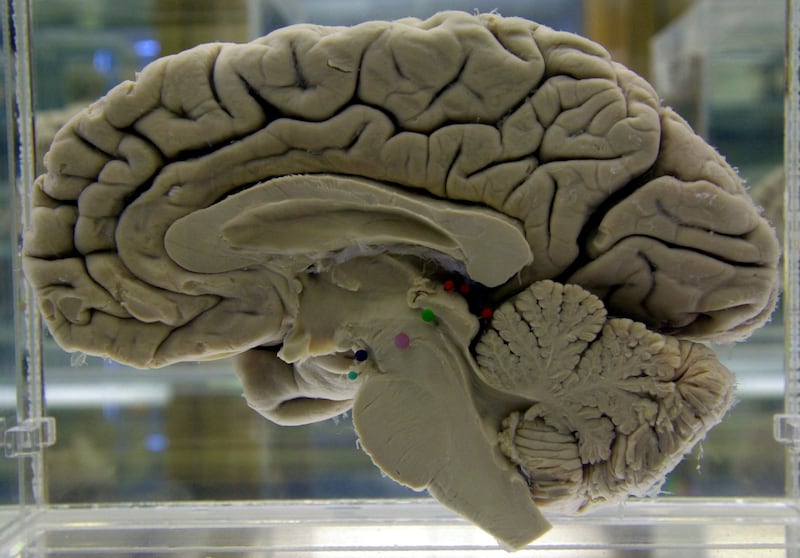
Archaeologists have uncovered records of over 4,000 preserved brains that date from the last 12,000 years, making scientists believe there is an unknown method preserving so many brains, according to a new study released in the journal Proceedings of the Royal Society B.
Preserved brains are normally considered a rare find in the science world, but researchers from the University of Oxford collected all known research papers that found preserved brains in archeological remains and found it far surpassed what scientists originally thought, according to a statement from the University of Oxford.
4,400 preserved brains found so far
The study explains that in all the records they collected, there have been 4,400 preserved brains found in archaeological remains, with 1,300 of them found within skeletal remains. All the brains came from every continent (except Antarctica), with the common features of being discolored and shrunken when compared to living brains.
Forensic anthropologist Alexandra Morton-Hayward from the University of Oxford and one of the main researchers in the study did an interview with Science. She shared that preserved brains are often one-fifth the size of a normal, healthy brain and can take on a variety of colors like orange, yellow or black.
All the records found in the study can date back to the 17th century, with the brains dating over thousands of years, per University of Oxford. The team found that the brains came from a variety of individuals of different backgrounds. They included royalty from Egypt and Korea to monks from Denmark and Britain.
They also found out that there was no specific environment among all the preserved brains. Brains have been found along the shores of a lakebed, inside an ancient salt mine and the summits of volcanoes, per University of Oxford. They’ve also been found in shipwrecks and graves, according to Smithsonian Magazine.
The different types of preservation methods
In the study, researchers identified five different ways brains are preserved.
- Dehydration: Brains are dark-colored and dry and brittle.
- Freezing: Brains have a sponge-like consistency with a grainy texture.
- Saponification: Brains resemble a grayish-white mass that can be hard and crumbly or soft and pasty.
- Tanning: Brains are often dark-colored and are slightly pliant.
- Unknown: Brain is often the only remaining tissue in the skeletal remains.
The University of Oxford explains that saponification is a process where fats turn into “graveyard wax” while tanning normally occurs in a peat. Morton-Hayward explains that dehydration and freezing is similar to the process of Egyptian mummification and frozen bodies, per Science.
What this means for scientists
The study’s conclusion states that the nervous tissues, such as brains, have been overlooked in archaeological literature and that brains are actually “among the most commonly preserved soft tissues.” They suggest that future archaeological digs should be on the lookout for preserved brains because they often look like their surroundings in terms of color, per Smithsonian Magazine.
The University of Oxford shares that the preserved brains “may provide new and unique insights into our history, helping us to better understand ancient health and disease, and the evolution of human cognition and behaviour.”