
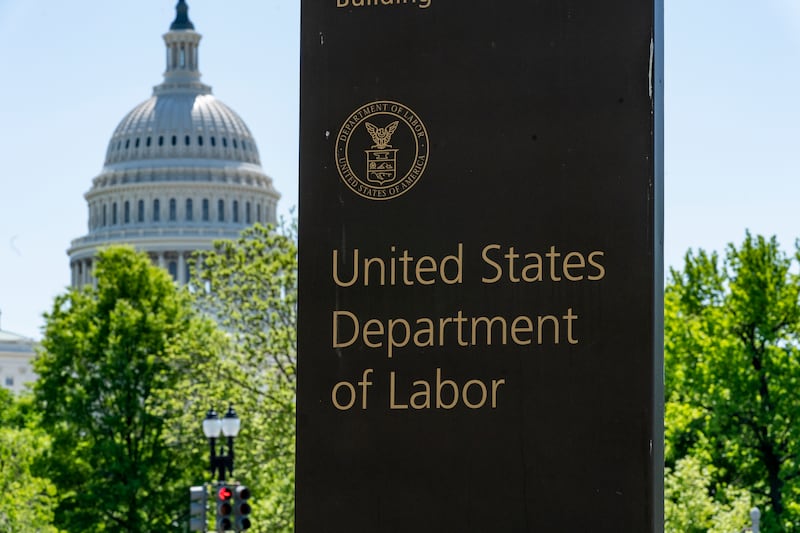

- The Department of Labor ceased funding for a nationwide senior job training program without a defined timeline for review.
- While state grantees have received their funding, the roughly $300 million for national grantees has not been approved.
- The program aims to help seniors live independently by helping them secure employment.
A large nationwide job training program for seniors has not received its regular funding from the Department of Labor, without any explanation.
The Senior Community Service Employment Program helps older adults who may face other challenges, such as homelessness or disability, to receive job training to help them secure employment and live independently.
According to Maura Porcelli, the senior director of the SCSEP program at the National Council on Aging, the program “provides a supportive environment for older adults who face so many barriers in their lives, across the board, and now, by and large, are dealing with a level of age discrimination. It shines a light forward for them, for a path that helps them access those services that they’ve not been able to access independently.”
What we know about the funding cuts
Porcelli shared that the program typically receives its guidance for funding in May and then, after a few weeks, they receive access to the federal funds through the Department of Labor.
The program has yet to receive the guidance for funding or the funding itself for national grantees this year.
While around $86 million in funds has been released to state grantees, the roughly $300 million set aside for national grantees has not been made available, per Bloomberg Law.
Porcelli said all they’ve been told is that the funding for national grantees is under review, and a timeline has not been given.
According to CNN, a spokesperson for the Department of Labor said the agency will “provide an update soon” on the funds that have yet to be released.
The Deseret News reached out to the Department of Labor for comment but has not received a response.
What is the Senior Community Service Employment Program?
According to Porcelli, SCSEP “is the only jobs training program that is specific to the mature job seeker.”
The program is for those 55 and older, and to qualify for the program, they must be unemployed and have an income no greater than 125% of the federal poverty line, which would mean an income of under $20,000.
SCSEP also aims to help seniors with specific barriers to employment such as homelessness, disability or limited education.
“So this program is designed to help those who are really challenged the most with employment barriers in general,” Porcelli said.
She added that on top of these other challenges, their age can make it even harder, since many people run into age discrimination in the job search process and in the workplace.
“So that’s in particular why this program is so important, because of its uniqueness,” Porcelli said.
Nationally, there are around 40,000 people that receive services through the program each year.
Bloomberg Law reported that the Trump administration has claimed the program, which has been around for decades, is unproductive and wasteful.
The White House budget plan for 2026 included a proposal to eliminate the program and described it as “an earmark to leftist, DEI-promoting entities like the National Urban League, the Center for Workforce Inclusion, and Easterseals,” per Bloomberg Law.
Thousands of seniors around the country are left without this program
Porcelli said that each program year goes from July 1 to June 30, so the most recent program year has already ended and there are not enough funds left to keep the program going without new funds.
Because of this, they had to make the “difficult decision” to furlough participant job seekers until they receive the money to keep the program going.
“Our hands are tied,” Porcelli said.
Losing the employment through SCSEP could be particularly devastating for thousands of participants who need a certain number of work hours to keep their Medicaid and SNAP benefits.
“Many SCSEP-supported job seekers receive SNAP and Medicaid benefits and may be at risk if they are unable to secure other employment or service opportunities,” Porcelli said.
How the Senior Community Service Employment Program helps improve seniors’ lives
Porcelli shared that when individuals join the program, they are evaluated to see what work they are interested in, what they have done in the past and what work they want to do in the future.
“Just because you’ve done something for years and years doesn’t mean it’s something you’re going to do for the rest of your life. And we want work to be fulfilling.”
These individuals are then put into community service assignments, where they’ll receive specific skill-based training and education.
Once they are able to gain the necessary skills, they are able to move off the program and independently secure employment. Porcelli added that everyone is different and this takes longer for some people than others.
As well as helping people secure employment, Porcelli shared that the program can help move people from homelessness to a shelter, to subsidized housing and hopefully to independent housing.
They also help people get access to food as well as heating and cooling during winter and summer. The program can also help people be less socially isolated and feel more fulfilled.
“We help the whole person in this program, because we recognize that if you are hungry or not knowing where you’re going to sleep, you can’t excel in work, in employment. So you have to have those basic needs met before you’re going to be able to flourish,” Porcelli said.