


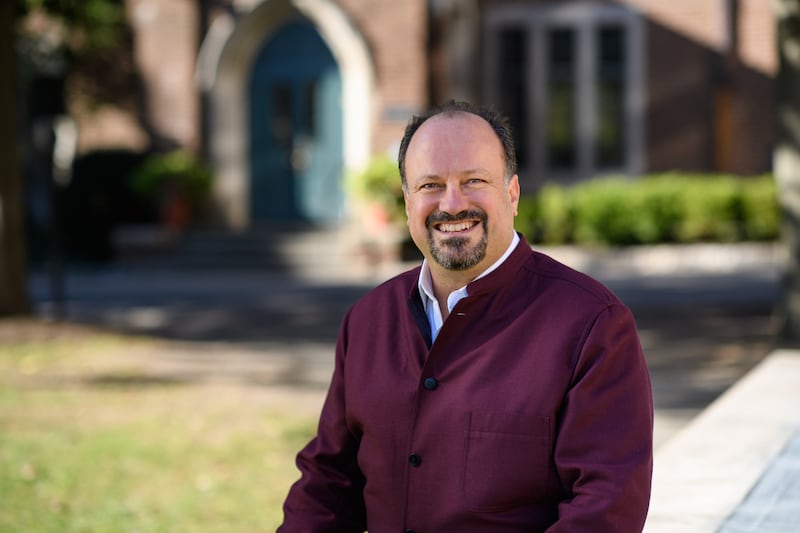
Bernard Haykel could have left the Middle East behind when he moved from civil-war-torn Lebanon to Miami, Florida, when he was 15. Instead, he parlayed his fluency in Arabic, his interest in history and his knowledge of the region into an academic career specializing in Islamic and Middle Eastern studies.
Now at Princeton University, where he teaches and directs the Institute for the Transregional Study of the Contemporary Middle East, North Africa and Central Asia, Haykel, 57, is watching the events unfolding in the Middle East with concern — not only from his vantage point as a scholar of the region, but also as an American citizen affected by the price of gasoline.
On that front, he says, things might get worse before they get better.
The son of a French-Lebanese surgeon and a Polish-American nurse, Haykel studied international politics at Georgetown University, and later earned a master’s degree and Ph.D. from Oxford. Before joining the faculty of Princeton, he taught at New York University, and he has traveled extensively throughout the Middle East and is friendly with the crown prince of Saudi Arabia among other regional leaders.
Haykel recently made headlines for saying on a Bloomberg podcast with Mishal Husain that he expects the Iranian regime to remain in power despite the military bombardment by Israel and the United States.
In a conversation with the Deseret News Thursday, he explained why. He also talked about how President Donald Trump is perceived in the Middle East, how the region’s media coverage of the conflict differs from that in the U.S., and what he sees as the best case and worst case scenarios as the conflict approaches the end of the second week.
The conversation has been edited for clarity and length.
Deseret News: Can you compare the media coverage in the United States about Iran, compared with what is being presented elsewhere?
Bernard Haykel: It’s a difficult question to answer because the American media landscape is quite diverse. What you get from The Wall Street Journal is not what you get from The New York Times, and also in the U.S., what the think tanks are producing. A lot of our media coverage is wrapped up in the personality of Donald Trump, and the media coverage in the Middle East is much less about that, and more about if you’re on the Arab side, “why are the Iranians attacking us, what do we have to do with this, we’re neutral.”
And then the Iranian media coverage is a lot of disinformation and propaganda. There’s a lot more conspiracy-theory type stuff in the Middle East. People are saying it’s not the Iranians attacking all the oil storage facilities and the tankers, it’s the Israelis doing it, and the Israelis are doing it because they want the Arabs to join the fight with them. And the evidence is that it’s clearly the Iranians.
And I think in the Arab world in particular, (the media coverage is) “the Americans don’t know what they’re doing. Despite their firepower, they haven’t planned it out, they haven’t thought about what would happen if the Strait of Hormuz was closed, they think they can do this all by air ... the Iranian regime is much more resilient and has prepared for this for a much longer time.” Some of the Arab coverage is much more immediate and realistic.
DN: We do see some commentary like that here.
BH: The news coverage has been OK. But I do think on oil, on the energy systems of the world, there is a much graver threat than the oil analysts and oil traders are admitting to. They think it’s going to be resolved quickly, or they’re hoping it will be resolved quickly — that the firepower will be so overwhelming — but in fact, we’re seeing a war of attrition between Iran and the Americans, and the Iranians are trying to establish deterrents, to make it very, very costly for the world and for the U.S. to wage war against them so it doesn’t happen again.

And for that to take place, we’re going to see a lot more destruction of oil facilities and oil tankers, and the price should reflect that. But the price is not reflecting that. It’s closer to $100 (a barrel) and it should be at least $150. Sooner or later, it will go there, when reality catches up.
DN: So you don’t believe that this is going to be over quickly, that like the president said, “this is an excursion” and that Iran will only be in the headlines for a short time, like Venezuela?
BH: President Trump made the analogy between Venezuela and Iran, thinking that the two regimes are similar and that he could cut a deal with the Iranians. I don’t think that’s possible. The analogy doesn’t stand, and I don’t think Trump has thought this through.
This is a much more resilient and hard regime than the Venezuelan regime is. It’s much more institutionalized, it’s much better organized, much more advanced militarily.
I think (Trump) kind of misjudged the nature of the regime and the enemy. It’s a much tougher, much more ideological regime. It’s not going to fold. So now they’re involved in a game of chicken; who’s going to cry uncle first. And the Iranians are going to try and put a lot of pain and pressure on the Americans.
DN: You told Mishal Husain that you saw three potential ways for this to end. Can you talk about those three scenarios and why you believe one is more likely?
BH: The three scenarios are, the Iran regime survives and hardens, which is what we’ve seen — we don’t see any division in the security forces of the regime. The others are that the regime survives but moderates, you get new leadership that’s more willing to cut deals with the Americans and give up on some of its revolutionary ideology — that we have not seen, although there are elements of the regime that have those views, like the president of Iran, for example, who is inside the system, not a powerful person; he’s a nonentity because the Iran Revolutionary Guard Corps makes the decisions and the new Supreme Leader, Mojtaba Khamenei.
And the third scenario is that the regime falls, that we see a toppling of the regime. And I don’t think that’s going to happen because the regime has all the weapons, and it still has a sufficient number of supporters in the country, and the opposition is extremely divided and unarmed, and without an inspirational leader. So what I see is the regime hardening and surviving, which is what we’ve seen in the last few days.
DN: What do you see as the best-case and worst-case scenarios from here?
BH: The best is for us to reach an immediate ceasefire with the regime so this war ends, and the attacks on oil and other energy installations end and the regime is somehow contained because of this intense activity that has cost them so much. And then it gets busy internally, getting on with the internal affairs of trying to keep the population from rebelling against it.

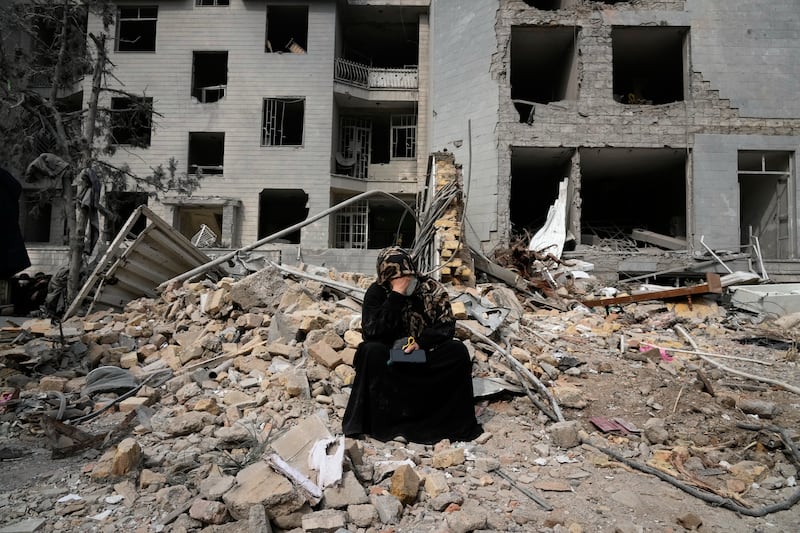
The worst is that this thing escalates and we move from attacking tankers to attacking desalination plants. These are the plants that produce fresh water from seawater and if those plants get attacked, then we have large cities like Dubai and Abu Dhabi and Riyadh and elsewhere where life would be unsustainable because they depend on the fresh water of the desalination plants. So yes, it could get much, much worse, and we could be looking at an environmental and humanitarian catastrophe in the region.
DN: There’s been reporting over the past few days about the threat of Iranian drones striking the West Coast. Do they have those capabilities and resources, or is that just bluster?
BH: They have sleeper cells around the world. They may have sleeper cells in the United States, so this would be terrorist activity. But their main military power lies in the drones and short-range missiles at this stage. Not anything else.
DN: Who are Iran’s friends, other than Hezbollah?
BH: They have these non-state actor proxy militias around the region — they have militias in Iraq; you have Hezbollah in Lebanon; you have Hamas in the Palestinian territories. And you have the Houthis in Yemen.
But they have no states that are really their friends. They have some sort of relationship with the Russians and the Chinese. The Russians are probably their closest allies at the moment. And the Russians are actually enjoying what’s happening in the Middle East because it makes their own oil much more valuable, and President Trump has removed sanctions on Russian oil because the world needs oil right now given the disruption. So the Russians are thrilled with what they see in the Middle East.
The Chinese are of two minds. On the one hand, they like to see the Americans weakened in another war. But on the other, they depend heavily on the oil that comes from this region. And so they don’t want chaos. They want stability so that oil shipments resume to Chinese ports.
DN: There are a number of commentators who say that America has basically been at war with Iran since 1979. Do you see it that way?
BH: The Iranian regime came after the revolution in 1979, and the regime, from the beginning, has been hostile to the United States. They chant “Death to America” in almost every Friday sermon. It’s a slogan of their state. They spread American flags on the ground at universities, make students step on American flags. They think America is an evil force in the world; they call us “The Great Satan.” They want to see us defeated in the Middle East and expelled from the region. They see America’s influence as nefarious, not just militarily, but also culturally and economically. So they’re hostile to the United States — not the people, but the regime. The people are mostly pro-America.
DN: How can that be, given the “Death to America” indoctrination that they get?
BH: Because they don’t buy into the indoctrination. They don’t buy the lies of the regime anymore, and they see the hypocrisy of the regime. I think most Iranians are pro-West and pro-American, and are sick and tired of this regime. But this regime has killed Americans repeatedly in many different places, either directly or through proxies, so I do agree this is an enemy hostile regime.
DN: In talking to people in the Middle East, do you encounter the dislike for Donald Trump that so many of his opponents in America have?
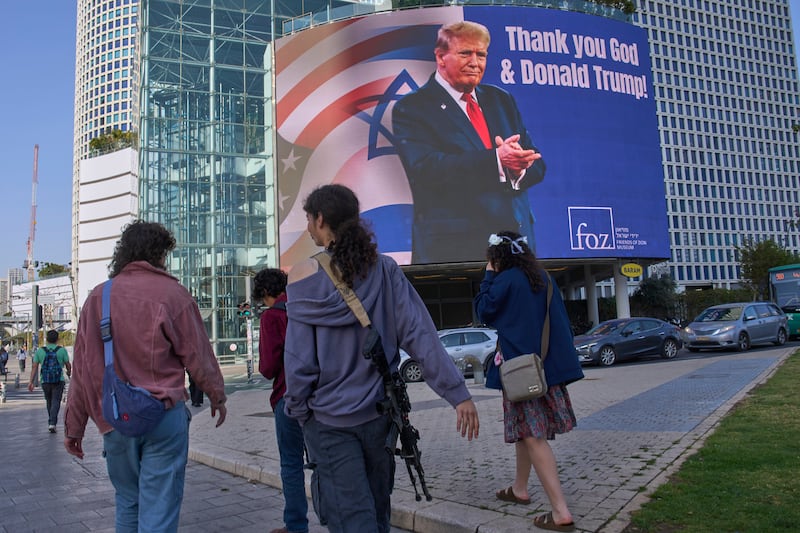
BH: Some find him hard (to take). On one hand, a lot of Middle Easterners find him refreshing because he just says it like it is, and he’s not pretending not to be powerful and wanting to control things and dominate. In the past, a lot of Middle Easterners would say, “you Americans, you speak with a forked tongue, you talk about human rights and you talk about values and the rule of law, but in fact you are a violent, aggressive, imperialist power that’s seeking to dominate the region.”
And here we have with Trump someone who just says, “Yeah, that’s right, we are going to dominate the region.” ... So there’s something refreshing about the honesty of Donald Trump. This is not to say they like him. It’s just that they think, “now we know exactly what you are, we’ve been saying this about you for a long time.”
DN: That’s what many of his defenders and supporters say: That other countries respect power, and that he is demonstrating power.
BH: What I think a lot of leaders in the Middle East don’t like about him is the kind of capricious and erratic quality to the man. Like he can switch very quickly, start a war, stop a war, open negotiations, then attack you while negotiating with you. There’s something very erratic about him, and transactional, that worries them.
DN: What do you think is the biggest misconception that Americans have about Iran?
BH: I don’t think Americans fully appreciate and understand the history and culture of Iran and how incredibly advanced and sophisticated they are. We just think of them like they’re basically nomads or Bedouins, people with camels, that sort of thing.
I’ve visited Iran, and it’s an incredibly beautiful country, an incredibly sophisticated place. Isfahan, for instance, is a major city with a lot of Islamic and Iranian art and buildings and monuments, and is one of the most beautiful cities in the world. I think we don’t fully appreciate the richness and the wealth and the sophistication of Iranian society and Iranian history.
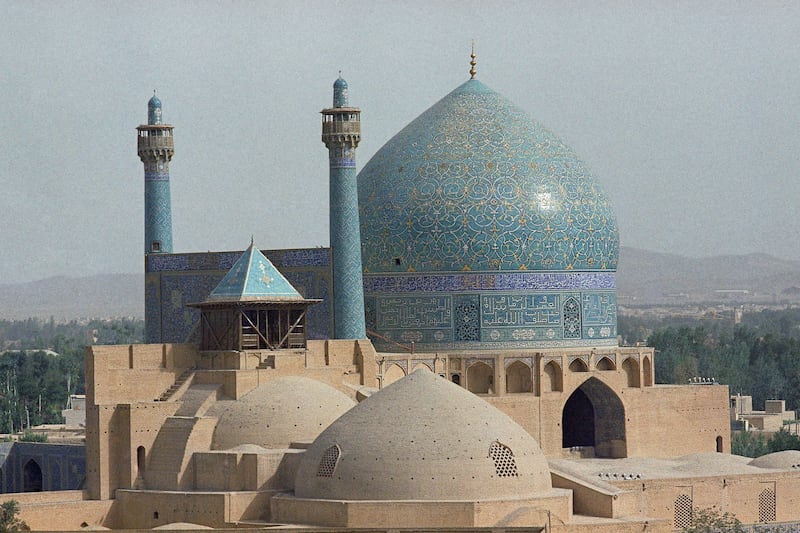
The Iranian people are a super talented, incredibly sophisticated and educated population, with strong institutions and a strong civil society. And my sense is they are tired of this regime and will want to see it either moderate or be replaced, sooner or later.
DN: What resources do you recommend for Americans who want to learn more about Iran?
BH: One of the most beautiful books ever written, ever, and it’s on Iran is a book called “The Mantle of the Prophet.” It’s by Roy Mottahedeh, who was a professor at Harvard. It’s about Iran and the revolution, written through the eyes of a cleric. There’s also “The Shah” by Abbas Milani, a professor at Stanford.