


2026 is shaping up to be a pretty big year for NASA.
Following the successful Artemis II mission to prepare for future lunar landings, the agency is preparing to launch its latest observatory.
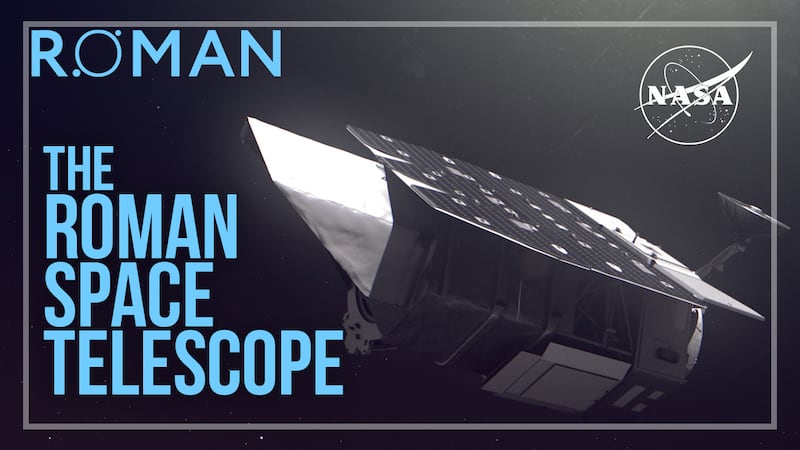
The Nancy Grace Roman Space Telescope — named for NASA’s first chief of astronomy, who played a crucial role in creating the Hubble Space Telescope — is scheduled to launch in early September.
NASA Administrator Jared Isaacman announced on X that the projected launch is eight months ahead of schedule and under budget.
In March, teams at NASA’s Goddard Space Flight Center tested the observatory with extreme sound and vibration to ensure it survives launch conditions, according to NASA.
“All of the testing went smoothly and progress is well ahead of schedule,” said Jack Marshall, the Roman observatory integration and testing lead. “The team has done a great job putting the observatory together, and the tests show that everything is lining up with expectations.”
Roman set to solve cosmic mysteries
The Roman telescope is designed to tackle some of the most profound questions in astrophysics: how the universe evolved, its “ultimate fate” and if we are alone, NASA said.
Categories of space science NASA hopes to learn more about through Roman include dark energy, exoplanets, dark matter and the evolving universe.
The observatory features a barrel-like shape to block out stray light from the sun, Earth and moon. While its primary mirror is 7.9 feet — the same size as Hubble’s — it is significantly lighter. At 410 pounds, Roman’s mirror is less than one-fourth the weight of Hubble’s, according to NASA.
This will allow the telescope to capture segments of the sky 100 times larger than Hubble while still producing the same high-resolution images. During its first five years of observation, Roman will image at least 50 times more sky than Hubble covered in 30 years.
The two will complement each other to continue to help scientists’ efforts to further understand space.
The mirror will direct light into two primary science instruments:
- The Wide Field Instrument: This will allow scientists to look back in time to the early universe to study its evolution.
- The Coronagraph: This instrument will limit the glare of nearby stars and allow astronomers to photograph orbiting planets that are nearly a billion times fainter than their host stars.
Roman’s observation point
To collect data, the telescope will orbit the sun 930,000 miles away from Earth. It will be positioned at what is known as the second Lagrange point (L2), a stable point in space where gravitational forces allow the spacecraft to remain in a steady position with minimal fuel consumption.
Isaacman told reporters Tuesday that the observatory will “soon take its place among America’s great observatories alongside Hubble and the James Webb Space Telescope.”
“This time a year from today we’re going to have a different understanding of the universe than we have right now because of the observations from the Nancy Grace Roman Space Telescope,” NASA stated in a recent video.