

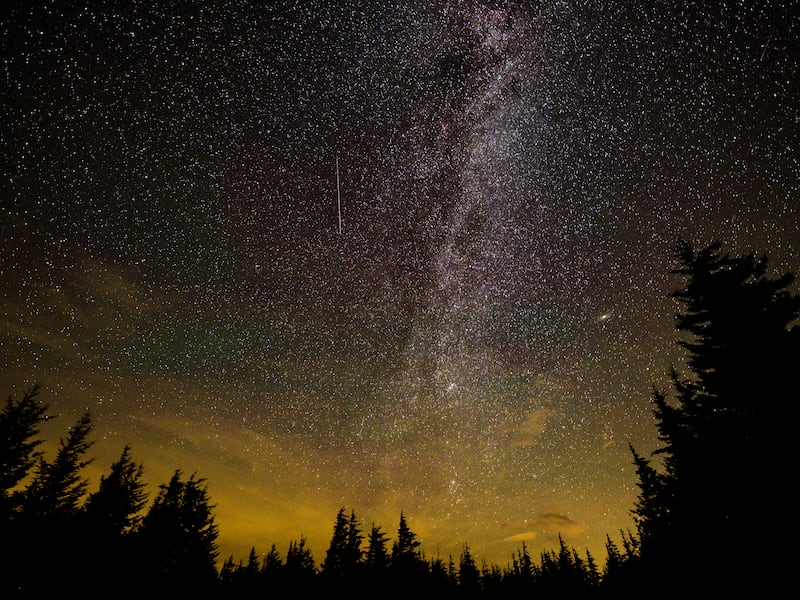

- Summer meteor showers have become viewable in the Northern Hemisphere.
- The popular Perseid meteor shower begins July 17.
- Thanks to an aligned new moon, the Perseids peak will occur amid optimum conditions.
Attention, stargazers.
The next few weeks could provide optimum opportunities to enjoy cosmic displays thanks to near-perfect conditions (if the weather cooperates) for viewing fiery shooting stars in the nighttime skies.
The popular and active Perseid meteor shower is an annual display that will first be visible on July 17 this year and run through Aug. 24.
The Perseids are particles released from comet 109P/Swift-Tuttle during its returns to the inner solar system, according to the American Meteor Society, and optimal viewing is set for the night of Aug. 12-13. This year’s timing is particularly opportune as the peak aligns with a new moon phase that will ensure dark skies for the show. The best viewing in the Northern Hemisphere occurs after midnight and is at its best just before dawn.
A typical Perseids meteoroid (which is what they’re called while in space) moves at 133,200 mph when it hits Earth’s atmosphere (and then it is called a meteor), according to Space.com. Most of the Perseids are tiny, about the size of a sand grain. Almost none of the fragments hit the ground, but if one does, it’s called a meteorite.
With swift and bright meteors, Perseids frequently leave long “wakes” of light and color behind them as they streak through Earth’s atmosphere. And they are one of the most plentiful showers with about 50 to 100 meteors seen per hour.
The Swift-Tuttle comet, with a nucleus of about 16 miles, is the largest object known to repeatedly pass by Earth. It last passed Earth during its orbit around the sun in 1992 and its next flyby of Terra Prime is expected in 2126.
Though among the minor meteor shower events, both the Southern Delta Aquariids and Alpha Capricornids are currently active.
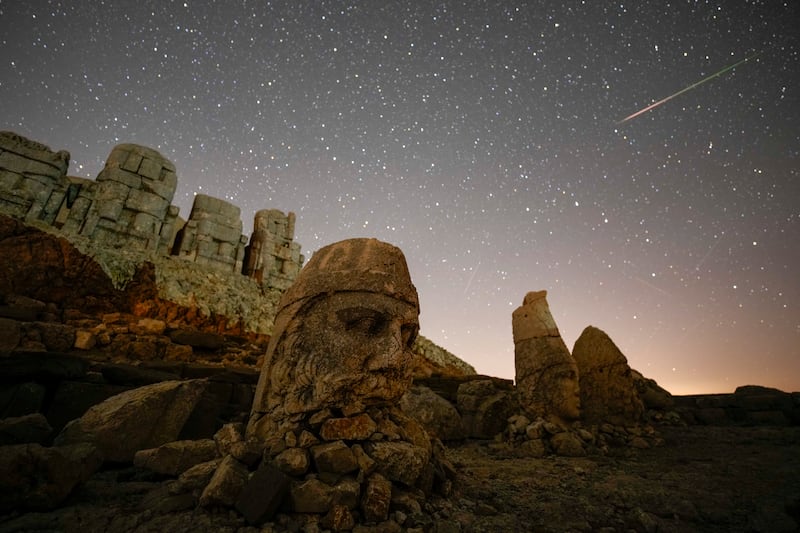
The Southern Delta Aquariids became viewable on July 12 and will be active through August 23 with peak on the night of July 30-31. Unfortunately, a full moon occurs just two days earlier and viewing will be severely compromised by the bright moonlight, per the American Meteor Society.
The Alpha Capricornids begin viewable activity on July 3 and will be visible through Aug. 12. It shares the same peak as the Aquariids and will be equally impacted by brighter night skies at that time. While this display is equally viewable from both sides of the equator, the American Meteor Society notes, it is not very strong and rarely produces more than five shower members per hour.
The dark side of summer meteor shows
NASA notes that “while many are captivated by the beauty of meteors and meteoroids during the summer, NASA’s Meteoroid Environment Office has its eyes on the skies all the time.” That’s because the cosmic debris poses a real and ongoing threat as even the smallest particles can damage space vehicles and critical hardware, according to NASA.
The U.S. space agency says its Marshall Space Flight Center in Huntsville, Alabama, leads technical work across the agency to understand where and how often meteoroids strike and what risks they pose.
“Meteoroids pose one of the biggest hazards to our spacecraft and crews, especially those bound for the moon and beyond,” said Bill Cooke, NASA’s meteoroid environment office lead, in a report published last month. “Because nothing is more important than the safety of our astronauts and mission success, NASA prioritizes mitigating these risks, whether through advanced modeling, observing meteors in Earth’s atmosphere with cameras and radars, monitoring the moon for meteoroid impacts, and developing the next generation of meteoroid detectors to be flown aboard spacecraft.”