

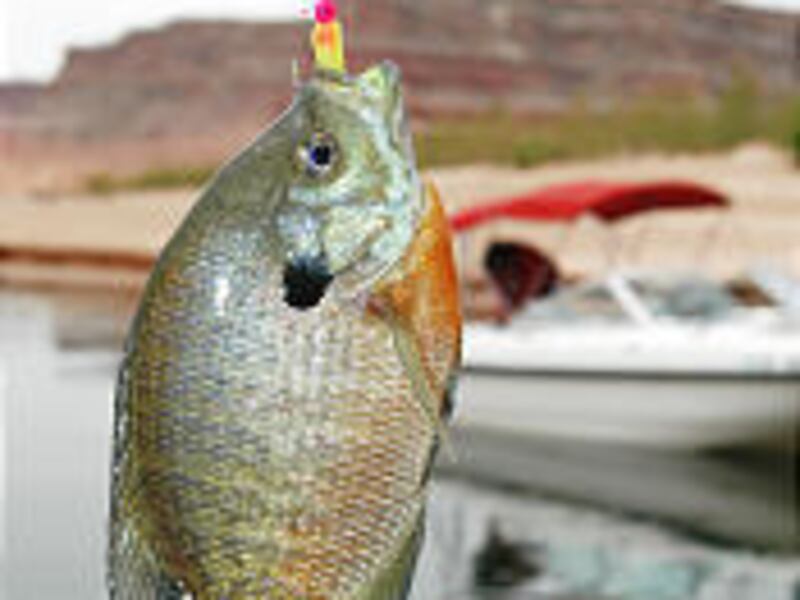
SALT LAKE CITY — Mike Fowlks, director of the Utah Division of Wildlife Resources, has issued an emergency order to protect bluegill populations at Steinaker Reservoir and Pelican Lake.
Anglers fishing the two Uintah County bodies of water must now release any bluegill they catch.
Steinaker Reservoir was drained for dam repairs in 2018, and Pelican Lake, was treated with rotenone in October 2018. To date, approximately 700 adult bluegill have been restocked into Steinaker Reservoir and about 2,700 adult bluegill have been restocked into Pelican Lake.
“Given this species’ schooling nature and how much anglers love to harvest panfish, we feel the need to protect these young fish until more bluegill have grown to a catchable size and are able to reproduce,” Natalie Boren, a regional sportfish biologist with the division, said in statement.
Here are some best practices for releasing the fish:
• Handle the fish with care and don’t drop it on the ground or on the ice if ice fishing.
• Gently remove the hook with a set of needle nose pliers or forceps.
• If the hook is too deep, cut the line near the fish’s mouth and return it to the water. Typically, the stomach acid will dissolve the hook and pass it through the system.
• In the springtime, bluegill will build beds, which the males will protect during the spawning season. Anglers should not catch males off the spawning beds. If one is caught it should be returned to the water quickly, as it could only be a matter of moments before a predator eats the young offspring or disturbs the nest.
The change to the 2019 Utah Fishing Guidebook will remain in effect until Dec. 31, 2020. All the other rules in the Utah Fishing Guidebook regarding these bodies of water have not changed and remain in effect.