
Editor’s note: This story was originally published on March 7, 2025.
A look back at local, national and world events through Deseret News archives.
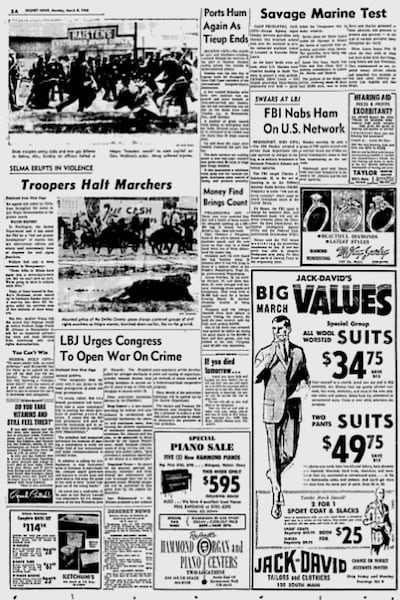
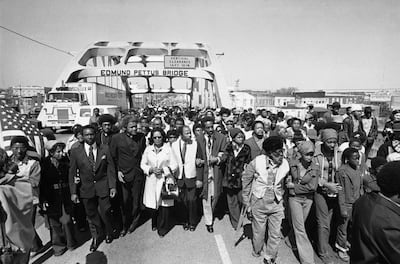
On March 7, 1965, a march by over 500 civil rights demonstrators was violently broken up at the Edmund Pettus Bridge in Selma, Alabama; state troopers and a sheriff’s posse fired tear gas and beat marchers with batons in what became known as “Bloody Sunday.”
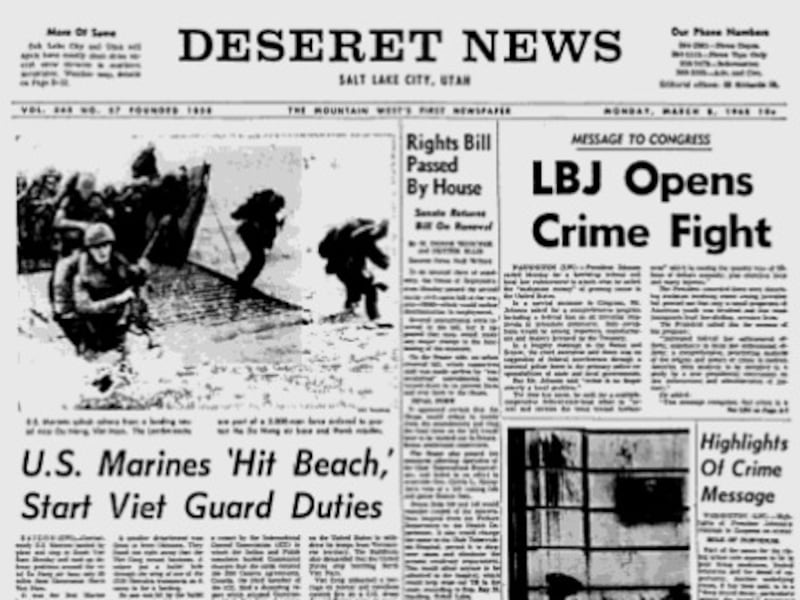
This was a volatile time in America, and the front page of the Deseret News on Monday, March 8, reflected those many issues. Here are some of the headlines:
“LBJ opens crime fight”
“U.S. Marines hit beach, start Viet guard duties”
“March is smashed”
“Rights bill passed by House”
“Cubans mar red embassy”
“Rocket leak holds up Gemini test”
As Americans fought for the Voting Rights Act in the 1960s, the South was the hot spot. The march was part of the Selma to Montgomery marches planned along the 54-mile road from Selma to the state Capitol.
The first march took place on March 7, led by figures including Bevel and Amelia Boynton, but was ended by state troopers and county possemen, who charged on about 600 unarmed protesters with batons and tear gas after they crossed the bridge.
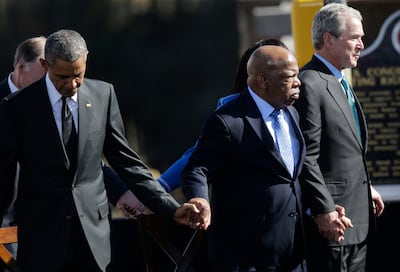
The venerable Georgia Rep. John Lewis was among those attacked on Bloody Sunday. Here are some stories from Deseret News archives about the moment, the civil rights movement and other historic turning points in history:
“50th anniversary of Bloody Sunday in Selma puts spotlight on deep poverty”
“Remembering the courage and faith of John Lewis, an American hero”
“Busloads of Nashvillians go to Bloody Sunday commemoration”
“Selma civil rights milestone marked by first black president”
“Photos of 1965 clash are gone from Rights Museum”
“Lyndon B. Johnson linked Latinos, civil rights in ‘Selma’ speech”
“Civil-rights marchers: U.S. still needs to address inequality”
“4,000 reenact historic march to get Black vote in Alabama”
“March on Washington showcased religious roots of Civil Rights movement”
“Racism did not begin in America, but it can end here”
“Deseret News archives: Civil Rights Act outlawed discrimination, but the journey continues”