

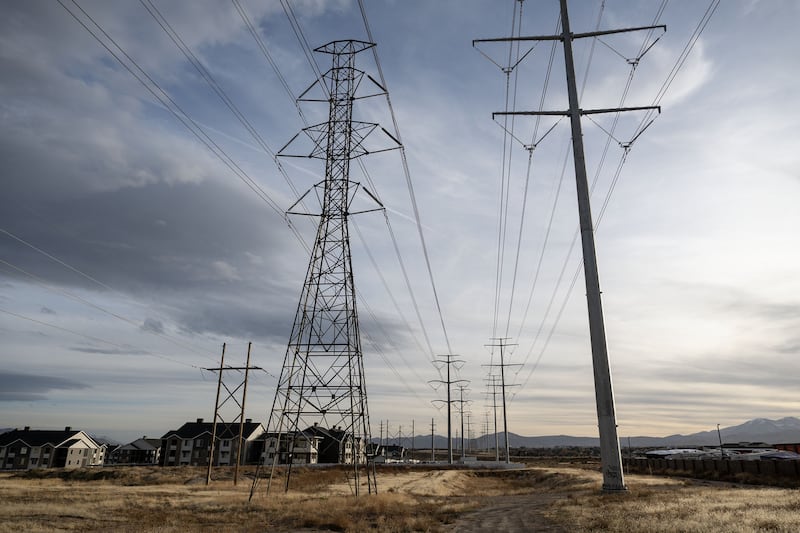
Utah’s largest power provider says it’s leaning on “enhanced safety settings and protective equipment” as the state prepares for a potentially active wildfire season, though it may lead to more blackouts in some areas.
Rocky Mountain Power plans to temporarily de-energize power lines during red-flag conditions or other periods of elevated fire risk. It also has protective equipment that can automatically shut off power when lines come into contact with debris, wildlife or strong winds.
Each can create “longer or more frequent outages” for customers, especially in high-risk areas, but can also reduce the likelihood of sparks that can create fires, the company said in a public notice on Tuesday.
“We are preparing for an elevated wildfire season across our service area and taking proactive steps to reduce risk,” said Curt Mansfield, senior vice president of Rocky Mountain Power, in a statement. “Working closely with our partners and encouraging customers to prepare now is critical to keeping our communities safe.”
Its advisory comes as fire danger is already above normal in southwestern Utah, and is expected to spread out to most of the state this June and July, according to the Great Basin Coordination Center. There have already been over 180 wildfires that have burned more than 8,300 acres across the state this year.
While a potentially active monsoon season could lower the risk back to normal for most of the state by August, the agency lists northern Utah and Idaho as having above normal risk by that time.
Some of the West’s more devastating fires in recent history have been tied to sparks from power lines, such as the 2018 Camp Fire that killed 85 people and destroyed more than 18,000 structures in and around Paradise, California. Pacific Gas and Electric, which owned the lines, ended up on the hook for tens of billions of dollars tied to it and other wildfires.
Utah lawmakers grilled Rocky Mountain Power leaders in 2024 over their proposed 30% rate increase, in part because of similar settlements that its parent owner, PacifiCorp, had to pay in Oregon.
Rocky Mountain Power, which supplies electricity to over 1 million customers in Utah and also serves parts of Idaho and Wyoming, notes that it has its own team that monitors over 300 weather stations and relies on other tools to track conditions. These assist with operational decisions to reduce risks, such as de-energizing power lines.
It has also carried out projects to replace aging overhead power lines across its service area in recent years, which also seek to reduce risks.
Rocky Mountain Power said Tuesday that customers should update their contact information to receive notifications about outages, review any backup power options and have an emergency kit prepared whenever there is an outage.