

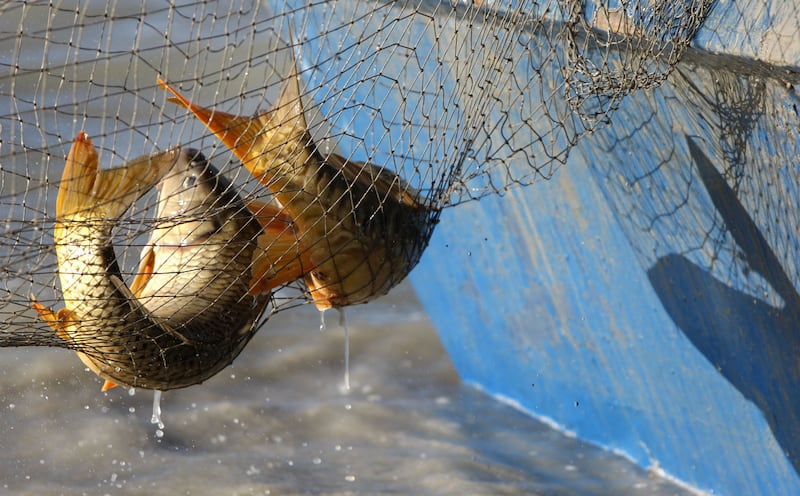
PROVO — Utah Lake’s main invasive species is now considered safe enough to eat, which is considered more of an environmental win than a chef’s recommendation.
A consumption advisory on the carp in Utah Lake was removed after over two decades on Wednesday, after Utah Department of Environmental Quality testing found that polychlorinated biphenyls levels, manmade organic chemicals commonly referred to as PCBs, were low enough to fall within the safe category.
“This is a major victory for Utah Lake and for everyone who has worked for years to improve its health,” said Luke Peterson, executive director of the Utah Lake Authority, adding that it might be the best example yet of how lake health has improved since Geneva Steel ceased operations near the lake shore.
PCBs are old industrial chemicals consisting of carbon, hydrogen and chlorine atoms that stick around in the environment. Companies began using them in U.S. manufacturing in 1929, for electrical, paint, plastic, paper and many other products until 1979, when evidence showed they were toxic to human health and the environment, according to the Environmental Protection Agency.
They ended up in Utah Lake, possibly from runoff from companies like Geneva Steel, which operated a steel mill in Vineyard from 1944 to 2001, where long-living bottom-feeder fish species like carp likely absorbed leftover chemicals, Utah Lake Authority officials explained.
State officials weren’t able to determine an exact source for Utah Lake’s PCBs after placing an advisory on carp in 2005. A similar order was also issued over channel catfish, which remains in place despite Wednesday’s announcement.
The discovery sparked efforts to clean up the lake, nevertheless. More than 30 million pounds of carp have been removed from the lake over the past two decades, physically removing “a massive amount of historic pollution” from the lake, Utah Lake Authority officials said.
“We are thrilled there have been measurable improvements in water quality,” added Candice Hasenyager, director of the Utah Division of Water Quality. “This is a direct result of the significant restoration efforts and meaningful investments from partners across the state.”
Carp were first introduced to Utah Lake in the 1880s. They’ve been considered destructive to the lake’s native vegetation, while also threatening the June sucker, a fish species endemic to the lake.
Efforts to remove carp, including the “Great Carp Hunt," have also sought to save the June sucker. Former Provo Mayor Michelle Kaufusi even launched an initiative to make Utah Lake carp-free for the 2034 Winter Olympics and Paralympics.
“In Utah, we believe nothing is impossible. Carp, we are coming for you, and we won’t stop until Utah Lake’s waters are clear again,” she said in October.
Contributing: Shelby Lofton