

SALT LAKE CITY — For 20 years, Axel Anderson held on to the belief that his father might suddenly show up.
“Every major milestone, there was always a little piece of me wondering, ‘Could this be it? Could this be the day he comes back?’” he said.
But in 2024, 20 years after 46-year-old Steven Willard Anderson went missing while driving to his cabin near Flaming Gorge, his Toyota Sequoia was found approximately 70 feet underwater at Starvation Reservoir. The vehicle was pulled out and Anderson’s remains were found inside.
“He never made it to the cabin. He didn’t flee to Mexico as I and some others had thought. He didn’t start another life. He wasn’t out there somewhere waiting for the right moment to come back. He wasn’t going to suddenly appear at my doorstep. My dad had passed 20 years earlier. Every possibility I had been carrying around for two decades suddenly collapsed into one answer,” Axel Anderson said Saturday. “He didn’t abandon me. He just never made it to the cabin.
“In some ways I lost my dad for a second time that day.”
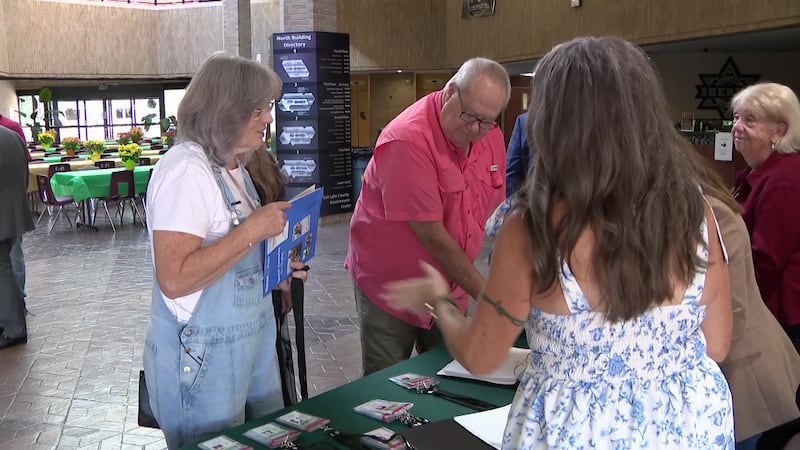
Anderson made his comments on Saturday at the Hope Conference hosted by the Salt Lake County Sheriff’s Office.
“The Hope Conference gives us the opportunity to meet with the families of missing or murdered loved ones to let them know that we are still diligently working on their case and update them on new services and technology that may help,” said sheriff’s detective Ben Pender. “It also gives families the opportunity to share information that they may remember about their family member that may be relevant.”
Pender, the only full-time cold case detective in Utah, is renowned in his field and has solved some of the state’s biggest cold cases, including the murder of Sherry Black, found stabbed to death inside her bookstore, B&W Billiards and Books, 3466 S. 700 East, on Nov. 30, 2010. More than a decade later, thanks in part to advances in DNA technology, Adam Durborow, 30, of Orem, pleaded guilty in 3rd District Court on Monday to aggravated murder.
Niki Price remembers attending the Hope Conference last year and listening to Heidi Miller, Black’s daughter, speak and thinking to herself, “I cannot wait until it’s my turn to come up here and tell my story.”
Price’s brother, Jason Mitchell Royter, was found stabbed to death inside his Magna home early in the morning of Aug. 6, 2005. The case went cold until an arrest was made in 2025.
On Saturday, Price spoke at the Hope Conference and remembered her brother.
“He certainly was not perfect. But he was my partner in crime … he was my best friend,” she said.
Price also read letters from Royter’s two adult children who could not be there.
“My dad was the absolute greatest,” his daughter, Deborah, wrote.
She recalled how her father made school fun for her, how he would play video games with her and her brother, his extra spicy beef ramen noodles and breakfast potatoes, and his love for the Green Bay Packers, Star Wars, Bob Ross, Pink Floyd, green Jolly Ranchers and dogs.
“Please don’t give up hope. Continue to hold on to all the memories, share your stories as well. I think it helps keep those we lost around,” Deborah wrote to others attending the conference.
Pender currently has 34 cold-case homicides and 14 missing person cases on his plate. In his office, he has pictures of every victim hanging on his wall with the latest information for that investigation.
“I know there are families in this room who are still waiting. Some of you have waited for years. Some of you have waited for decades. I can’t promise you when that answer will come. And I can’t make a promise I can’t keep. But we’re not simply sitting back and waiting for answers; we’re actively out looking for them. We’re looking for the next lead. We’re looking at all the evidence with new technology.” Your loved one’s case matters, whether it happened two years ago, 20 years ago or 90 years ago," said Salt Lake County Sheriff’s Capt. Dustin Fowler.
Fowler says cold case work is personal to him. His brother was killed in California nearly eight years ago. As of Saturday, the murder investigation remained unsolved.
This year alone, he said Pender has logged 20,000 miles across eight states trying to track down leads for Salt Lake County cold cases. He says the county’s commitment to solving these cases isn’t measured by what they say, but by the miles detectives travel, the advances in DNA technology they’re willing to try and by the money the county is willing to spend in support.
“We can’t promise every family when that answer will come. We can promise persistence. Your loved ones matter. Their stories matter. And they are not forgotten,” Fowler said.
Defining hope
For Axel Anderson, he said he never imagined speaking at the Hope Conference because his definition of hope has changed over the past two decades. He said he hoped for answers, hoped for closure, hoped his dad would suddenly reappear and hoped for a miracle. And then wondered if hope was actually hurting him.
“At what point am I supposed to stop hoping? (If) I accept that my dad is probably dead, am I giving up on him? But if I keep believing that someday he’s going to walk through the door, am I just torturing myself? I don’t know that there’s a right answer to that question,” he said.
Anderson said he had gotten to the point where he was “tired of telling my story with no answers for 20 years” because it was like ripping off a scab every time. So in 2022, when he agreed to do another interview with his sister about his missing father, he swore it would be the last time.
That interview, however, reached the desk of Doug Bishop with the nonprofit group United Search Corps. Bishop specialized in underwater recovery. Unbeknownst to Anderson, after his interview, Bishop began working on his father’s case and eventually contacted Pender. That collaboration led to the discovery of Steven Anderson’s remains.
Axel Anderson says the first six months after his father was found were hard for him. But then something happened that he didn’t expect.
“And that was that I could talk about my dad. Not the missing person. Not the cold case. Not the vehicle at the bottom of the lake. My dad. I could tell my children about the guy who was larger than life … the guy who never missed an opportunity to be with me, to make sure I knew how much he loved me,” he said. “For 20 years, his disappearance had swallowed his story. Finding him gave his story back to me, and I got to bring him back to life. I had no idea how badly I needed that.”
Anderson said he couldn’t tell those attending Saturday’s conference who still have missing loved ones or unsolved cases what hope should look like for them. But for him, Anderson says, even though it wasn’t the outcome he had dreamed about for decades, he can now talk about his father’s life rather than his being missing.
“I don’t think hope means that the outcome you desperately want is going to happen. I used to, for years, hope meant my dad would walk right through that door. I’ve learned that hope can change without disappearing. Sometimes hope is that they’re coming home. Sometimes hope is just an answer. Sometimes hope is a detective who cares. Sometimes hope is technology that didn’t exist when the case began is now available.
“Because 20 years ago I wouldn’t talk about my dad. Two years ago … I swore I was giving the last interview I would ever give about him. I thought healing meant closing the door on this story and never opening it again,” he continued. “And I was wrong about that too. Healing wasn’t ignoring the story until it stopped hurting. For me, healing became being able to tell the story without being completely destroyed by it.”